
Reviewed · KYOTO COOKING CLASSES
Nara: Authentic Onigiri Cooking Class & Meal in a Local Home
Onigiri may be simple rice balls, but making them in a private, 70-year-old Nara home turns lunch or dinner into a window on everyday Japanese life. You cook with Mune and Hitomi, two English-speaking local hosts, rather than following a lesson in a commercial kitchen.
I like two things in particular: you make three styles of onigiri, including an original version of your own, and the meal includes miso soup and homemade side dishes. I also like the small group size, capped at six, which leaves room for conversation. One consideration: the experience lasts about two hours, so it takes a meaningful bite out of a sightseeing day.
The useful details at a glance
- A home, not a studio: The class takes place in a private house built more than 70 years ago.
- Three kinds of rice balls: Make traditional, popular, and original onigiri.
- A meal is part of the class: Sit down with your creations, miso soup, and homemade side dishes.
- English-speaking hosts: Mune has a tourism background, and Hitomi loves folk art.
- Easy to reach: The meeting address is about a five-minute walk from JR and Kintetsu Nara Stations.
- Small group: No more than six people take part.
A private home changes the feel of the class
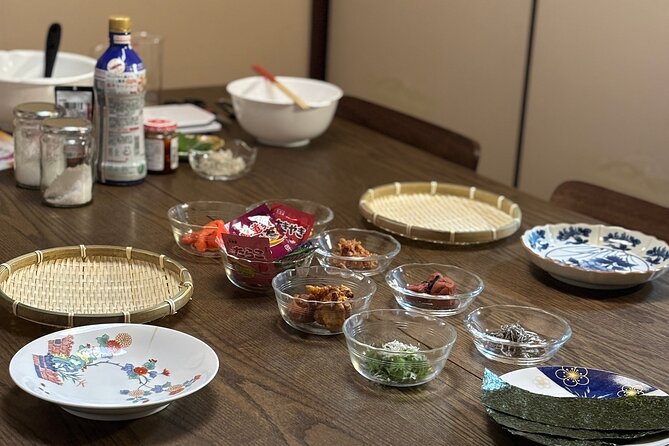
The experience begins at 1-chōme-1-8 Shibatsujichō, a short walk from Nara Station. Instead of entering a restaurant or a purpose-built cooking studio, you step into the hosts’ private residence, a typical Japanese home more than 70 years old.
That setting is central to the appeal. You are not just learning how to prepare a familiar food; you are spending time in a lived-in home and getting a glimpse of a domestic space that visitors rarely see on a standard temple-and-shrine itinerary. The house is described as having a nostalgic atmosphere, though it is still a private residence, not a museum or a staged historical display.
The class is especially appealing after time at Nara Park. It offers a change of pace from sightseeing and creates a natural setting for conversation. If your Nara plans are built around fitting in as many sights as possible, though, keep in mind that this is a scheduled two-hour activity, not a quick stop between attractions.
More Nara trips in Nara:
- World Heritage Kyoto & Nara Uji Authentic Matcha Experience
★ 5.0 · 1,573 reviews - Kyoto/Osaka: Nara, Fushimi Inari Taisha, Arashiyama Bus Tour
★ 4.7 · 1,275 reviews - Nara Half Day Trip Walking Tour (Private Option Available)
★ 5.0 · 937 reviews
Mune and Hitomi make the meal part of the conversation
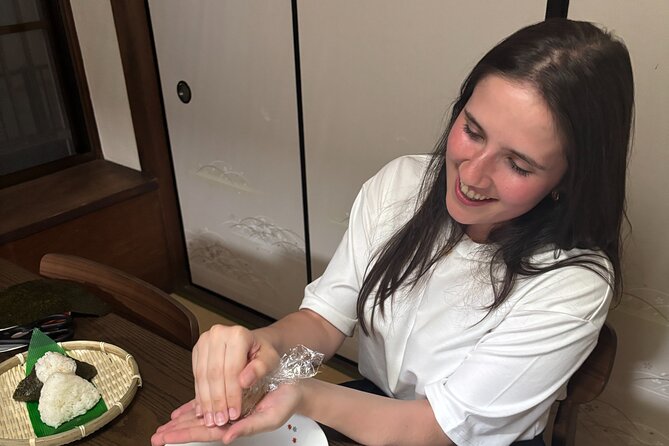
Mune and Hitomi welcome you as local friends, not simply as instructors. Both speak English. Mune has a tourism background and a master’s degree from the University of Glasgow, while Hitomi is a folk art lover. Those interests give you an opening to ask about local life, culture, and history as you cook and eat.
The social side is one of the strongest reasons to book. A cooking class can be a good way to meet local people, but the private-home setting makes conversation feel like part of the activity rather than a short introduction before a demonstration. You can ask the questions that might not come up during a guided walk or a restaurant meal.
The group is limited to six, which helps keep the class personal. That does not guarantee a private session, since other participants may join, but the cap does mean you are not sharing the kitchen with a large tour group. If you are hoping for a quiet, one-on-one conversation, check the group arrangements when booking.
Three onigiri styles keep the hands-on part interesting
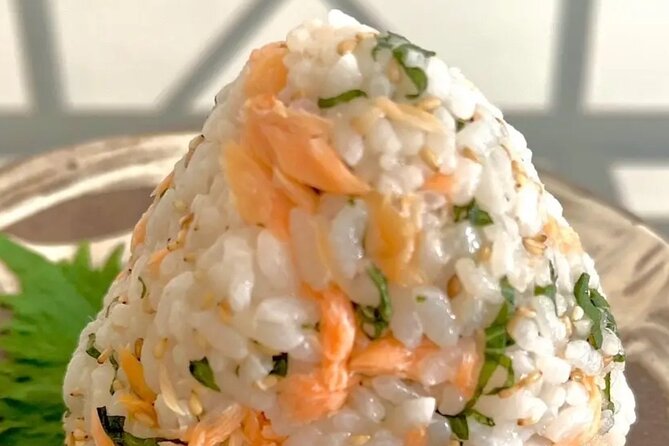
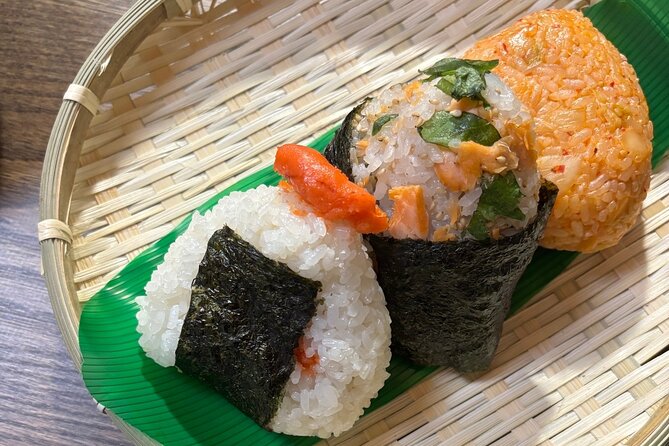
The cooking portion covers three approaches: traditional onigiri, a typical popular style, and an innovative version that you create yourself. The class is about shaping and seasoning Japan’s everyday rice food, with the chance to go beyond making a single basic rice ball.
The original onigiri is a useful touch. You are not only copying a set form; you also get to put together a version of your own. A previous participant’s rice balls were so neatly shaped that the hosts commented on how beautiful they looked. That gives you a sense of the hands-on focus, though the point is to enjoy making them, not to pass a test in rice-ball geometry.
The available details do not specify fillings, ingredients, or how much instruction is given for each style. If you have a particular food restriction or want to know exactly what you will cook, ask the provider before booking. The class does promise three styles, but it is better not to assume a certain menu or level of customization.
Miso soup and side dishes turn class into a proper meal
Once the onigiri are ready, you sit down for a full meal with miso soup and homemade side dishes. That matters when comparing this with a short cooking demonstration: here, the food you make is part of lunch or dinner, and the activity includes time to eat together.
A meal with the hosts also gives the conversation room to continue. You can ask about Japanese food and everyday habits while sharing the dishes, rather than heading straight back out after the cooking ends. The class description calls the meal satisfying, but it does not list the side dishes or promise a particular menu, so treat those as subject to what is served that day.
You can choose a lunch or dinner experience. Lunch may fit well as a break before more sightseeing, while dinner offers a home-based alternative at the end of the day. The hosts note that many local restaurants are closed at dinner time, but you should still choose the slot that suits your own plans rather than relying on that as a guarantee about restaurant hours.
More cooking classes in Nara:
- Sushi Making Experience Luxury Course in Nara
★ 5.0 · 36 reviews - Nara: Cooking class, learning how to make authentic sushi
★ 5.0 · 5 reviews - Udon and Tempura Cooking Class in Nara
★ 5.0 · 3 reviews - Ramen Cooking Class at Ramen Factory in Kyoto
★ 5.0 · 1,937 reviews
The station location works well for a Nara day trip
The home is about a five-minute walk from JR and Kintetsu Nara Stations, and the activity ends back at the meeting point. That makes it relatively easy to fit into a day in the city without arranging a separate transfer to a distant kitchen.
The trip is also presented as a possible add-on from Kyoto or Osaka, with travel times of roughly 35 to 50 minutes depending on the starting point and route. Those are broad estimates, not door-to-door guarantees, so leave room for your actual train journey and station walk. If you are already visiting Nara Park, the class can give your day a more personal counterpoint to the usual sightseeing.
The address is in Shibatsujichō. Confirm your route to the meeting point before setting out, especially if you are arriving from another city or have a tight schedule. The activity is near public transportation, but no pickup service is described.
Is $70 fair for a two-hour class?
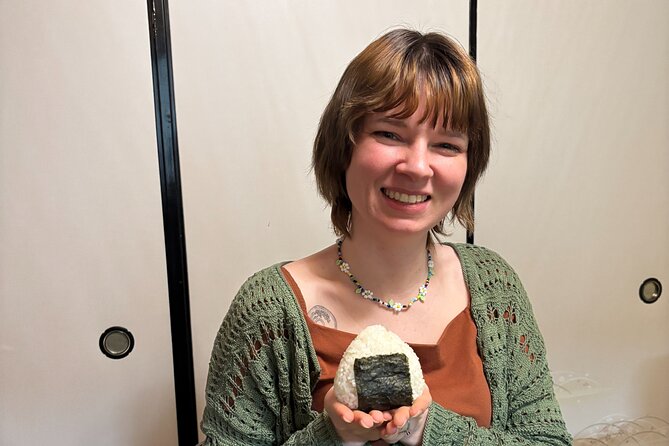
At $70 per person, this is more than a quick demonstration, but it includes the cooking session and a meal with onigiri, miso soup, and homemade side dishes. You are also paying for a small-group experience in a private home, with English-speaking hosts and time to talk. If you value personal contact and a meal as much as the recipe itself, the price has a clear rationale.
The comparison is less favorable if your main goal is simply to learn one inexpensive food technique. You may be able to find a shorter or more basic cooking lesson elsewhere, but this experience is designed around the home setting, shared meal, and cultural conversation as well as the onigiri.
The price is per person, so the total rises quickly for a family or group. The maximum of six helps preserve a personal atmosphere, though it does not tell you how many people will be in your particular session. With only four public ratings noted, all at five stars, the available sample is small. One participant particularly valued being able to talk with local people after visiting Nara Park and praised Mune as kind and fun to speak with. That is encouraging, but it is not enough to predict every session.
Who will get the most from this Nara experience?
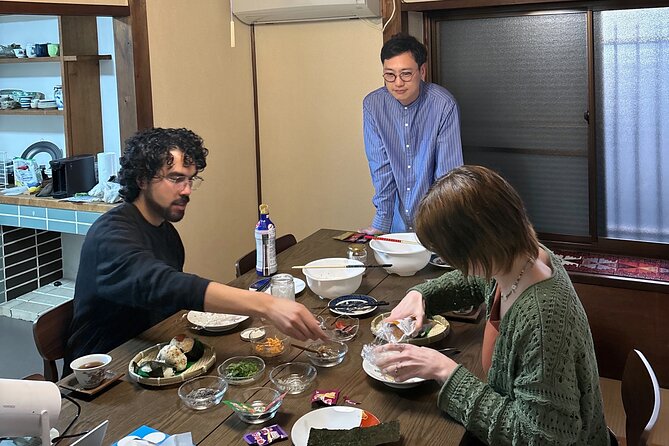
This class is a strong fit if you want a break from sightseeing that involves more than eating in a restaurant. You make food, share a meal, and have time to ask local hosts about Japanese culture and daily life. It should also suit people who enjoy learning by doing and are happy to spend two hours in one place.
It is less suited to a packed itinerary or anyone looking for a fast, drop-in activity. The experience has a set meeting point and a full two-hour duration. It is also not the best choice if you need a detailed menu in advance: the specific fillings and side dishes are not provided in the available information.
The mobile ticket and booking confirmation make the basic entry process straightforward. Free cancellation is available up to 24 hours before the start time; cancellations or changes within 24 hours are not accepted, and the payment is not refunded. If you have a dietary concern, ask the provider before booking, since no accommodation details are specified.
Should you book this home-cooking class?
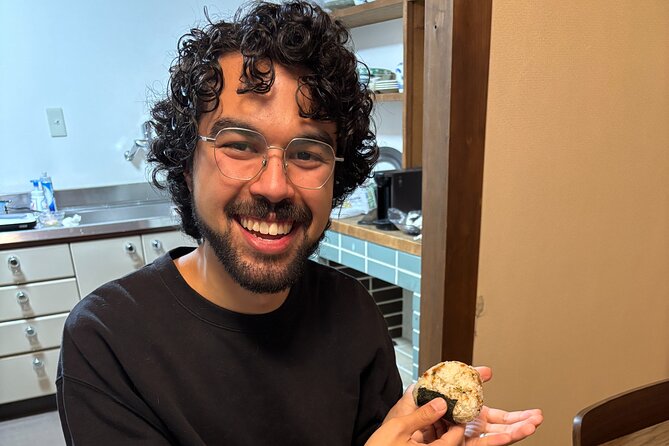
Book it if you want to meet local people, cook three kinds of onigiri, and eat a homemade meal in a real Nara residence. Its best feature is the combination of food and conversation: Mune and Hitomi offer a personal setting that can add something different to a day otherwise spent among temples, parks, and museums.
Skip it if you have little time in Nara, prefer a fast activity, or need a confirmed menu before you commit. For a relaxed two-hour break near the station, though, the class offers more than a recipe. It gives you a seat at a local table.
FAQ
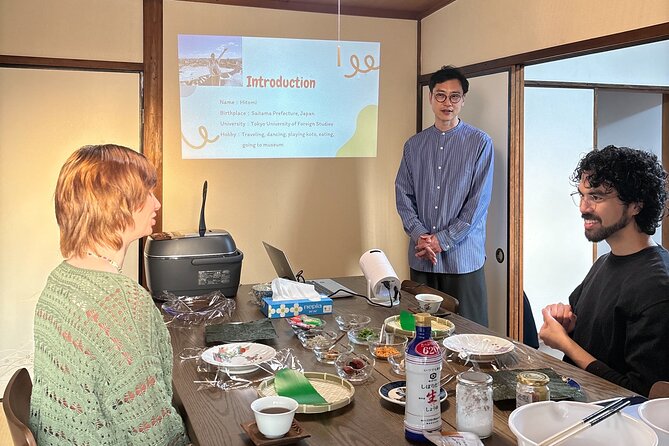
How long does the onigiri class last?
The experience lasts about two hours.
How much does it cost?
The listed price is $70 per person.
Where does the class meet?
It meets at 1-chōme-1-8 Shibatsujichō, Nara, Japan, about a five-minute walk from JR and Kintetsu Nara Stations.
Who leads the experience?
The hosts are Mune and Hitomi, an English-speaking local couple. Mune has a tourism background, and Hitomi is a folk art lover.
What kinds of onigiri will I make?
You will make traditional onigiri, a typical popular style, and an original version of your own.
Is food included after the cooking?
Yes. The meal includes the onigiri you make, miso soup, and homemade side dishes. It is offered as lunch or dinner.
How many people can join?
The activity has a maximum of six travelers.
What is the cancellation policy?
You can cancel at least 24 hours before the start time for a full refund. Cancellations or changes made less than 24 hours before the start time are not accepted, and cancellations within that period are not refunded.
Newly added in Nara
- Nara Private Day Trip – Enjoy Your First-Time Visit to Nara!★ 5.0 · 10 reviews
- Relax in Nara: Deer Park, Todai-ji Temple and Merchants’ Town★ 5.0 · 6 reviews
- Nara Todaiji Lazy Bird Walking Tour★ 5.0 · 11 reviews
- Private Nara Tour and Sake Tasting (Departing from Kyoto/Nara)★ 5.0 · 40 reviews
- Nara World Heritage PRIVATE TOUR★ 4.5 · 15 reviews
- Private Journey in Nara’s Historical Wonder★ 5.0 · 3 reviews
- Nara:Private Tea Ceremony(Max 5 ppl) -Master Matcha Making-★ 5.0 · 3 reviews
- Nara Sake Tasting Tour at Local Brewerie(tasting fee included)★ 5.0 · 12 reviews
Kyoto Cooking Classes, compared.

Ramen Cooking Class at Ramen Factory in Kyoto
Read our review →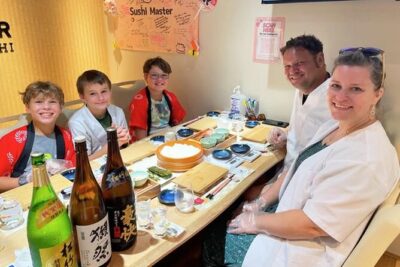
Sushi Making in Kyoto! Same-day bookings welcome!
Read our review →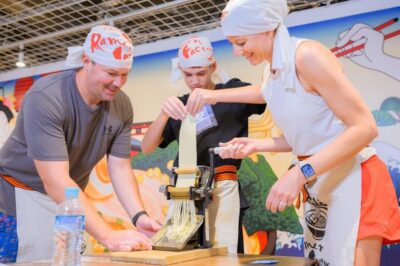
Ramen Cooking Class at a Ramen Factory with Souvenir
Read our review →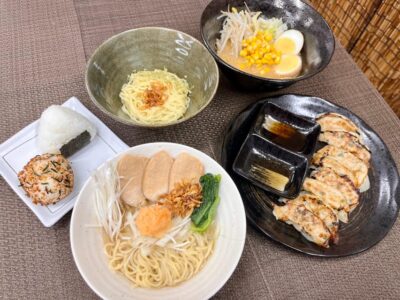
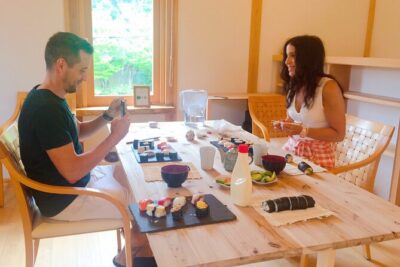
The Original Small-Group Sushi Making Class in Kyoto
Read our review →
Japanese Washoku Bento Small Group Cooking Class
Read our review →
Japanese Traditional Sweets Making and Tea Ceremony
Read our review →
Kyoto Ramen and Gyoza Cooking Class with Professional Chefs
Read our review →Browse the lists this tour appears in