
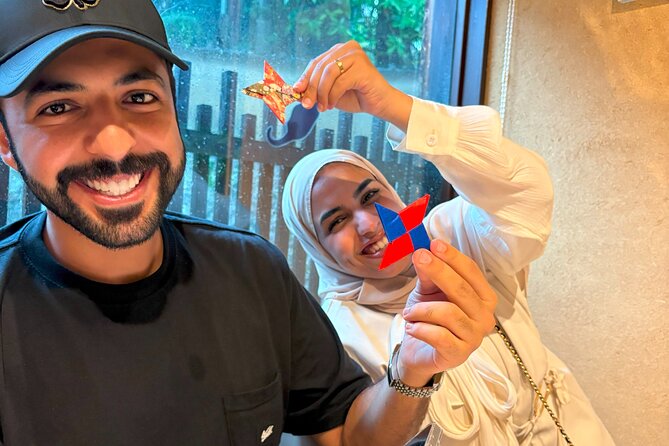
Reviewed · KIYOMIZU-DERA TOURS
Origami Workshop Near Kiyomizu Dera Temple in Kyoto
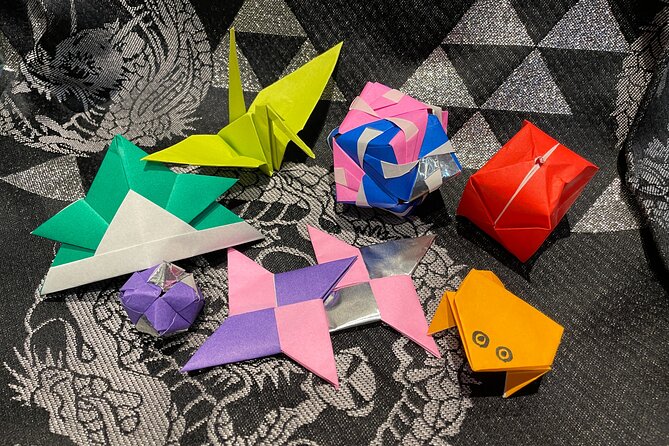
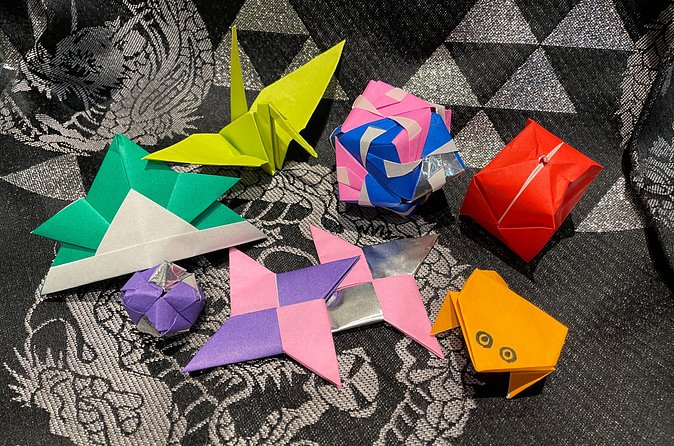
Near Kiyomizu-dera, this one-hour origami workshop gives you a hands-on look at a familiar Japanese art, with local instructors guiding you through folds step by step. You start with basic tools and paper, then make designs such as a crane, frog, or samurai helmet.
I like two things here: the patient, beginner-friendly teaching, and the chance to choose colors and patterns before you begin. The main consideration is the short format: at about an hour, this is a compact introduction, not an extended craft class.
Key points
- Make classic paper figures: The workshop covers cranes, frogs, samurai helmets, and other figures, with seasonal themes also offered.
- Get guidance in English: Instructors explain the basics and lead each fold, so you do not need prior origami experience.
- Choose your paper: Select colors and patterns before you start, then fold using Japanese origami paper.
- Take home your work: Your finished pieces go with you in a mini envelope made from traditional paper.
- Meet near Kiyomizu-dera: The workshop starts and ends at Cafe 362 in Kyoto’s Higashiyama Ward.
- Book for your own group: This is a private activity, priced at $19.51 per person, with free cancellation up to 24 hours before the start time.
A quiet craft break near Kiyomizu-dera
Kyoto sightseeing can involve plenty of walking and looking. This workshop offers a different way to spend an hour: sit down, work with your hands, and learn a traditional craft from local instructors. It is a good fit if you want a cultural activity that does not require a long lesson or any previous skill.
The location makes it easy to consider as part of a day in Higashiyama, but the meeting point is the specific address, Cafe 362, 362-3 Masuyachō. The information provided describes it as near Kiyomizu-dera, but does not give a walking time or directions from the temple. Check your route before you set out rather than assuming the distance.
The workshop is private, so only your group participates. That can make the hour feel more personal than a large class, especially if you are coming with children or a few companions. The published price is per person, so the total depends on the number in your group.
Starting with paper, tools, and simple folds
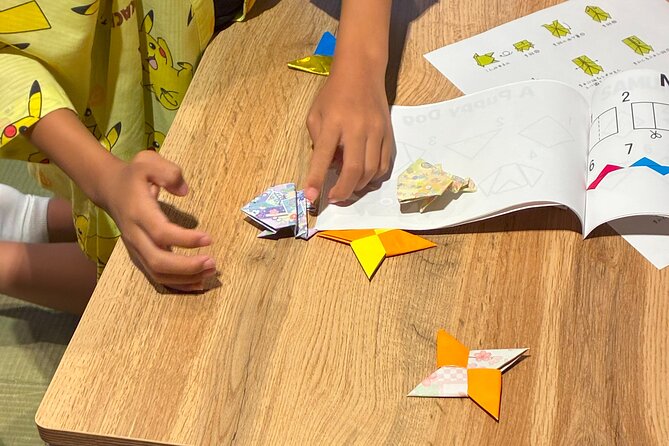
The session begins with a staff member introducing basic tools and types of traditional origami. That short orientation matters: origami can look deceptively simple, but a clean fold and a careful crease make the next steps much easier. You are not expected to arrive knowing the vocabulary or technique.
Next, you choose paper in colors and patterns that appeal to you. This small choice gives you a say in the finished object, rather than having every participant make an identical figure. Japanese origami paper is included in the price, so you do not need to bring your own supplies.
The class is taught in English, which is useful when a set of folding steps needs to be explained clearly. The instruction is step by step, and the activity is designed for beginners. A short customer comment describes the teachers as patient and talented, which supports the workshop’s beginner-friendly appeal. No instructor names are provided, so you cannot request a particular teacher.
More Kiyomizu-dera tours in Kyoto:
- Kyoto: Tea Ceremony in a Traditional Tea House in Kiyomizu
★ 4.9 · 3,519 reviews - Kyoto: Nijo Castle, Kiyomizu & Fushimi Inari Guided Tour
★ 4.7 · 700 reviews - Kyoto: Nijo, Kinkaku-ji, Arashiyama, Kiyomizu & Fushimi Inari
★ 5.0 · 699 reviews
Cranes, frogs, and samurai helmets
The classic crane is one of the central designs. In Japan, the crane is associated with peace and good fortune, giving the exercise a cultural meaning beyond the pleasure of making a neat paper figure. You will learn through the folding itself, rather than only hearing a description of the symbol.
The samurai helmet offers a different kind of fun, particularly for children and for photos. A frog is also among the designs listed, and the workshop may include other figures or seasonal themes. The exact selection can vary, so it is best to treat the named designs as examples rather than a guaranteed checklist for every session.
These projects make the class appealing to mixed ages and skill levels. A child may be drawn to the helmet or frog, while an adult may prefer the crane and its symbolism. The instructor’s guidance is useful when a fold goes wrong; paper is less forgiving than it looks, and having someone show you the next move can save a beginner from starting over.
Taking home more than a souvenir

At the end, you can take your origami creations home in a mini envelope made from beautiful traditional paper. That is a thoughtful detail: the finished figures are small and easy to carry, and the envelope gives them a tidy place in your bag. You leave with both the objects and the folding skills you have practiced.
The workshop does not promise a large collection of finished pieces, nor does it specify exactly how many designs you will complete. With about an hour available, expect a brief introduction and guided folding rather than a long list of elaborate projects. If you enjoy crafts, you may want to continue experimenting after the class, using the basic techniques you have learned.
This is also a more personal keepsake than a shop-bought trinket. You chose the paper and made the folds yourself. For families, children can take home something they created during the trip, while adults get a small reminder of Kyoto that does not take up much luggage space.
Is $19.51 a fair price?

At $19.51 per person, the cost buys an instructor-led activity of about an hour, English-language guidance, Japanese origami paper, and a small envelope for your creations. The value is not in the amount of material; origami uses little paper. You are paying for instruction and a chance to learn by doing.
That makes the price reasonable if you want a short, hands-on cultural activity and would otherwise be unsure how to begin. It is less compelling if you are looking for a long class, a large number of finished crafts, or a broad lesson on Japanese culture. The session is focused on folding, with a brief introduction to tools and paper.
Because the activity is private, the experience is limited to your group rather than shared with other participants. That can suit families and small parties who prefer to learn at their own pace. The price is listed per person, so compare the total for your group before booking.
More craft workshops in Kyoto:
- Kyoto : Chopsticks Making Workshop in Gion with Engraving Option
★ 5.0 · 958 reviews - Kyoto: Calligraphy class at Buddhist temple in city center
★ 5.0 · 167 reviews - Kyoto: Beginner Knife Sharpening & Handle Fitting Workshop
★ 4.9 · 141 reviews - Kyoto: Small-Group Authentic Sushi Making Workshop
★ 5.0 · 137 reviews
Who will enjoy this hour
Families with children are a natural match. The samurai helmet is noted as a good design for kids and photos, and the step-by-step format does not assume that participants already know how to fold. Most people can participate, according to the activity information.
It also works well for adults who want a slower, more tactile break from sightseeing. You do not need to be an arts-and-crafts person. The class is short, the designs are familiar, and the instructor walks you through the process.
If you are traveling alone, note that the activity is described as private, meaning only your group participates. The information does not say whether individual bookings are paired with other people, so check that point with the operator if it matters to you. The same applies if you have a particular seasonal design in mind, since the exact projects are not specified.
Practical details before you go
The meeting point is Cafe 362, 362-3 Masuyachō, Higashiyama Ward, Kyoto, postal code 605-0826. The activity ends back at the same place. It is listed as near public transportation, but no specific station, route, or travel time is supplied.
The duration is approximately one hour. Confirmation is received at booking, and a mobile ticket is available. You can cancel for a full refund up to 24 hours before the experience’s start time. Cancellations or changes made less than 24 hours before the start are not accepted, and cutoff times use local time.
Should you book this origami workshop?
Book it if you want a modestly priced, low-pressure activity near Kiyomizu-dera, especially if you are visiting with children or enjoy learning a craft through direct instruction. The English-language teaching, included paper, private format, and take-home envelope make the plan straightforward.
Skip it if you want a long workshop or need a confirmed list of every design you will make. The session is short, and the exact mix of figures can vary. For a simple hour of folding cranes, frogs, or a samurai helmet with patient guidance, it is a practical addition to a Kyoto day.
FAQ

How long does the origami workshop last?
The workshop lasts about one hour.
Is the class taught in English?
Yes. The origami class is taught in English.
Do I need origami experience?
No. The workshop is intended for beginners, and instructors provide step-by-step guidance.
What designs can I make?
Examples include a crane, frog, and samurai helmet. Other figures and seasonal themes may also be included.
Is origami paper included?
Yes. Japanese origami paper is included.
Where does the workshop start and end?
It starts at Cafe 362, 362-3 Masuyachō, Higashiyama Ward, Kyoto, and ends back at the meeting point.
Can I cancel for a refund?
Yes. You can cancel for a full refund at least 24 hours before the experience’s start time.
More temple and shrine tours in Kyoto
- Kyoto: Tea Ceremony Ju-An at Jotokuji Temple
★ 4.9 · 3,207 reviews - World Heritage Kyoto & Nara Uji Authentic Matcha Experience
★ 5.0 · 1,573 reviews - Arashiyama Bamboo, Temple, Monkeys, or Secret Sake Brewery
★ 4.8 · 886 reviews - Kyoto: Arashiyama Bamboo Forest, Monkeys, Matcha & Temple Tour
★ 5.0 · 759 reviews
Newly added in Kyoto
- Uji: Private immersion into Kyoto’s tea and reglious culture★ 5.0 · 17 reviews
- Whisk Your Own Matcha: A Zen Matcha Experience at Temple★ 3.6 · 7 reviews
- Kyoto tea town for matcha lovers★ 5.0 · 16 reviews
- Treasures of Kyoto: Gion & historical Walking Tour★ 5.0 · 6 reviews
- Kyoto Matcha Green Tea Tour★ 4.5 · 23 reviews
- Uji and Wazuka Matcha Farm Half Day Private Guided Tour★ 5.0 · 21 reviews
- Uji Tea Ceremony and UNESCO Heritage Walking Tour★ 5.0 · 20 reviews
- Utilising upcycled Matcha! Creating matcha incense (Uji, Kyoto)★ 5.0 · 6 reviews
Kiyomizu-dera Tours, compared.

Tea Ceremony in a Traditional Tea House in Kiyomizu
Read our review →
Nijo Castle, Kiyomizu & Fushimi Inari Guided Tour
Read our review →
Nijo, Kinkaku-ji, Arashiyama, Kiyomizu & Fushimi Inari
Read our review →
Private Rickshaw Tour of Gion and Higashiyama Area
Read our review →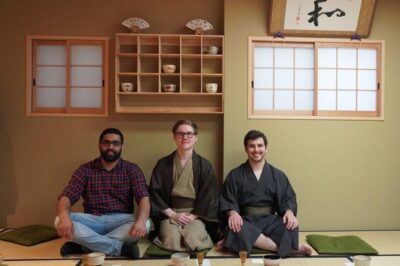
Kyoto Tea Ceremony & Kiyomizu-dera Temple Walking Tour
Read our review →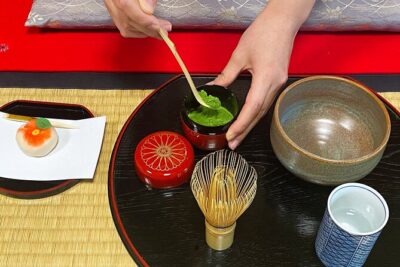
Kyoto Kiyomizu Tea Ceremony with Scenic Garden Views
Read our review →
Kimono/Yukata Rental 5 Minute from Kiyomizu-dera
Read our review →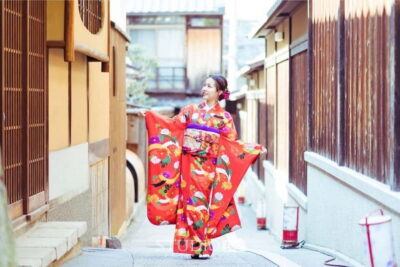
Kyoto Gion Kiyomizudera Kimono Yukata Hairstyle | Photoshoot
Read our review →Browse the lists this tour appears in