
Reviewed · KYOTO TEA CEREMONIES
Scenic Green Tea Fields of Hidden Kyoto & Local Tea Exp (Private)
Kyoto’s tea country is a world away from city streets: neat rows of tea bushes fold over the hills, and the view feels almost too orderly to be real. This private outing links those fields with Byodo-in’s celebrated Phoenix Hall and Shoju-in’s heart-shaped window, giving you both countryside and temple time in one afternoon.
I like two things in particular: the private ride makes remote tea farms practical to visit, and guide Daiki brings history and local tea culture into the day rather than leaving you to puzzle it out alone. You also get time for a cafe stop and tea shopping, not just a quick photo beside the fields.
The main consideration is the extra cost. The group price covers the vehicle and fuel, but temple admission and anything you order at the cafe are separate. The route also includes driving, short walks, and stairs, so this suits you best if you want a countryside outing more than a low-effort city tour.
Key points
- Wazuka’s tea rows: Visit the carefully planted fields that give this tour its most distinctive views.
- Byodo-in Phoenix Hall: See a celebrated temple complex whose image appears on Japan’s 10-yen coin.
- Tea tasting and shopping: Stop at a local cafe, with premium tea available at lower prices than in the city.
- A private ride: Groups of two to six travel by air-conditioned van; solo travelers use a convertible Mini Cooper.
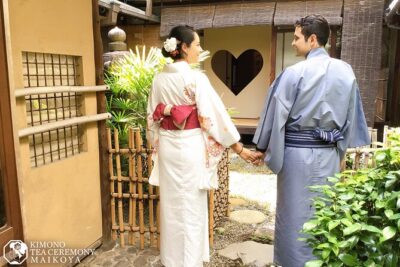
- Shoju-in’s heart-shaped window: End with a small temple known for its unusual view from the tea room.
- Plan for add-ons: Byodo-in and Shoju-in charge admission, and cafe drinks are not included.
Tea country beyond Kyoto’s city streets
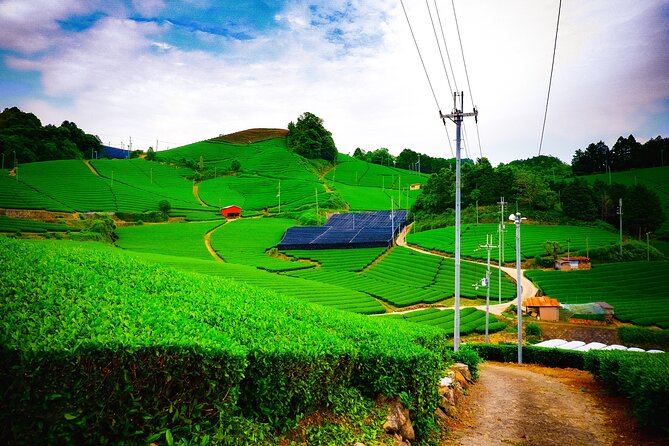
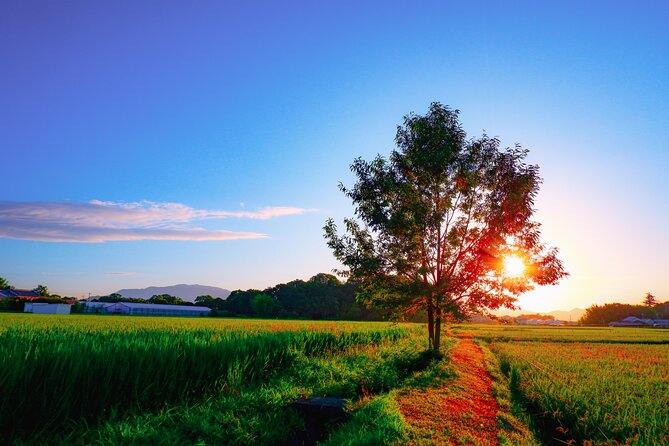
The appeal here is the contrast. You leave Kyoto’s temples and busy streets behind for Wazuka, a village associated with high-grade Uji tea. The tea bushes are planted in orderly lines across slopes, creating a striking pattern that changes with the light and season. The greenery is not limited to summer: the fields are evergreen, so they can still look vivid in winter.
That makes this a good choice if you have already seen central Kyoto’s main sights and want a different view of the region. The countryside is hard to reach efficiently without a car, and the private format avoids the pace and fixed stops of a large coach group. You can ask questions, take your time with photos, and enjoy the ride through the rural scenery.
The outing lasts about five and a half hours and starts at 1 p.m. It combines temple visits, a tea stop, and several short visits to tea-growing areas. Expect some time on the road between places; the value is not only in standing among the tea bushes, but in seeing how the region connects temples, villages, and tea production.
Byodo-in and the image on the 10-yen coin
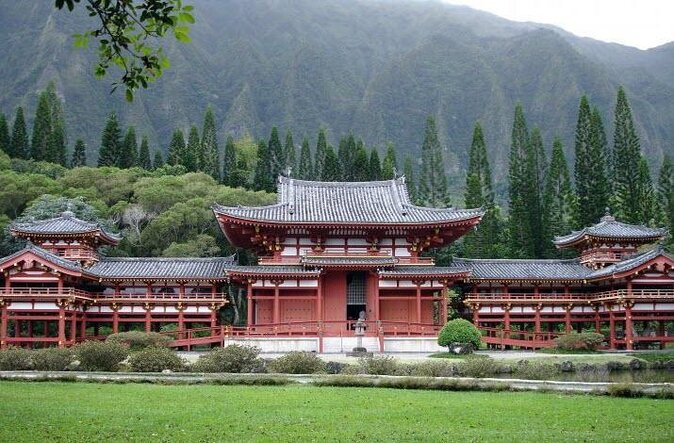
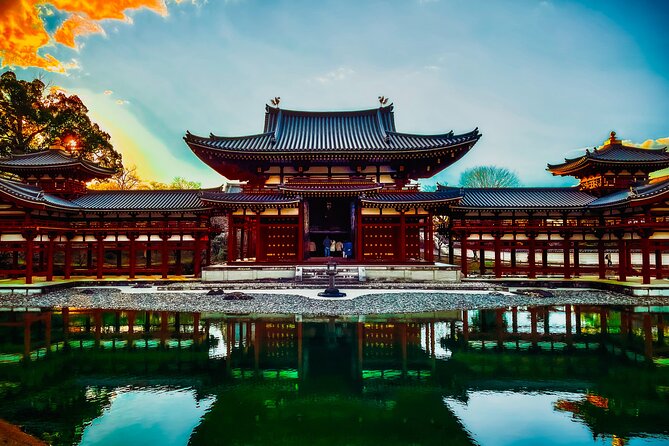
Byodo-in is the first stop, with about two hours set aside. Its Phoenix Hall is one of Japan’s best-known temple buildings, and its image is familiar from the 10-yen coin. The temple is also associated with the Buddhist idea of the Pure Land, or paradise, which helps explain why its architecture is so carefully composed.
The long stop gives you room to look beyond a quick exterior photo. The temple’s history reaches back roughly a thousand years, and the building survived centuries of conflict. That survival makes the visit especially meaningful: you are seeing more than an attractive facade, but a rare piece of architecture that has endured through major changes in Japan.
Admission costs ¥600 per person and is not included in the tour price. Keep that in mind when comparing the group rate with a self-guided day. The temple stop is a strong cultural counterpoint to the tea fields, but if you have already visited Byodo-in, you may find that much of the tour’s appeal lies later in the countryside.
More tea ceremonies in Kyoto:
- Kyoto: Tea Ceremony in a Traditional Tea House in Kiyomizu
★ 4.9 · 3,519 reviews - Kyoto: Tea Ceremony Ju-An at Jotokuji Temple
★ 4.9 · 3,207 reviews - Kyoto: 45-Minute Tea Ceremony Lesson Experience
★ 4.3 · 2,378 reviews
A local tea stop in Wazuka
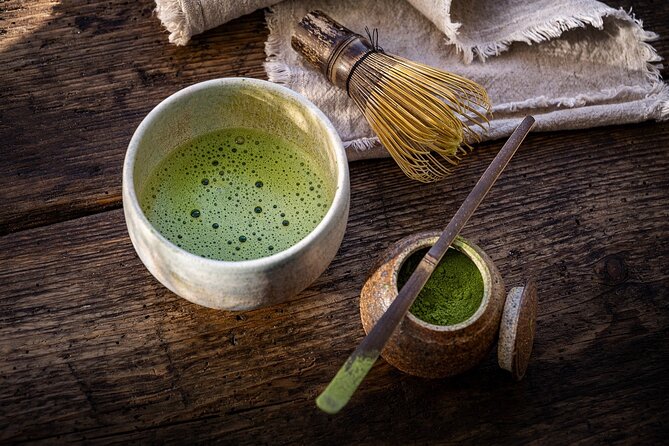
At Wazuka-cha Cafe, the plan is to spend about an hour tasting tea and matcha. The region is known for Uji tea, and Wazuka is presented as a source of especially pure, high-quality tea. Rather than treating tea as a souvenir alone, this stop gives you a chance to taste it where it is grown and to ask about what makes one tea different from another.
Cafe drinks are not included, so budget for whatever you choose to order. The tea experience can be as simple or as involved as you want: enjoy a cup, try a matcha dessert, or browse the tea for sale. Premium tea is described as costing around half to one-third of city prices, which can make the stop useful if you plan to bring some home.
This is also a natural pause in a day with several visits. If you are not a tea drinker, you can still enjoy the scenery and local setting, but the cafe stop will matter less to you. Tea fans, on the other hand, get a chance to connect the cup with the fields they are about to see.
Ishitera’s green slopes and the photo stop
Ishitera Tea Plantation is one of the clearest reasons to book this trip. The tea rows climb and curve across the hills, producing those geometric patterns that look so different from Kyoto’s temple gardens. The scheduled visit is about 30 minutes, enough for a look around and photographs, though not a long walk through the growing area.
The fields are kept in neat lines, and their repeating shapes make the views memorable even if you have seen tea farms elsewhere. The tour description notes that the scene is photogenic year-round, including winter, when the evergreen bushes retain their color. The appearance will still depend on weather and light, so don’t expect every visit to look like a bright, clear-day photograph.
A short stop also means you should be ready to make the most of it. If photography is important to you, tell Daiki you may need a little time for pictures. One visitor specifically appreciated his patience with frequent photo stops, a useful sign for anyone who prefers to frame a shot rather than rush back to the car.
Ujitawara and the roots of Japanese tea
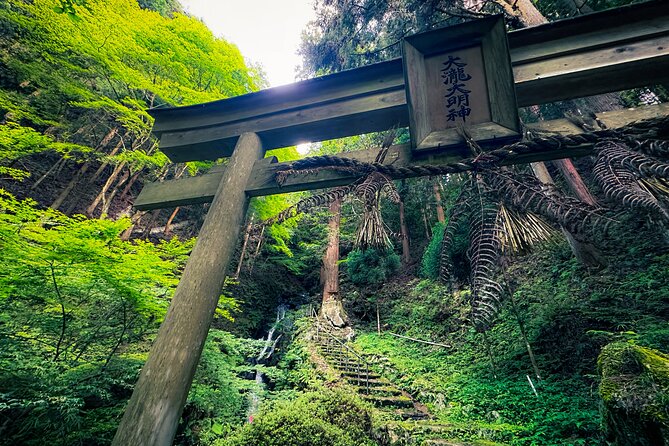
The route then reaches Ujitawara, another important tea-producing area. The region is associated with the invention of Japanese green tea and matcha, giving the stop a historical angle as well as a scenic one. You’ll visit a tea field where you can walk on a farm and take photos.
This half-hour stop adds variety to the day. Instead of seeing only one famous plantation, you get another perspective on tea country and its connection to Japanese culture. The distinction matters if you want more than a single roadside photo: the tour places the fields in a wider story about tea-making and the people who developed it.
The information also connects tea culture with monks, samurai, and ninjas. The route may include smaller temples or places tied to that past, though the exact itinerary can change with closures, road conditions, crowds, and seasonal offerings. Treat the history as part of the guide’s explanation, not as a guarantee of a particular additional stop.
More private tours in Kyoto:
- Fushimi Inari Hidden Hiking Tour (Private Option Available)
★ 5.0 · 1,750 reviews - Private Kyoto Tour with a Local, Highlights & Hidden Gems, Personalised
★ 5.0 · 1,543 reviews - Kyoto 6hr Private Tour with Government-Licensed Guide
★ 5.0 · 1,369 reviews - 10 Must-see Spots in Kyoto One Day Private Tour (up to 7 people)
★ 5.0 · 1,108 reviews
Shoju-in’s heart-shaped window

Shoju-in is the final scheduled stop, with about an hour and a half allowed. It is a countryside temple known for a heart-shaped window in its tea room. The shape gives the visit an unusual visual focus, and the rural setting makes a different finish from the more famous Byodo-in.
Admission is ¥1,000 per person, paid separately. Short walks and stairs are part of the outing, so wear shoes you are comfortable walking in. If you have limited mobility, ask the operator in advance about the route and what the temple visit involves; the available details do not specify step-free access.
The longer allotted time suggests this is more than a quick roadside stop, but the exact visit can depend on conditions that day. Seasonal courses may be offered for cherry blossoms, plum blossoms, or autumn leaves. Those options can change the character of the route, so check what is running for your date before you book.
Daiki, the private vehicle, and the value
The guide is a large part of the experience. Daiki is described as energetic, patient, and good at explaining Japanese history, culture, and tea. That matters on a route with several distinct stops: a guide can connect the temple architecture to Buddhist ideas, then shift to tea and rural life as you leave the city behind.
The private format is useful in practical ways, too. The tour offers pinpoint pickup and drop-off, and the start and end points can differ. Groups of two to six ride in an air-conditioned Nissan van, while solo travelers are offered an open-air Mini Cooper convertible. Fuel and highway fees are included, so the main additional costs are admissions and your own cafe order.
At $250.38 per group of up to six, the price can be good value when shared among several people, especially since reaching the tea fields independently may be difficult without a car. For one person, the cost is much higher per head, though the convertible option makes the transport itself part of the appeal. Compare the full group price with your party size, not just the headline figure, and add ¥600 for Byodo-in, ¥1,000 for Shoju-in, and money for tea or coffee.
Some outings with Daiki have included extra stops or a meal drop-off, but those are not guaranteed parts of this five-and-a-half-hour route. Focus your decision on the listed schedule, and ask about any special requests before booking. The tour can change because of closures, traffic, road conditions, or crowd levels.
Who should book this Kyoto tea tour
Book it if you want to see rural Kyoto, care about tea, or prefer a private day with room to ask questions and take photos. It is particularly appealing if you have already spent time among the central temples and want to see a quieter part of the region. The mix of Byodo-in, working tea country, and Shoju-in gives the afternoon more variety than a tea-field photo run alone.
It is less suitable if you want a relaxed day entirely on foot, are trying to avoid additional admission costs, or have little interest in tea and countryside. The itinerary involves driving between stops, and the core tea-field visits are relatively short. You’ll get a better return if the idea of tasting local tea, learning about its place in Japanese culture, and seeing the fields in person genuinely appeals to you.
For a small group, the shared price and private vehicle make this an efficient way to reach places that are not convenient to connect by public transport. For a solo visitor, weigh the higher individual cost against the unusual convertible ride. Either way, ask about pickup details and seasonal route changes before you commit.
FAQ
How long is the tour?
The tour lasts about five and a half hours. It starts at 1 p.m.
Is the tour private?
Yes. Only your group participates.
What vehicle is used?
Groups of two to six travel in an air-conditioned Nissan van. Solo travelers are offered a convertible Mini Cooper.
Are temple admission fees included?
No. Byodo-in admission is ¥600 per person, and Shoju-in admission is ¥1,000 per person.
Are tea and cafe drinks included?
No. Coffee or tea that you order for yourself is not included in the tour price.
Does the tour include pickup and drop-off?
Yes. Pickup and drop-off are offered, and different start and end points can be arranged.
Can the itinerary change?
Yes. It may change because of closures, road conditions, or crowd levels. Special seasonal routes may also be offered.
Newly added in Kyoto
- Uji: Private immersion into Kyoto’s tea and reglious culture★ 5.0 · 17 reviews
- Whisk Your Own Matcha: A Zen Matcha Experience at Temple★ 3.6 · 7 reviews
- Kyoto tea town for matcha lovers★ 5.0 · 16 reviews
- Treasures of Kyoto: Gion & historical Walking Tour★ 5.0 · 6 reviews
- Kyoto Matcha Green Tea Tour★ 4.5 · 23 reviews
- Uji and Wazuka Matcha Farm Half Day Private Guided Tour★ 5.0 · 21 reviews
- Uji Tea Ceremony and UNESCO Heritage Walking Tour★ 5.0 · 20 reviews
- Utilising upcycled Matcha! Creating matcha incense (Uji, Kyoto)★ 5.0 · 6 reviews
Kyoto Tea Ceremonies, compared.

Tea Ceremony in a Traditional Tea House in Kiyomizu
Read our review →

World Heritage Kyoto & Nara Uji Authentic Matcha Experience
Read our review →
Arashiyama Bamboo Forest, Monkeys, Matcha & Temple Tour
Read our review →
Tea Museum Tickets and Matcha Grinding Experience
Read our review →Browse the lists this tour appears in