
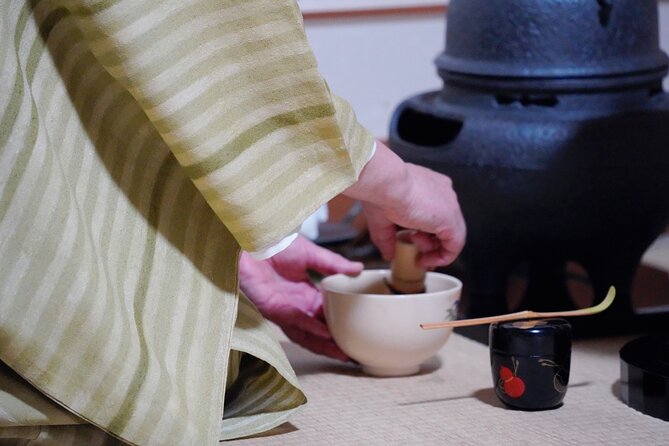
Reviewed · KYOTO TEA CEREMONIES
Tea ceremony by the tea master in Kyoto SHIUN AN
Kyoto’s tea ceremony makes more sense when you see the gestures up close. At SHIUN AN, a tea master introduces the room and its utensils, serves matcha with a seasonal sweet, then teaches you to prepare a bowl yourself.
I like two things in particular: the small group size, which leaves room for questions, and the chance to make your own matcha rather than only watch. The tea master’s explanations are translated into English, so you can follow the customs and the reasons behind them.
The main drawback is the location. It is in a quiet residential area, not near Gion, and can be tricky to find. Plan your route before you set out, and allow extra time to arrive.
- A tea room near Daitoku-ji: The setting connects the ceremony to a Kyoto temple with a longstanding relationship to tea culture.
- A close-up demonstration: See the host prepare matcha and learn about the utensils, the room’s decor and the ceremony’s steps.
- Two bowls of matcha: You’ll taste tea made by the tea master and prepare a bowl of your own.
- Seasonal sweets included: Two kinds of Japanese sweets accompany the tea.
- A small session: Groups usually have up to six people, with a maximum of eight during peak seasons.
- Allow time to find the address: The venue is in a residential neighborhood and may take some effort to locate.
The ceremony begins with the room
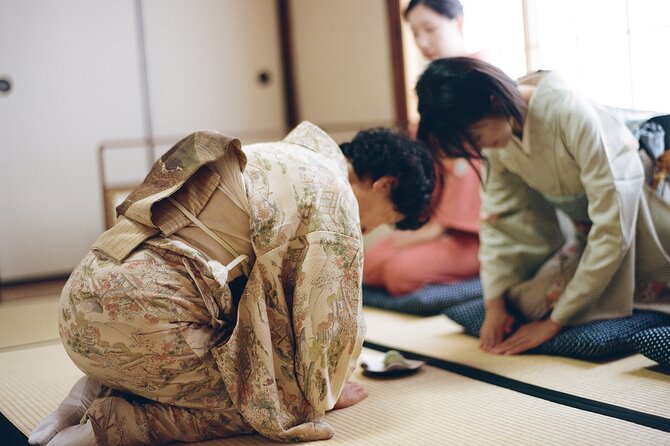
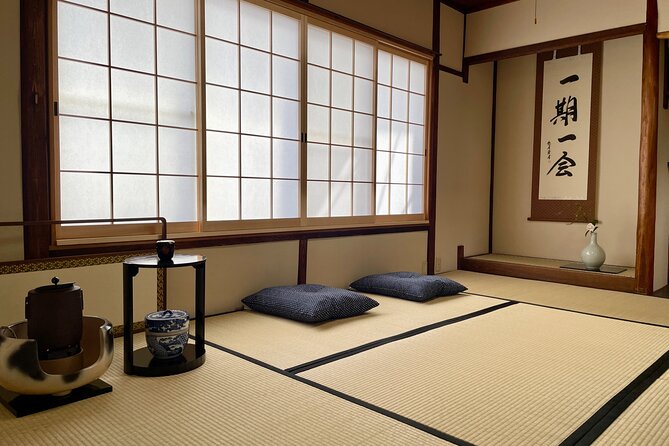
The session starts when the host brings you into the tea room. Before anyone drinks tea, you’ll have time to look at the hanging scroll and flower arrangement. These details are part of the ceremony, not just decoration: the host explains what you’re seeing and how the room’s layout contributes to the experience.
The tea master then introduces the basic sequence and the utensils. You’ll see the tea container, bowl, scoop and whisk, and hear how each is used. This brief introduction gives you a framework for watching the formal preparation that follows.
SHIUN AN describes its tea masters as having a Tea Name, a qualification it associates with full professor status. The point for you is that the person leading the session has studied the practice as a discipline, not simply as a way to prepare a drink. The ceremony is presented as a path of learning and reflection, with a connection to Zen ideas of finding understanding through attention and self-discovery.
The setting is a small house in a quiet residential area. That can feel a world away from Kyoto’s busiest sightseeing streets, and the calm is part of the appeal. It also means you should not expect to stumble upon the venue while walking through a shopping district.
Watching matcha take shape
Once the introduction is finished, the host performs the tea ceremony. Watch the measured movements and the order in which the utensils are handled. The process can look simple at first, but the care given to each step is what makes the ceremony interesting to observe.
You’ll receive matcha with a seasonal Japanese sweet while watching. The sweetness offers a contrast to the tea’s more pronounced flavor, and it gives the ceremony a practical rhythm: take in the host’s preparation, enjoy the sweet, then sip the tea.
English interpretation helps explain the customs as they happen. That matters because the ceremony is not only about the finished bowl. The room, the tools, the sequence and the manner of serving all carry meaning. You can ask questions and get context rather than having to guess at what each movement signifies.
The demonstration is the part to watch closely if you’re curious about the precision involved. The host’s practiced motions also give you a useful comparison for the hands-on part that follows. Your own bowl may not look quite as polished, and that is part of the lesson.
More tea ceremonies in Kyoto:
- Kyoto: Tea Ceremony in a Traditional Tea House in Kiyomizu
★ 4.9 · 3,519 reviews - Kyoto: Tea Ceremony Ju-An at Jotokuji Temple
★ 4.9 · 3,207 reviews - Kyoto: 45-Minute Tea Ceremony Lesson Experience
★ 4.3 · 2,378 reviews
Making your own bowl
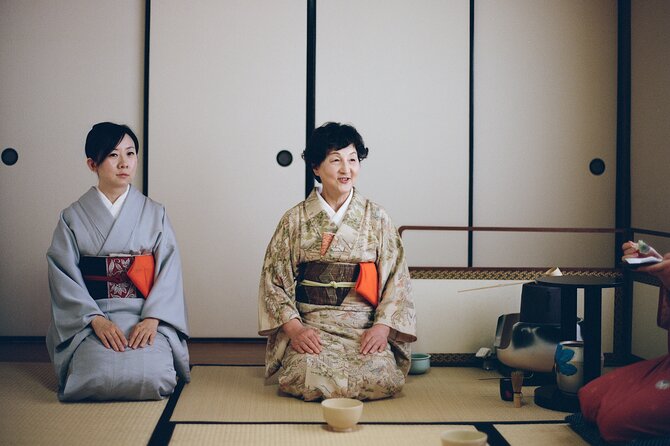
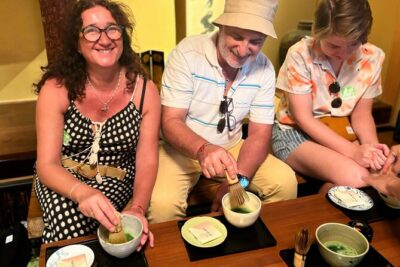
Each participant gets a turn to make matcha. The tea master provides the tea bowl, container, scoop and whisk, then guides you through the basics. You do not need to arrive with experience. The aim is to learn the method and take part, not to pass an exam in whisking.
You’ll have a second bowl of matcha as part of the session, along with another kind of Japanese sweet. This means the experience is more than a short demonstration: you see the master’s preparation, taste the tea and try the technique yourself.
I’d come with questions if you have them. The format is small enough to make the teaching personal, and the interpreter can help you follow the explanation. Some people are especially interested in matcha; others come to understand a Japanese custom. Either way, the hands-on portion helps turn the ceremony from an idea into something you can remember and describe.
The experience lasts about 45 minutes. That is long enough for an introduction, a demonstration and a turn at making tea, but short enough to fit into a day of sightseeing. The ceremony is not a full-day cultural program, so think of it as a focused introduction rather than an exhaustive study of tea practice.
Why the neighborhood matters
SHIUN AN is near Daitoku-ji, a Zen Buddhist monastery associated with notable priests and the development of tea ceremony culture. That setting gives the activity a useful connection to Kyoto’s religious and cultural history. You are not simply learning a recipe for matcha; you are learning about a practice shaped by ideas and traditions that extend beyond the tea bowl.
The Golden Pavilion, Kinkaku-ji, is also described as four bus stops away. That can make the ceremony a sensible pairing with sightseeing in northern Kyoto, though check your route and timing rather than assuming the stops connect directly to your next destination. The venue is not near Gion, so it works better as part of a day in this part of the city than as a quick add-on between central Kyoto sights.
Finding the house is the practical challenge. The address is 955-1 Idachō, Kamigyo Ward, Kyoto, and the neighborhood is quiet and residential. Use a map, leave early and avoid cutting your arrival time close. Local buses and public transportation serve the area, but the final approach may still take attention.
One person described the stairs as difficult, so consider that before booking if stairs are a concern for you. The ceremony takes place in a traditional setting, and participants may be seated on the floor. The host has made people who could not sit in the preferred position feel included, but you should contact the provider in advance if you need to discuss a specific requirement.
Group size, comfort and useful details
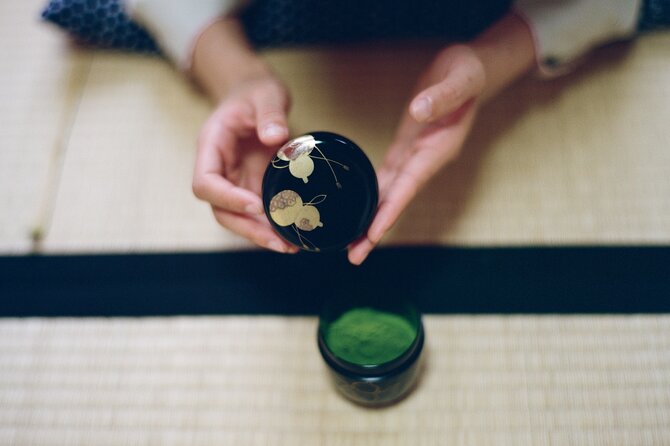
The usual maximum is six participants, although the group may grow to eight during peak seasons. A smaller group makes it easier to see the utensils and follow the host’s movements. If you visit during a busy period, expect a slightly less intimate session than the standard arrangement.
White socks and a fold fan are included, along with the tea utensils, matcha and sweets. You do not need to bring your own tea-making equipment. If you have a food allergy, let the provider know ahead of time, since Japanese sweets are part of the tasting.
Service animals are allowed, and the venue is near public transportation. Pickups and drop-offs are not included. The activity ends back at the meeting point, so plan your next stop from there.
More Kyoto tours in Kyoto:
- PERFECT KYOTO 1-Day Bus Tour
★ 5.0 · 13,518 reviews - Kyoto: Fushimi Inari, Kinkakuji, Bamboo Grove 1 Day Bus Tour
★ 4.8 · 4,316 reviews - Kyoto Geisha Walking Tour: Gion District & Hidden Gems
★ 4.7 · 3,273 reviews - Kyoto: Gion Magical Night Walking Tour with Geisha Trivia
★ 4.9 · 2,393 reviews
Is $33.03 good value?
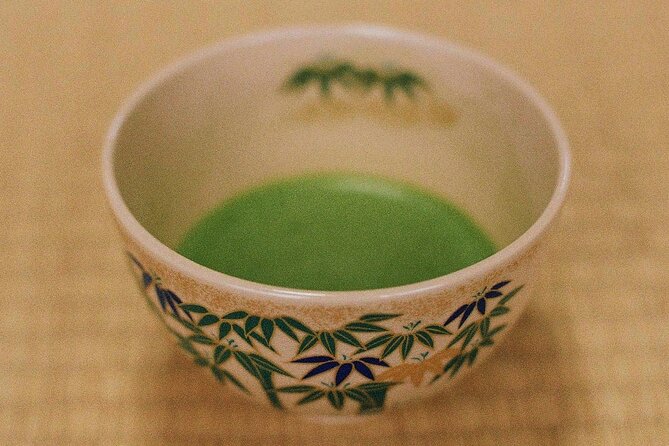
At $33.03 per person, the price buys more than a cup of matcha. It covers instruction from a tea master, an English explanation, a demonstration, hands-on preparation, two bowls of tea, two Japanese sweets, and the small items supplied for the ceremony. For a cultural activity under an hour, that is a fair package.
The value depends on what you want from Kyoto. If your goal is to sample matcha quickly, a tea shop will be easier and likely cheaper. If you want to understand the ceremony’s pace, tools and customs, this session offers more substance than a simple drink stop. The chance to make tea yourself is a key part of what justifies the price.
The activity is especially suited to first-time visitors curious about Japanese culture, matcha fans, and anyone who wants a quieter break from sightseeing. It can also work well for families with older children who can sit through a short explanation and enjoy participating. A young child accompanied a parent and enjoyed the session, though the format is calm and focused rather than playful.
Should you book SHIUN AN?
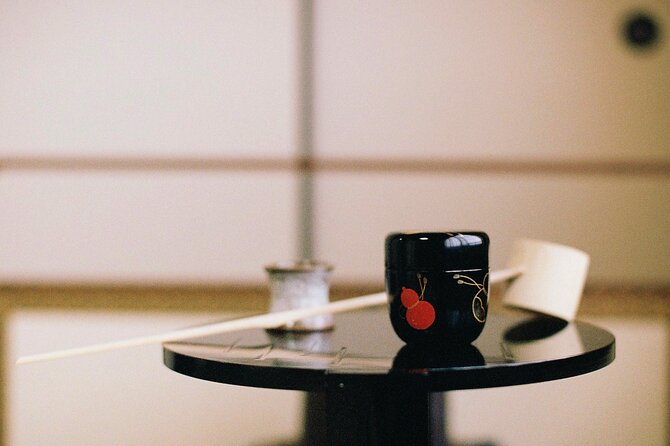
Book it if you want a clear, small-group introduction to tea ceremony, with enough history and explanation to make the ritual legible. The combination of a skilled tea master, interpreter, sweets and hands-on practice gives the session useful depth without taking half your day.
Skip it if you want a central Kyoto location, need a highly accessible venue without stairs, or would rather spend your time on an activity with more movement. For the right visitor, though, this is a thoughtful way to slow down and understand why preparing tea can be more than making a drink. Leave extra time for the address, and you’ll arrive ready to focus on the ceremony.
FAQ
How long does the tea ceremony last?
The session lasts approximately 45 minutes.
Where does the experience take place?
It meets at 955-1 Idachō, Kamigyo Ward, Kyoto, 602-8302, Japan, and ends back at the same meeting point.
How many people are in each session?
The usual maximum is six people. During peak seasons, the group may increase to a maximum of eight.
What will I do during the ceremony?
You’ll see the tea room, learn about its decor and utensils, watch the tea master prepare matcha, enjoy tea and sweets, and make a bowl of matcha yourself.
How many bowls of matcha and sweets are included?
You’ll have two bowls of matcha and two kinds of Japanese sweets.
Are tea-making tools provided?
Yes. Tea bowls, tea containers, tea scoops and whisks are provided, along with white socks and a fold fan.
Is the experience in English?
An English interpreter helps explain the ceremony and its details.
Is the venue near Daitoku-ji or Kinkaku-ji?
The venue is near Daitoku-ji. Kinkaku-ji is described as four bus stops away.
Are pickup and drop-off included?
No. Pickup and drop-off are not included, and you must make your own way to the meeting point.
Can I cancel for a refund?
You can cancel at least 24 hours before the start time for a full refund. Cancellations or changes made less than 24 hours before the start time are not accepted for a refund.
Newly added in Kyoto
- Uji: Private immersion into Kyoto’s tea and reglious culture★ 5.0 · 17 reviews
- Whisk Your Own Matcha: A Zen Matcha Experience at Temple★ 3.6 · 7 reviews
- Kyoto tea town for matcha lovers★ 5.0 · 16 reviews
- Treasures of Kyoto: Gion & historical Walking Tour★ 5.0 · 6 reviews
- Kyoto Matcha Green Tea Tour★ 4.5 · 23 reviews
- Uji and Wazuka Matcha Farm Half Day Private Guided Tour★ 5.0 · 21 reviews
- Uji Tea Ceremony and UNESCO Heritage Walking Tour★ 5.0 · 20 reviews
- Utilising upcycled Matcha! Creating matcha incense (Uji, Kyoto)★ 5.0 · 6 reviews
Kyoto Tea Ceremonies, compared.

Tea Ceremony in a Traditional Tea House in Kiyomizu
Read our review →

World Heritage Kyoto & Nara Uji Authentic Matcha Experience
Read our review →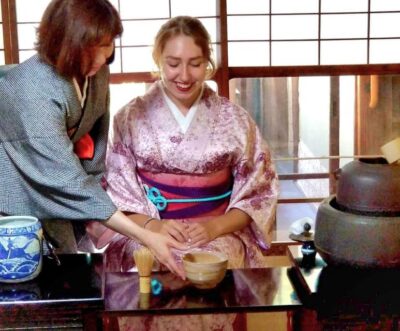

Arashiyama Bamboo Forest, Monkeys, Matcha & Temple Tour
Read our review →
Tea Museum Tickets and Matcha Grinding Experience
Read our review →Browse the lists this tour appears in