
Reviewed · KYOTO TEA CEREMONIES
The Way of Tea: Kyoto Crafts, Hidden Temples & Wabi-Sabi Walk
Kyoto’s tea culture makes the most sense when you see it alongside the places and crafts that shaped it. This 3.5-hour walk links Gion’s matcha shops with Kennin-ji Temple, ceramics and a tea ceremony in a traditional Japanese house.
I like two things in particular: the small group, capped at seven, gives you room to ask questions, and the final tea ceremony turns a city walk into a practical introduction to matcha. Temple admission is included, so you do not have to sort out separate tickets along the way.
One consideration: the guide’s explanations matter a lot here, and at least one account described soft speech and difficulty following the English. If you have trouble hearing, ask the guide to speak up early. The tour also starts promptly, so arriving late means missing the group.
- Gion starts the story: Learn about Japanese tea and its preparation while walking through the historic district and visiting a well-known matcha shop.
- Kennin-ji gives the walk a temple anchor: The stop is about 30 minutes, with admission to two temples included in the tour price.
- Crafts lead to the tea bowl: Shop visits introduce ceramics and the character of raku teacups.
- A garden temple brings in wabi-sabi: The walk connects the city’s places and objects to ideas explored during the tea ceremony.
- The final hour is hands-on: A tea master guides the matcha experience in a traditional Japanese house.
- Keep the practical details in mind: The tour is about 3.5 hours, has a maximum of seven participants and is not suitable for children under six to take part in the ceremony.
A Kyoto walk that ends with a bowl of matcha
This tour combines two familiar sides of Kyoto, temples and tea, but its appeal lies in the smaller links between them. You move from Gion’s streets to a temple, then to craft shops and a garden before sitting down to learn how matcha is prepared. The tea ceremony is not an add-on in a different part of the day. It is the conclusion to a walk that introduces the objects and ideas behind it.
The experience lasts about 3 hours 30 minutes. The listed stops account for roughly three hours, with the remaining time allowing for walking between them. You start outside Exit 5 of Gion Shijo Station, at the statue of Izumo-no-Okuni, and finish at the tea experience in the Kiyomizu area. A guide holding an orange Magical Trip signboard helps you find the group.
The maximum group size is seven. That is a useful limit on a walking tour with explanations at shops and temples: you have a better chance of hearing the guide and asking questions than you might in a large group. Still, the quality of the experience depends on clear guiding. One reported concern involved a guide who spoke softly and was difficult to understand in English, with some uncertainty about a few stops. If you cannot hear well, say so at the start.
Gion introduces the everyday culture of tea
The first stop is a roughly 30-minute walk through Gion, where the guide introduces the history of Japanese tea and how it is made. You also visit a famous matcha shop. The stop is a useful opening because it gives you context before the ceremony: matcha is not simply a green drink served at the end of a sightseeing route, but part of a broader practice with its own tools and customs.
The shop visit is a chance to see tea in a commercial, everyday setting before encountering it in a formal one. The tour does not include extra food or drinks, so budget separately if you plan to buy something. The included matcha comes during the tea ceremony, not as an all-day tasting.
Gion is a busy, well-known district, and this tour’s value is not that it takes you somewhere no one else goes. Rather, a guide gives the walk a subject and helps connect the tea shop to the other parts of the route. You will get more from it if you are curious about how tea is prepared and presented, not just looking for a quick photo stop.
More tea ceremonies in Kyoto:
- Kyoto: Tea Ceremony in a Traditional Tea House in Kiyomizu
★ 4.9 · 3,519 reviews - Kyoto: Tea Ceremony Ju-An at Jotokuji Temple
★ 4.9 · 3,207 reviews - Kyoto: 45-Minute Tea Ceremony Lesson Experience
★ 4.3 · 2,378 reviews
Kennin-ji adds a temple pause
From Gion, the group visits Kennin-ji, a historic temple that has stood for centuries. The planned visit is about 30 minutes. That is enough for a focused introduction and a look around, but not a long, unhurried temple visit. If you want to spend more time exploring temple grounds on your own, plan a separate visit.
Admission to two temples is included in the tour price. That makes the walk simpler: you do not need to stop and arrange tickets during the group visit. The tour information does not identify the second temple by name, so ask your guide which site you will see that day if knowing its name in advance matters to you.
Temple time also changes the pace of the experience. You are not rushing from one shop to another for the full 3.5 hours. The stop gives the guide a chance to place the tea and craft traditions in a setting with a longer past, though the tour’s short format means you should expect an introduction rather than an exhaustive account.
Craft shops bring the tea bowl into focus
The route includes about 30 minutes at craft shops. One particular focus is ceramics, especially the raku teacup. The guide explains how each cup can carry its own character, history and meaning. That is a useful counterpoint to the matcha shop: here, the vessel matters as much as what goes into it.
This part of the tour helps make the later tea ceremony easier to read. A tea bowl is not just a container to hold while you drink. Its shape and feel are part of the experience, and the guide’s explanation gives you something specific to notice when you sit down with matcha.
The exact shops and the amount of time spent in each are not specified. Think of this as a guided introduction to local craft rather than a dedicated shopping outing. If you are hoping to browse at length or make a purchase, keep in mind that the group has a schedule and other stops to reach.
A garden temple connects the walk to wabi-sabi
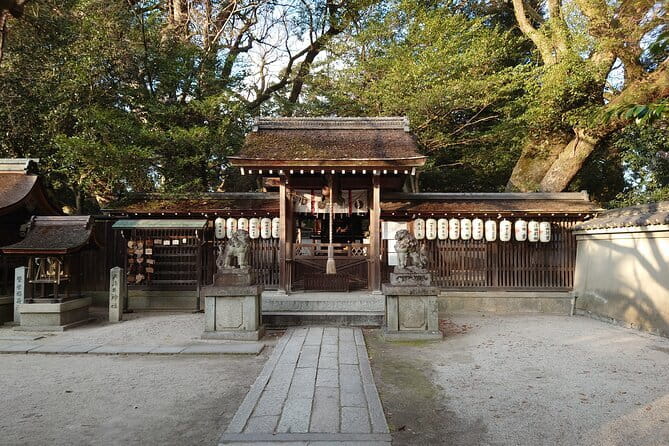
Another 30-minute stop takes you to a hidden temple and garden. The route uses this visit to introduce wabi-sabi, an idea the guide will draw on again during the tea experience. The tour’s strongest thread is this progression: you encounter tea, a historic temple, a handmade bowl and a garden, then bring those impressions into the tea house.
The word wabi-sabi can be difficult to pin down in a short explanation. Here, it is presented through places and objects rather than as a classroom topic. You can pay attention to the character of the tea bowl and the atmosphere of the garden, then see how the tea master frames those ideas during the ceremony.
The description does not name the garden temple or promise a particular garden feature, so go in ready to follow the guide’s explanation rather than expecting a specific landmark. The stop’s appeal is the contrast with Gion’s shops and streets, and the way it sets up the quieter final hour.
More walking tours in Kyoto:
- Kyoto Geisha Walking Tour: Gion District & Hidden Gems
★ 4.7 · 3,273 reviews - Kyoto: Gion Magical Night Walking Tour with Geisha Trivia
★ 4.9 · 2,393 reviews - Kyoto: Gion Geisha District Walking Tour – Stories of Geisha
★ 4.7 · 2,187 reviews - Night Walk in Gion: Kyoto’s Geisha District
★ 4.5 · 2,003 reviews
The tea ceremony is the main event
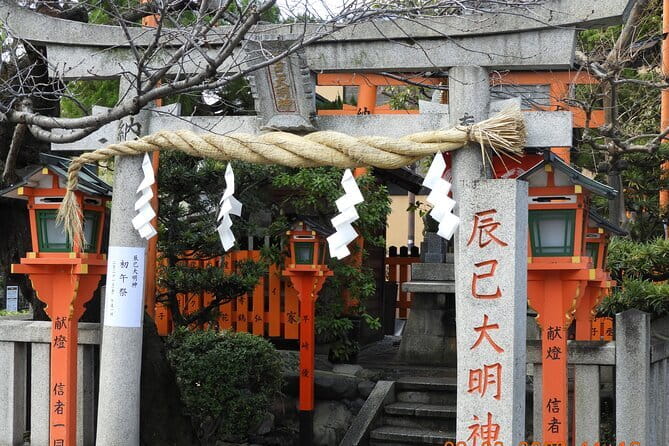
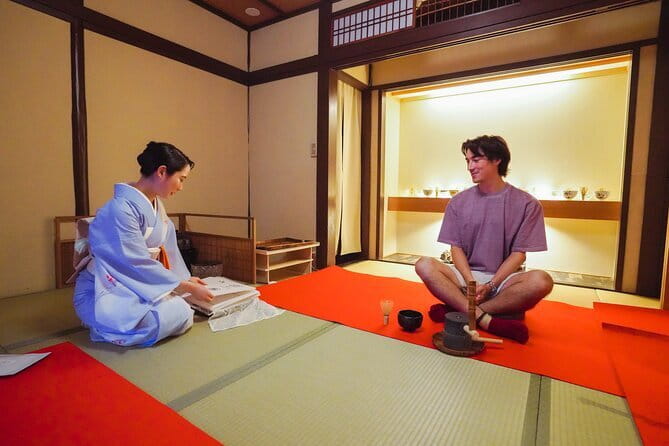
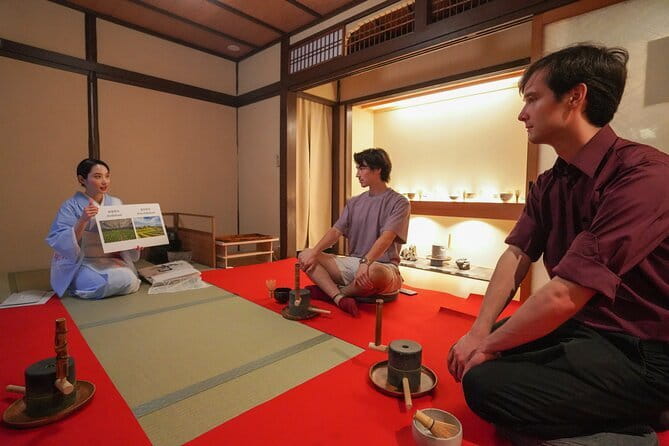
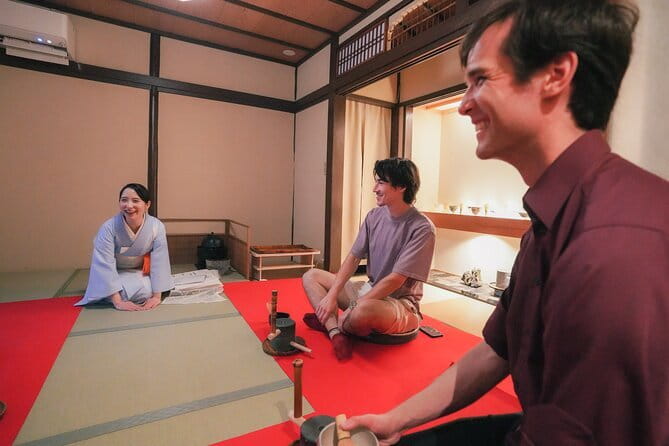
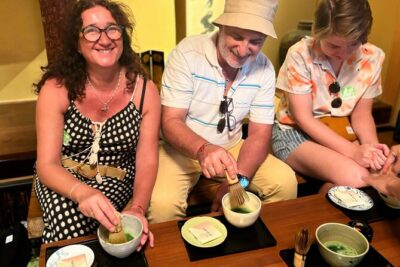
The final stop is a one-hour tea ceremony in a real tea house, held in a traditional Japanese house. A tea master gives instruction, and you take part in making tea and drinking matcha. This is the most hands-on part of the tour, and it gives the earlier stops a clear destination: you have seen a matcha shop, learned about tea bowls and walked through a temple garden before trying the ceremony yourself.
The price includes the ceremony and matcha. You do not need to pay for the guide’s food or drinks, and extra food and drinks for you are not included. Photos taken during the tour are also included, a helpful extra if you would rather stay present during the walk than stop to take pictures at every stage.
The ceremony can accommodate participants aged six and older. Younger children may come along, but one adult must accompany them outside the facility while the ceremony takes place. That rule is worth considering before booking as a family, since it means an adult may miss the central activity.
The tour ends at the tea experience location in the Kiyomizu area, listed at 4-chōme-172-7 Kiyomizu. It does not return you to the Gion Shijo meeting point, so plan onward travel from the end location rather than assuming you will finish where you started.
Is $94.45 a fair price?
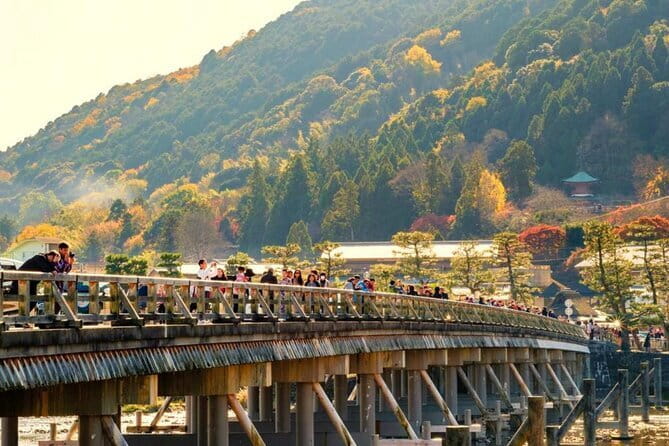
At $94.45 per person, this is more than a simple guided neighborhood walk. The price covers an English-speaking local guide for the tour, admission to two temples, the matcha experience in a traditional house and photos taken during the outing. The group cap of seven also makes the guide’s time more accessible than it would be on a large coach tour.
The value depends on whether you want the combination. If you would book a temple visit, a guided craft walk and a tea ceremony separately, having them tied together can make the price reasonable and save you from planning each piece. If your main goal is a long, formal tea ceremony, or a slow visit to Kennin-ji, this short combination may feel too compressed.
The tour has a 4.9 rating from 41 reviews, with 98 percent recommending it. Those figures are encouraging, but they do not remove the practical issue of guide delivery. You are paying for interpretation as well as admission and tea, so being able to hear and understand the guide is central to getting your money’s worth.
Timing, weather and what to plan
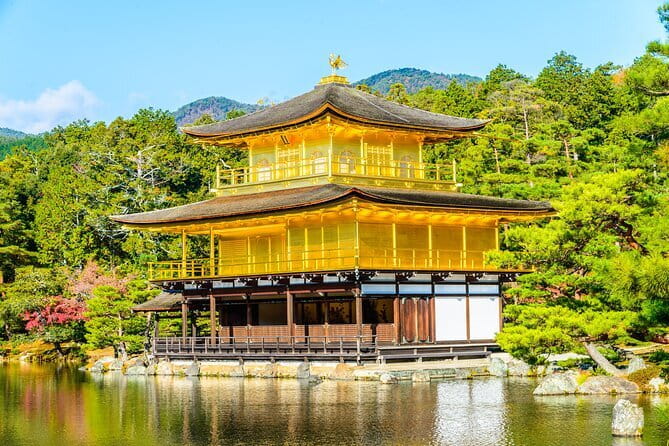
The starting point is easy to identify: the Statue of Izumo-no-Okuni just outside Exit 5 of Gion Shijo Station on the Keihan Line. Look for the orange Magical Trip signboard. The group starts on time, and the stated policy is strict: if you arrive late and miss the tour, you cannot join, reschedule or receive a refund.
Dress for the day, not just the forecast at breakfast. Kyoto can reach summer highs of 40°C (110°F) and winter lows of -5°C (20°F), so bring suitable clothing and water for the walk. The tour may be cancelled when weather is unsuitable for safety. It is also near public transportation, though the route itself is on foot.
You can cancel or reschedule without charge until 24 hours before the start time. Changes or cancellations inside that 24-hour window are not accepted, and the fare is not refunded if you cancel later. Confirmation is issued at booking, and the ticket is mobile.
Who should book this Kyoto experience?
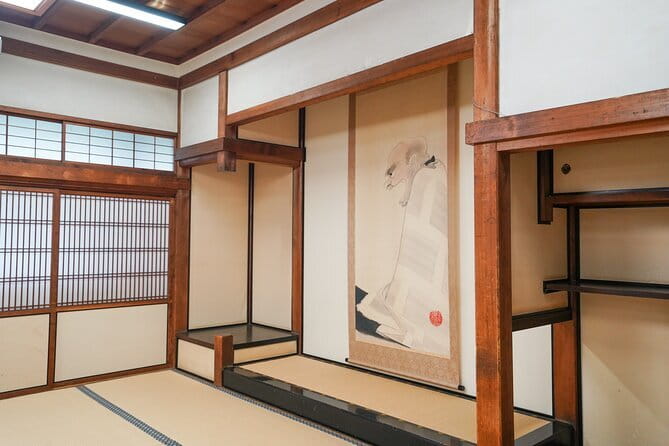
I would choose this tour if you want a guided, compact introduction to tea culture that includes more than the ceremony itself. The mix of Gion, Kennin-ji, a second temple, craft shops, a garden and hands-on matcha gives you several points of reference in one half-day. It suits first-time visitors who would rather have a guide connect the stops than navigate and research each one alone.
It is also a good fit if a small group and included temple admission matter to you. The cap of seven keeps the outing intimate, and the one-hour ceremony is a meaningful portion of the schedule rather than a quick demonstration.
I would look elsewhere if you prefer a long, quiet visit at one temple, want substantial time for shopping, or are mainly interested in a tea ceremony without a walking tour. For families with children younger than six, remember that one adult must stay outside the ceremony facility with the child. If the combination matches your interests, and you can arrive promptly and comfortably manage Kyoto’s weather, this is a practical way to connect the city’s tea, craft and temple traditions.
FAQ
How long is the tour?
The tour lasts approximately 3 hours and 30 minutes.
Where does the tour start?
Meet at the Statue of Izumo-no-Okuni, outside Exit 5 of Gion Shijo Station on the Keihan Line. The guide carries an orange Magical Trip signboard.
Where does the tour end?
It ends at the tea experience location in the Kiyomizu area, at 4-chōme-172-7 Kiyomizu.
Is the tea ceremony included in the price?
Yes. The price includes a tea ceremony in a traditional Japanese house and matcha to drink. Additional food and drinks are not included.
Are temple entrance fees included?
Yes. Admission to two temples is included.
Can children take part in the tea ceremony?
The ceremony accommodates people aged six and older. Younger children may come, but one adult must accompany them outside the facility during the experience.
More temple and shrine tours in Kyoto
- World Heritage Kyoto & Nara Uji Authentic Matcha Experience
★ 5.0 · 1,573 reviews - Arashiyama Bamboo, Temple, Monkeys, or Secret Sake Brewery
★ 4.8 · 886 reviews - Kyoto: Arashiyama Bamboo Forest, Monkeys, Matcha & Temple Tour
★ 5.0 · 759 reviews - Osaka/Kyoto: Arashiyama, Nara & Fushimi Inari Shrine w/Lunch
★ 4.4 · 754 reviews
Newly added in Kyoto
- Uji: Private immersion into Kyoto’s tea and reglious culture★ 5.0 · 17 reviews
- Whisk Your Own Matcha: A Zen Matcha Experience at Temple★ 3.6 · 7 reviews
- Kyoto tea town for matcha lovers★ 5.0 · 16 reviews
- Treasures of Kyoto: Gion & historical Walking Tour★ 5.0 · 6 reviews
- Kyoto Matcha Green Tea Tour★ 4.5 · 23 reviews
- Uji and Wazuka Matcha Farm Half Day Private Guided Tour★ 5.0 · 21 reviews
- Uji Tea Ceremony and UNESCO Heritage Walking Tour★ 5.0 · 20 reviews
- Utilising upcycled Matcha! Creating matcha incense (Uji, Kyoto)★ 5.0 · 6 reviews
Kyoto Tea Ceremonies, compared.

Tea Ceremony in a Traditional Tea House in Kiyomizu
Read our review →

World Heritage Kyoto & Nara Uji Authentic Matcha Experience
Read our review →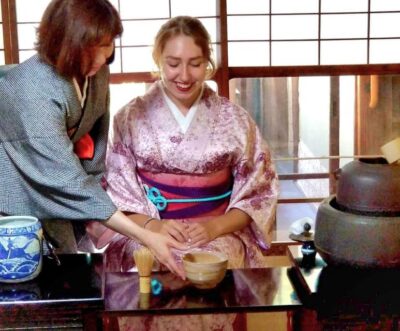

Arashiyama Bamboo Forest, Monkeys, Matcha & Temple Tour
Read our review →
Tea Museum Tickets and Matcha Grinding Experience
Read our review →Browse the lists this tour appears in