
Reviewed · KYOTO TEA CEREMONIES
Traditional Tea Ceremony Experience in Kyoto
Kyoto is a fitting place to encounter the Japanese tea ceremony, and this short session gives you a close look at OTE-MAE without asking you to commit half a day. I like two details in particular: you get to taste single-origin matcha, and the tea comes with OHIGASHI, traditional Japanese dried sweets.
I also like that you sit at tables and chairs, a practical choice if kneeling on tatami is not comfortable for you. The trade-off is time: 30 minutes makes this an introduction, not a long lesson, and the room can feel crowded enough to make the instructor hard to hear.
What to know before you book
- A short Kyoto tea introduction: The session lasts about 30 minutes, including a demonstration and an explanation of the ceremony.
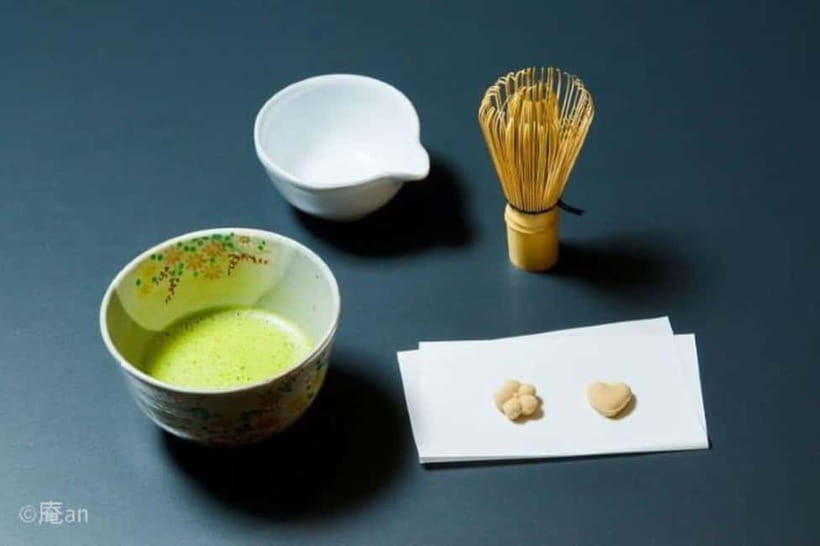
- Single-origin matcha with a sweet: Your tea is served with OHIGASHI, Japanese dried sweets.
- Table-and-chair seating: You do not need to sit on the floor during the experience.
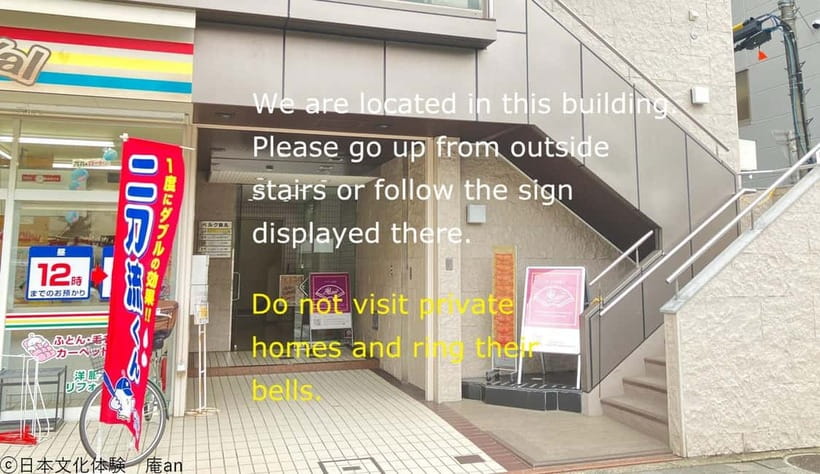
- A central meeting point: The venue is a one-minute walk from Exit 1 of Gojo Station, on the Karasuma subway line.
- English help is possible, not guaranteed in detail: The instructor works in Japanese, and English translation can be provided as much as possible if you request it.
- A certificate costs extra: If you want an experience completion certificate, it costs 300 JPY.
A compact introduction to Kyoto tea culture
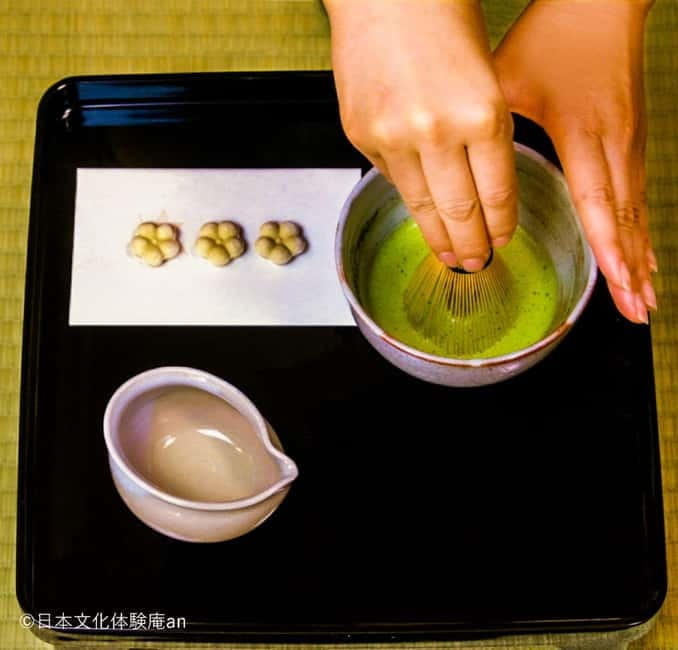
The point of this experience is not to master a ceremony in half an hour. It is to see how a tea master prepares matcha and to learn that the ceremony is more than a drink being mixed with hot water. The explanation is meant to cover the purpose of the movements and utensils, along with the ideas behind the practice.
That distinction matters. Matcha is easy to find in Kyoto, but a cup in a café does not show you the gestures and choices that give tea preparation its formal character. Here, the demonstration connects the finished drink with the process used to make it.
The session is presented as a way to encounter a tradition associated with Kyoto, Japan’s ancient capital and a birthplace of the tea ceremony. You can expect a concise lesson rather than a detailed account of the ceremony’s full history. One attendee found the explanation basic and wished for more about the ceremony’s cultural role, when matcha is usually drunk, and who drinks it. If those are your main questions, this may leave you wanting a longer class.
Other accounts describe a calming, educational session, with practical guidance on matcha and the do’s and don’ts. That is a useful way to set expectations: you should come away with a clearer sense of what you watched and how to approach the tea, but not with the depth of a specialist lecture.
More tea ceremonies in Kyoto:
- Kyoto: Tea Ceremony in a Traditional Tea House in Kiyomizu
★ 4.9 · 3,519 reviews - Kyoto: Tea Ceremony Ju-An at Jotokuji Temple
★ 4.9 · 3,207 reviews - Kyoto: 45-Minute Tea Ceremony Lesson Experience
★ 4.3 · 2,378 reviews
What happens during the 30 minutes
The activity includes a set experience of OTE-MAE, the Japanese tea ceremony. A tea instructor guides you through the session, demonstrating how matcha is prepared and explaining the movements, utensils, and ideas involved. The exact order and length of each part are not specified, so think of the following as the broad shape of the visit rather than a minute-by-minute schedule.
You begin with the demonstration and explanation. Watch how the tea is made, and listen for the reason behind each action. The value here is in seeing the preparation close up, not simply being handed a bowl. If you have a question about a utensil or gesture, this is the moment to ask, particularly if the explanation is being given in a language you understand.
The next part is the tasting. You are served single-origin matcha, along with OHIGASHI, a Japanese dried sweet. The sweet provides a small accompaniment to the tea and gives the session a clear tasting element. One attendee described the matcha as very rich and appreciated having a snack with it. If you are used to a milder green tea, expect a more concentrated flavour.
Seating is at tables and chairs rather than on the floor. That makes the format more approachable for people who would rather not kneel, and it can suit a short stop between other Kyoto plans. It also means the session is not designed as a traditional floor-seated ceremony from start to finish.
The whole activity is listed at 30 minutes. One attendee found that it lasted closer to 25 minutes, with about half the time spent in English and half in Korean. That account is a useful reminder that the timing and language balance may vary. If you need English explanations, contact the provider ahead of time and ask what can be arranged for your session.
The tea, sweets, and what you can learn
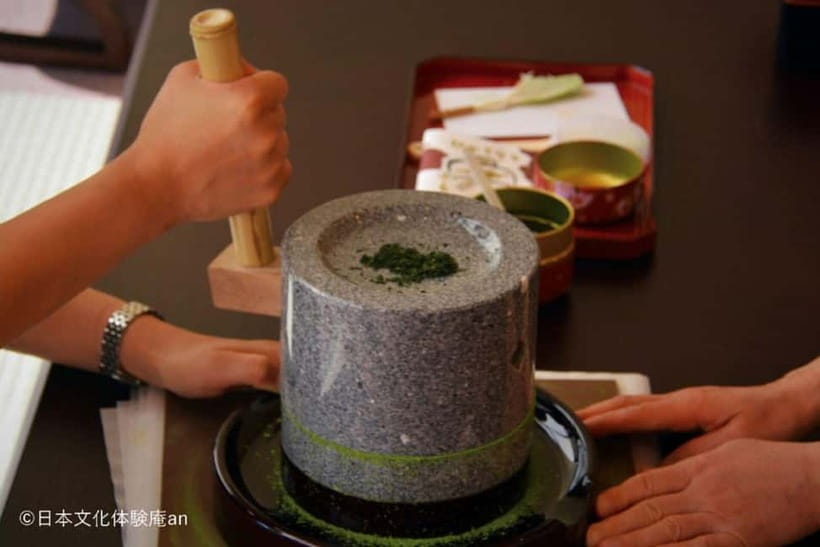
The tasting is a small part of the visit, but it is central to its appeal. You are not only watching a demonstration; you also get to try the matcha that has just been prepared. The single-origin detail gives the tea a specific point of interest, though the available information does not name the origin or provide tasting notes.
OHIGASHI is served with the tea. These Japanese dried sweets are a traditional pairing and make the experience feel more complete than a demonstration alone. The portion and exact variety are not specified, so do not book expecting a particular sweet or a large snack.
The teaching can include the history of matcha and basic etiquette. A participant who found the session especially useful singled out learning the history and the do’s and don’ts. That is the kind of practical knowledge you can carry into another tea setting: how to approach the bowl and what to notice in the preparation.
Still, the session’s brevity sets a limit on how much context can fit. If you are keen to learn about the role of matcha in daily life, the people who traditionally drank it, or the long development of tea practice, you may need to ask specific questions or seek out a longer class. The available language support also matters. The instructor’s language is Japanese, with English translation provided as much as possible when requested. Do not assume every explanation will be delivered fully in English.
Getting to the venue and planning around it
The meeting point is close to Gojo Station on the Karasuma subway line. From Exit 1, the walk is about one minute, and the store entrance faces Gojo-dori, the main street. This is a straightforward stop to fit into a day in central Kyoto, especially if you are already using the subway.
Operation hours are 10:00 to 17:00. Reservations received after 17:00 are processed the next day, so leave time if you are booking late in the evening. The provider also says it cannot hold the session for late arrivals. Plan to reach the venue before your start time rather than relying on a last-minute dash from the station.
There is a practical access detail to check before you go. The activity is marked wheelchair accessible, but the building has no elevator and stairs are required to reach each venue. Those details do not sit neatly together, so contact the provider in advance to confirm whether the route works for your specific access needs.
The instructor is Japanese. If you want English translation, contact the provider in advance and explain what you need. Translation is offered as much as possible, but the information does not promise a fully English-led session.
More Kyoto tours in Kyoto:
- PERFECT KYOTO 1-Day Bus Tour
★ 5.0 · 13,518 reviews - Kyoto: Fushimi Inari, Kinkakuji, Bamboo Grove 1 Day Bus Tour
★ 4.8 · 4,316 reviews - Kyoto Geisha Walking Tour: Gion District & Hidden Gems
★ 4.7 · 3,273 reviews - Kyoto: Gion Magical Night Walking Tour with Geisha Trivia
★ 4.9 · 2,393 reviews
Is $7 good value for a short tea ceremony?
At $7 per person, the price is modest for a guided cultural activity that includes a demonstration, single-origin matcha, and a Japanese sweet. You are paying for a brief, structured introduction in Kyoto, not an in-depth tea course. If you want a compact cultural stop and a cup of matcha with context, the price is appealing.
The value depends on what you expect to learn. The session’s strongest points are its convenient location, direct demonstration, and tasting. Its weak point is depth: 25 to 30 minutes is not much time for a full historical account, especially if translation takes part of the session. For a more detailed lesson, you should look for a longer experience.
A completion certificate is available for an additional 300 JPY. It is an optional extra, not part of the $7 price. One participant treated it as a fun souvenir, but you do not need it to take part in the tea experience.
Children under two who sit on a parent’s lap are free. The information does not specify a broader child price or age policy, so check with the provider if you are booking for older children. People who are not taking part in the experience are not allowed to enter, which is worth considering if your group includes someone who would prefer to wait nearby.
Who will get the most from this session
This is a good fit if you want a short, low-cost introduction to matcha and tea ceremony customs while in Kyoto. It suits first-time visitors who want to see tea prepared, taste it with a traditional sweet, and learn a few basic points without setting aside a long block of the day.
It is also a practical option if floor seating would make a ceremony uncomfortable. The tables and chairs remove that concern, though the stairs in the building may present a separate access issue. Check directly if mobility or wheelchair access is important to your plans.
I would be more cautious about booking if you want a long, detailed history lesson or a session guaranteed to be in English. The instruction is in Japanese, and English translation is offered as much as possible when requested. The room can also be crowded, and one attendee found it difficult to hear the guide. If you are keen to catch every word, ask about language and group conditions before paying.
The experience has an overall rating of 4.3 from 64 ratings. Individual impressions vary, which makes sense for a short activity where language, room noise, and expectations about depth can shape the visit. The most consistent appeal is the combination of an educational introduction and a calming cup of matcha with a sweet.
Booking and cancellation details
You can reserve now and pay later, which lets you hold a place without paying at the time of booking. Free cancellation is available up to 24 hours in advance for a full refund. The provider also notes that cancellation fees apply outside the free-cancellation period, and that changing a reservation after a fee has been incurred may bring an additional specified charge. Check the exact terms for your booking, including how the provider counts the 24-hour deadline.
Arrive on time. The session will not be held for late arrivals, and the provider says it cannot reimburse travel costs if the activity is cancelled. If you need to reserve the property or have a question about access or translation, contact the provider before your visit.
Should you book this Kyoto tea ceremony?
Book it if you want a short, affordable taste of Kyoto tea culture: a demonstration, some basic guidance, single-origin matcha, and OHIGASHI, all near Gojo Station. The seated format is convenient, and the half-hour length makes it easy to fit into a busy day.
Skip it, or choose a longer class, if your priority is an in-depth history or a guaranteed English-language lesson. This is an introduction, not a full course. Contact the provider about translation and the stairs before booking if either could affect your visit, then arrive early enough to settle in and hear the demonstration.
FAQ
How long does the tea ceremony experience last?
The listed duration is 30 minutes. The exact length may vary slightly.
What is included in the price?
The experience includes a set of OTE-MAE, the Japanese tea ceremony. Single-origin matcha and OHIGASHI dried sweets are served.
Is the session conducted in English?
The instructor’s language is Japanese. English translation can be provided as much as possible if you contact the provider and request it.
Where is the meeting point?
The venue is a one-minute walk from Exit 1 of Gojo Station on the Karasuma subway line. The entrance faces Gojo-dori.
What time is the venue open?
Operation hours are 10:00 to 17:00. Reservations received after 17:00 are processed the next day.
Do participants sit on the floor?
No. Participants are seated at tables and chairs.
Is the venue wheelchair accessible?
The activity is marked wheelchair accessible, but the building has no elevator and stairs are required to reach each venue. Contact the provider to confirm access for your needs.
Is a completion certificate included?
No. An experience completion certificate costs an extra 300 JPY.
Can children attend for free?
Children under two years old are free if they sit on a parent’s lap. The information does not specify other child pricing.
Can I cancel for a full refund?
You can cancel up to 24 hours in advance for a full refund. Fees may apply outside that period, so check the terms attached to your booking.
Newly added in Kyoto
- Uji: Private immersion into Kyoto’s tea and reglious culture★ 5.0 · 17 reviews
- Whisk Your Own Matcha: A Zen Matcha Experience at Temple★ 3.6 · 7 reviews
- Kyoto tea town for matcha lovers★ 5.0 · 16 reviews
- Treasures of Kyoto: Gion & historical Walking Tour★ 5.0 · 6 reviews
- Kyoto Matcha Green Tea Tour★ 4.5 · 23 reviews
- Uji and Wazuka Matcha Farm Half Day Private Guided Tour★ 5.0 · 21 reviews
- Uji Tea Ceremony and UNESCO Heritage Walking Tour★ 5.0 · 20 reviews
- Utilising upcycled Matcha! Creating matcha incense (Uji, Kyoto)★ 5.0 · 6 reviews
Kyoto Tea Ceremonies, compared.

Tea Ceremony in a Traditional Tea House in Kiyomizu
Read our review →

World Heritage Kyoto & Nara Uji Authentic Matcha Experience
Read our review →
Arashiyama Bamboo Forest, Monkeys, Matcha & Temple Tour
Read our review →
Tea Museum Tickets and Matcha Grinding Experience
Read our review →Browse the lists this tour appears in