
Reviewed · KYOTO TEA CEREMONIES
Traditional Tea Ceremony in Kyoto
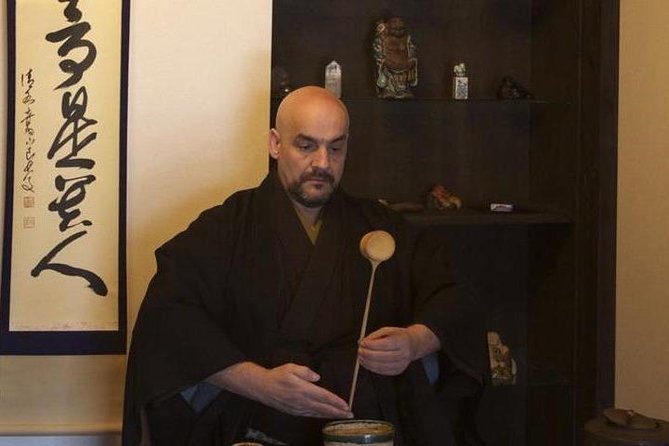
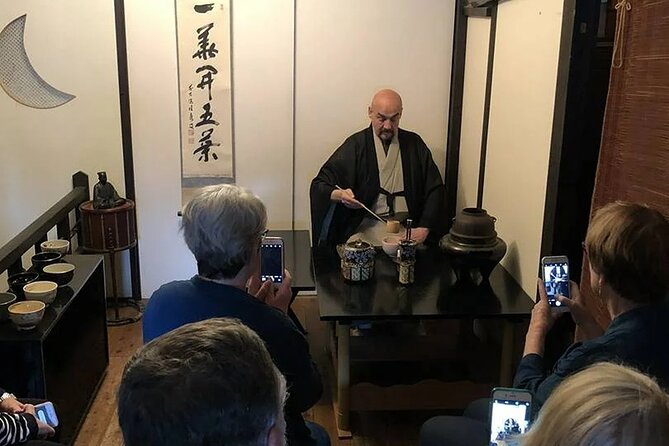
Kyoto’s tea ceremony tradition comes into focus in this 90-minute session with Randy Channell Soei, a tea master from outside Japan who holds the highest rank in his field. He presents ryurei, a formal style of tea ceremony that dates to the 1870s and was used to welcome foreign dignitaries.
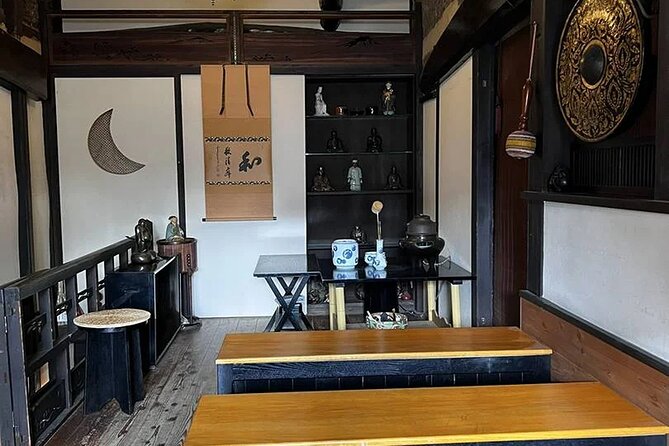
I like two things here: you get an explanation of the ceremony’s etiquette, not just a quick demonstration, and you make your own bowl of Kyoto-grown matcha after sampling tea and sweets. One practical consideration: this takes place in a small townhouse setting, and you sit on chairs or benches rather than on tatami mats or low tables.
At a glance
- Ryurei with a purpose: Learn about a formal tea ceremony style associated with welcoming foreign dignitaries.
- Randy Channell Soei leads the session: He is the highest-ranked tea ceremony master from outside Japan.
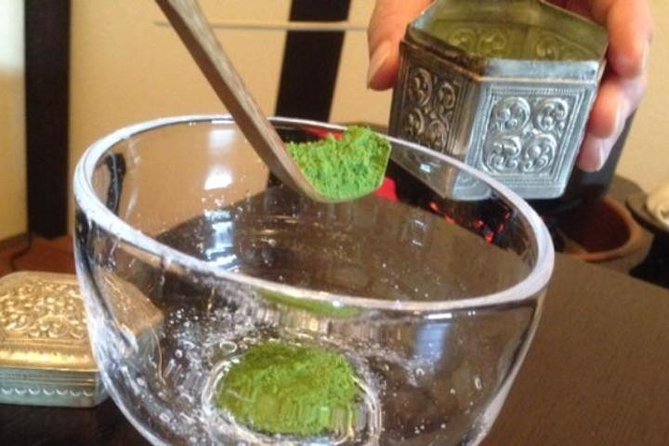
- You make your own matcha: The session includes a chance to prepare a bowl yourself.
- Kyoto treats are part of the visit: Taste Randy Sensei’s original Kyoto-grown matcha and traditional sweets from Kyoto sweet makers.
- A compact, indoor experience: Allow about 1 hour 30 minutes at ran Hotei, with a maximum group size of 25.
- Chairs, not tatami: The format may suit you if floor seating is uncomfortable, but it is not the classic floor-level arrangement some people expect.
A formal welcome, not just a cup of tea
Tea ceremony, or chanoyu, is more than a way to prepare a drink. It is also a carefully shaped expression of hospitality. This Kyoto experience focuses on ryurei, a style dating to the 1870s that was used to welcome foreign dignitaries. The setting and approach are meant to help you understand the ceremony as a formal act of welcome, rather than as a casual tea tasting.
That context gives the session a useful frame. You are not simply handed a bowl of matcha and sent on your way. Randy Channell Soei explains the details of the custom and its etiquette, so you can see why the form matters as you watch and take part. If you have wondered what lies behind a tea ceremony beyond its graceful appearance, this guided introduction aims to answer that question.
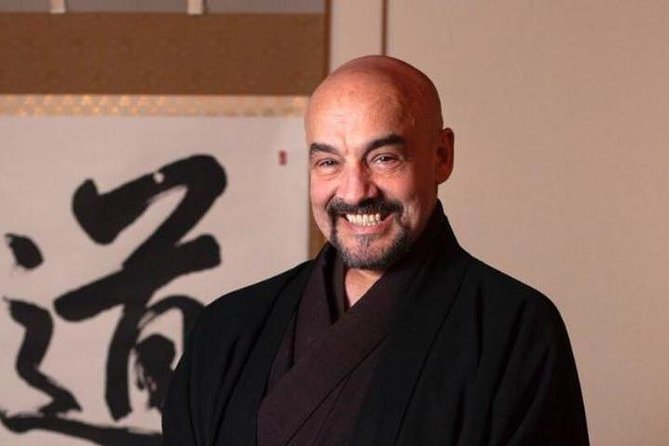
The name to know is Randy, also referred to as Randy Sensei. He is described as the highest-ranked tea ceremony master from outside Japan, a detail that makes his perspective especially relevant for an English-speaking audience. You can ask and learn in a setting designed to welcome visitors, rather than needing to arrive with prior knowledge of tea.
More tea ceremonies in Kyoto:
- Kyoto: Tea Ceremony in a Traditional Tea House in Kiyomizu
★ 4.9 · 3,519 reviews - Kyoto: Tea Ceremony Ju-An at Jotokuji Temple
★ 4.9 · 3,207 reviews - Kyoto: 45-Minute Tea Ceremony Lesson Experience
★ 4.3 · 2,378 reviews
What happens at ran Hotei
The experience takes place at ran Hotei, a townhouse in Kyoto’s Nakagyo Ward. The session lasts about 90 minutes and brings together a formal tea ceremony, an explanation of its customs, a tasting of matcha and sweets, and the chance to make your own bowl. It ends back at the meeting point.
The ceremony is the center of the visit. You’ll encounter ryurei as a formal style of hospitality and learn about the details that shape a traditional tea gathering. The information provided does not spell out every step or utensil, so I would not book expecting a technical workshop on every aspect of tea preparation. Think of it instead as a guided introduction with a chance to participate.
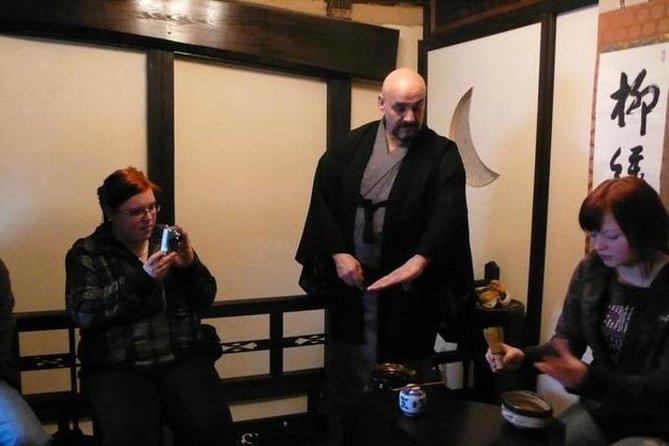
A particularly useful feature is the hands-on portion. You do not only watch the tea master; you also get to prepare matcha yourself. That can help the lesson stick, especially if matcha is new to you. One person who had never been keen on matcha found that learning to make it changed their mind, which points to the value of trying it in a guided setting rather than judging it from a ready-made cup.
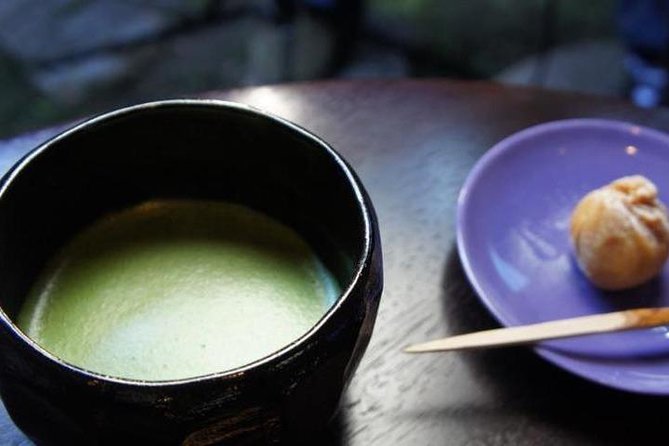
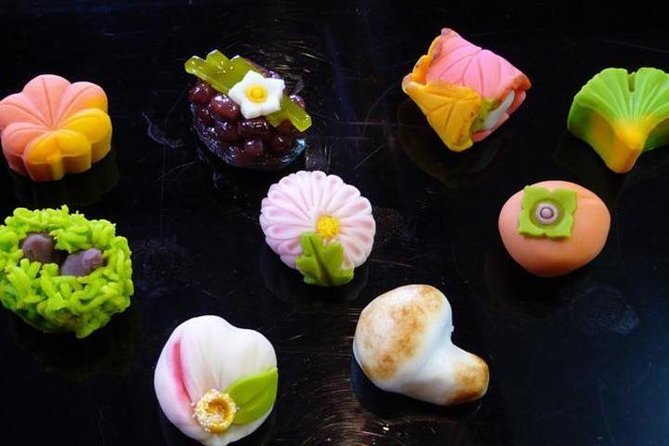
You’ll also sample traditional sweets from Kyoto’s well-known sweet makers. Tea and sweets belong together in the ceremony, and tasting them gives you a fuller sense of the experience than a demonstration alone. The matcha is Randy Sensei’s original Kyoto-grown blend. If you enjoy food experiences that explain what you are tasting, this pairing is one of the session’s strongest draws.
A group photo is included, giving you a simple memento without needing to arrange one yourself. The maximum group size is 25. That is large enough that you may share the host’s attention, but still small enough for a focused activity rather than a crowd-sized presentation. If you want a private lesson or a very intimate gathering, check whether a group discount or another arrangement suits your plans before booking.
The chair-seated format matters
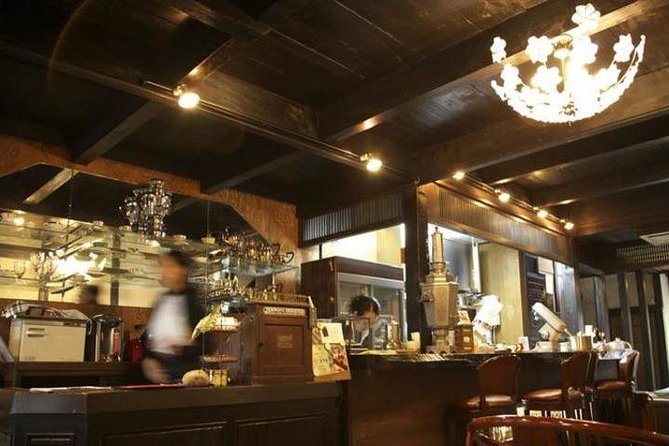
Some people picture a tea ceremony as sitting on tatami mats, perhaps at a low table. That is not the arrangement here. You are not seated on tatami or at low tables; the experience uses benches or chairs. One person found the room small and the seating less traditional than expected.
There are two sides to that. Chair seating can make the ceremony more comfortable if kneeling or sitting on the floor is difficult. But if your main reason for booking is to experience a traditional tatami-room setting, this format may not meet that expectation. The ceremony’s ryurei style is formal, but the room and seating are not necessarily the image you have in mind from photographs of floor-based tea gatherings.
The townhouse is described as small, so expect a close indoor setting rather than a spacious cultural venue. That may feel personal, though it can also feel cramped depending on the group. With up to 25 people, your experience of the space will depend partly on how many are booked for your session.
Is $56.34 good value?
At $56.34 per person, this is more than a simple cup of tea, but the price includes a tea ceremony with a master, Kyoto-grown matcha, traditional sweets, a hands-on chance to make matcha, and a group photo. The 90-minute length also gives the host time to explain the custom rather than racing through a brief demonstration.
I see the best value here for someone who wants context and participation. You are paying for instruction and a guided cultural experience, not just for refreshments. If you already know the basics of tea ceremony and mainly want an elaborate room or a long, highly technical lesson, the value may feel less compelling, especially given the compact venue and chair seating.
Group discounts are available, though the specific discount is not stated. The activity is booked, on average, 61 days in advance, so it is sensible to plan ahead if this is a priority for your Kyoto visit. The confirmation is provided within 48 hours of booking, subject to availability.
Transportation and kimono are not included. You’ll need to get yourself to the meeting point, ran Hotei at 64 Kamikawaracho in Nakagyo Ward. The activity ends there as well. A mobile ticket is offered, which keeps the ticket side simple, but allow time to find the townhouse and arrive ready for a scheduled session.
More Kyoto tours in Kyoto:
- PERFECT KYOTO 1-Day Bus Tour
★ 5.0 · 13,518 reviews - Kyoto: Fushimi Inari, Kinkakuji, Bamboo Grove 1 Day Bus Tour
★ 4.8 · 4,316 reviews - Kyoto Geisha Walking Tour: Gion District & Hidden Gems
★ 4.7 · 3,273 reviews - Kyoto: Gion Magical Night Walking Tour with Geisha Trivia
★ 4.9 · 2,393 reviews
Who will enjoy this tea ceremony
I would recommend this experience if you are curious about Japanese tea culture but want more than a quick tasting. The combination of explanation, sweets, and preparing your own matcha gives you several ways to engage with the custom. It should also suit visitors who value learning from a specialist and are open to a contemporary room setup.
It can work well for newcomers. You do not need to know the rules in advance; learning the etiquette is part of the activity. The practical format also means that people who prefer not to sit on the floor may find it more comfortable than a ceremony that requires tatami seating.
On the other hand, consider your expectations before you book. If you want an austere, floor-seated tea room experience, you may be disappointed by the chairs or benches and the small space. The ceremony is presented as a traditional practice, but the seating is a notable departure from the setting some people associate with tea ceremony.
The feedback around this experience has been strongest on the teaching, matcha, and sweets. Those are the elements I would put at the top of your reason-to-go list. The room and seating are the main caveats, so decide which matters more to you: a clear, participatory introduction or a particular architectural and seating style.
Booking and planning tips
The meeting point is ran Hotei, 64 Kamikawaracho, Nakagyo Ward, Kyoto, postal code 604-8374. The venue is near public transportation, but transportation itself is not included. Because the tour is only about 90 minutes, it can fit into a day of sightseeing without taking up a full morning or afternoon.
Most people can participate, but the supplied information does not specify particular access arrangements beyond the chair or bench seating. If you have a specific mobility need, confirm directly before you book rather than assuming the setup will work for you.
The activity has free cancellation up to 24 hours before its start time. Cancellations made later are not refunded, and changes made within 24 hours are not accepted. Those cutoffs use local time in Kyoto, so keep the time difference in mind if you are arranging plans from abroad.
Should you book it?
Book this if you want a clear, hands-on introduction to Kyoto tea ceremony, with a specialist explaining ryurei and a chance to make matcha yourself. The sweets and Kyoto-grown tea add welcome substance, and chair seating may be a practical advantage.
Skip it if a tatami room and floor seating are central to the experience you want. The townhouse is small, and the format is not designed around sitting on the floor. For most curious first-timers, though, the balance of teaching, tasting, and participation makes this a worthwhile way to spend an hour and a half in Kyoto.
FAQ
How long does the tea ceremony experience last?
It lasts approximately 1 hour and 30 minutes.
How much does the experience cost?
The listed price is $56.34 per person. Group discounts are available, but the discount amount is not specified.
What is included in the price?
The experience includes a tea ceremony with a tea master, Randy Sensei’s original Kyoto-grown matcha, traditional sweets from Kyoto sweet makers, a chance to make your own bowl of matcha, and a group photo.
Where does the experience start and end?
It starts and ends at ran Hotei, 64 Kamikawaracho, Nakagyo Ward, Kyoto, 604-8374, Japan.
Will I sit on tatami mats?
No. Participants are not seated on tatami mats or at low tables. The seating is on chairs or benches.
How many people can join the activity?
The maximum group size is 25 people.
Can I cancel for a refund?
You can cancel for a full refund up to 24 hours before the experience starts. Cancellations made less than 24 hours before the start time are not refunded.
Newly added in Kyoto
- Uji: Private immersion into Kyoto’s tea and reglious culture★ 5.0 · 17 reviews
- Whisk Your Own Matcha: A Zen Matcha Experience at Temple★ 3.6 · 7 reviews
- Kyoto tea town for matcha lovers★ 5.0 · 16 reviews
- Treasures of Kyoto: Gion & historical Walking Tour★ 5.0 · 6 reviews
- Kyoto Matcha Green Tea Tour★ 4.5 · 23 reviews
- Uji and Wazuka Matcha Farm Half Day Private Guided Tour★ 5.0 · 21 reviews
- Uji Tea Ceremony and UNESCO Heritage Walking Tour★ 5.0 · 20 reviews
- Utilising upcycled Matcha! Creating matcha incense (Uji, Kyoto)★ 5.0 · 6 reviews
Kyoto Tea Ceremonies, compared.

Tea Ceremony in a Traditional Tea House in Kiyomizu
Read our review →

World Heritage Kyoto & Nara Uji Authentic Matcha Experience
Read our review →

Arashiyama Bamboo Forest, Monkeys, Matcha & Temple Tour
Read our review →
Tea Museum Tickets and Matcha Grinding Experience
Read our review →Browse the lists this tour appears in