
Reviewed · KYOTO TEA CEREMONIES
Elegant Tea Ceremony While Wearing Kimono Experience in Kyoto
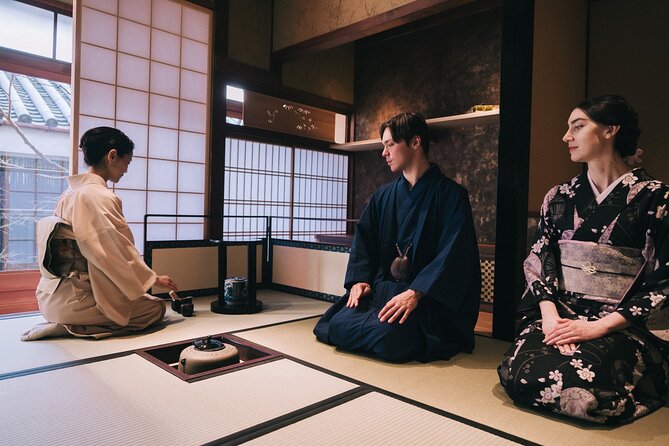
The pleasure here begins before the tea: you choose a kimono, get help putting it on, and step into a quiet tea room close to Kyoto’s famous food market. You’ll make your own matcha with a bamboo whisk and taste traditional sweets from a confectioner with a century of history.
I especially like the hands-on tea preparation and the option to add calligraphy, gold leaf art, or a guided Nishiki walk. One consideration: this is a compact cultural introduction, not a long study of tea ceremony, and the room and nearby market can feel crowded on weekends and holidays.
What makes this Kyoto experience worth considering
- Kimono dressing is part of the visit: Staff help you dress, and women can have their hair styled at no extra charge.
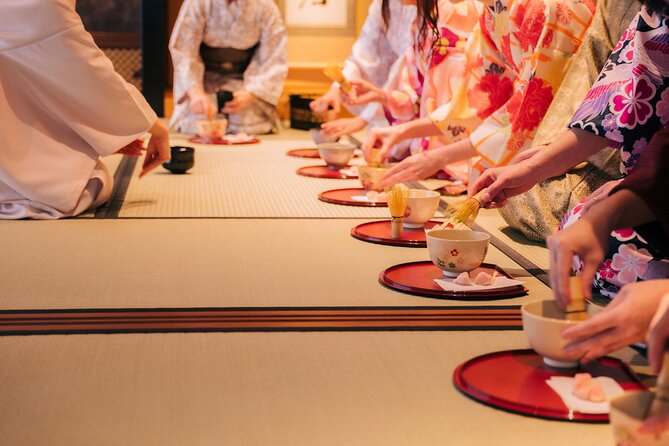
- You prepare your own matcha: First watch a demonstration, then use a bamboo whisk yourself.
- The sweets have a local story: The wagashi is supplied by a confectioner that has been making traditional sweets for 100 years.
- Choose a second activity: Add brush calligraphy, a gold-leaf plate workshop, or a guided walk around Nishiki Market.
- It’s a small-group visit: The maximum group size is 10, with English guidance throughout.
A tea room just off Nishiki Market
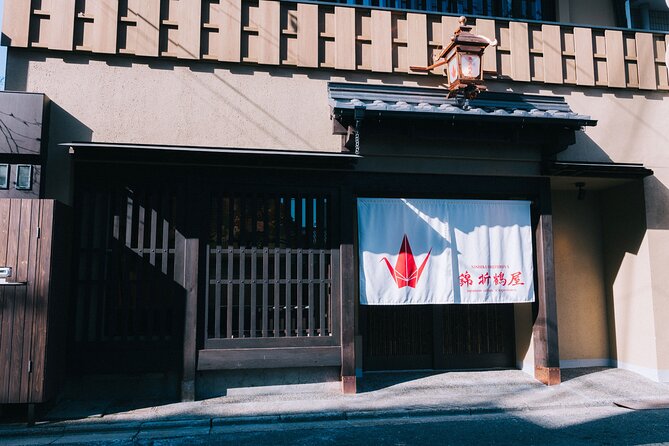
Nishiki Orizuruya sits at 452 Jūmonjichō in Nakagyo Ward, about a minute’s walk from Nishiki Market. That location makes the ceremony easy to pair with a market visit, but the tea room offers a marked change of pace from the busy shopping street nearby.
The activity is guided in English, and the tea master’s explanation can make the ceremony more meaningful than simply watching someone prepare a bowl of tea. Ruriko is one host whose explanations have been especially appreciated, while Lina has led the market walk. Names and assignments can vary, so treat those as familiar examples rather than guaranteed hosts.
The group limit of 10 helps keep the session personal. You can ask questions, see the demonstration clearly, and get help with your kimono without being lost in a large tour group. Still, this is a popular central Kyoto activity, and the area may be crowded during weekends, holidays, and special events.
More tea ceremonies in Kyoto:
- Kyoto: Tea Ceremony in a Traditional Tea House in Kiyomizu
★ 4.9 · 3,519 reviews - Kyoto: Tea Ceremony Ju-An at Jotokuji Temple
★ 4.9 · 3,207 reviews - Kyoto: 45-Minute Tea Ceremony Lesson Experience
★ 4.3 · 2,378 reviews
Getting dressed is half the fun
The first part of the visit is choosing and putting on a kimono. Staff help with dressing, and women can have their hair styled at no extra cost. The care given to the clothing and accessories is a major part of the appeal: you’re not just borrowing a costume and being sent on your way, but getting help to put together a traditional look.
The selection is broad for women, while men may find the choices less varied. The staff have also been accommodating with different body sizes. If you have a particular need, it’s sensible to check what can be accommodated before booking, rather than assume that every garment or arrangement will suit everyone.
The kimono also makes this a natural occasion for photographs. Staff have been willing to help take pictures, and the setting gives you time to enjoy the moment rather than rush through a quick snapshot. Some participants have been allowed to keep their kimono on after the ceremony and walk around the neighborhood, in some cases until 6 p.m. Confirm this on the day before planning your afternoon around it.
Watching the tea master, then whisking your own matcha
Once dressed, you enter the tea room for the ceremony. The tea master demonstrates the preparation and explains the customs in English. You then make your own matcha with a bamboo whisk, a small but satisfying shift from watching to doing.
The ceremony is a chance to notice how much care goes into a simple bowl of tea. The deliberate movements and calm setting offer a useful contrast with the busy market streets just outside. A good explanation also helps you understand that the steps have meaning, rather than feeling like a series of gestures to copy.
The level of detail can vary. Some sessions include a clear account of the ceremony’s customs and significance; others may give less background than you hoped. If you’re keen to understand the meaning behind each step, ask questions as the tea master explains the process. This is an introductory session, so don’t expect an extensive lecture on Japanese tea culture.
You’ll taste matcha with seasonal wagashi, traditional Japanese sweets from a Kyoto confectioner with 100 years of history. The pairing is part of the lesson: the sweet and the tea are enjoyed together, not treated as unrelated refreshments. If you have an allergy, staff have accommodated dietary concerns in the past, but share the information before the tasting and confirm what is possible.
Choose calligraphy, gold leaf, or a Nishiki walk
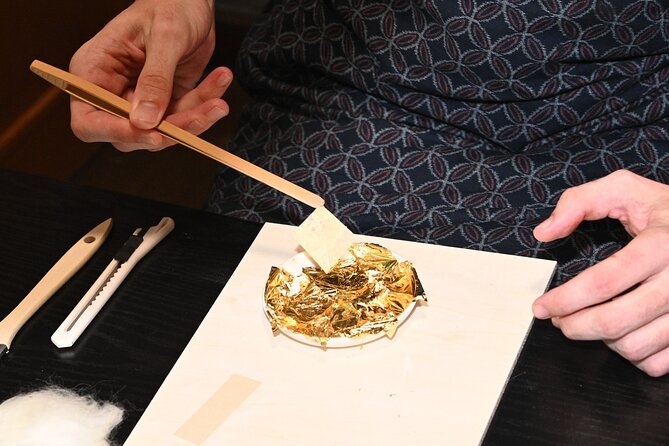
The basic tea ceremony lasts about 90 minutes. You can add one of three activities, each giving the visit a different focus. The full activity is listed at approximately two and a half hours, though the chosen option affects the schedule.
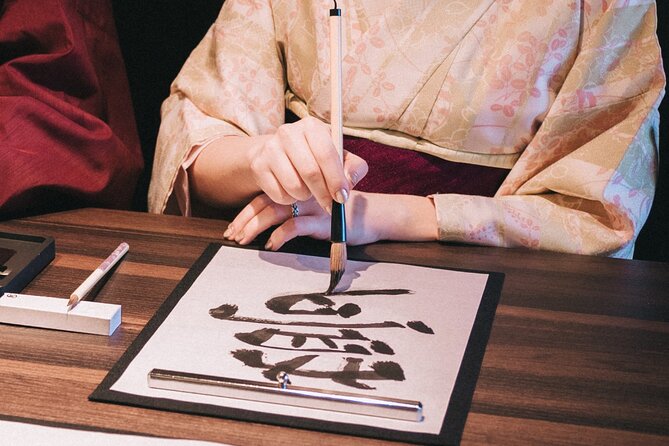
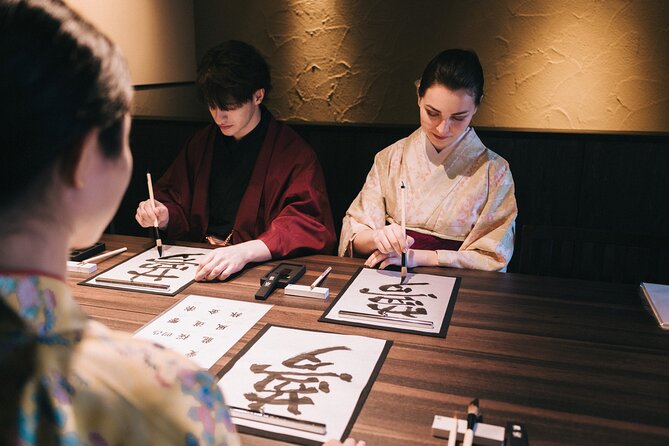
Calligraphy follows the tea and sweets. You learn to use brush and ink to write a favorite kanji on washi paper. It’s a good choice if you want to take home something personal and made by your own hand. The activity is about trying the art, not producing a polished piece, so go in ready to enjoy the process rather than judge your handwriting.
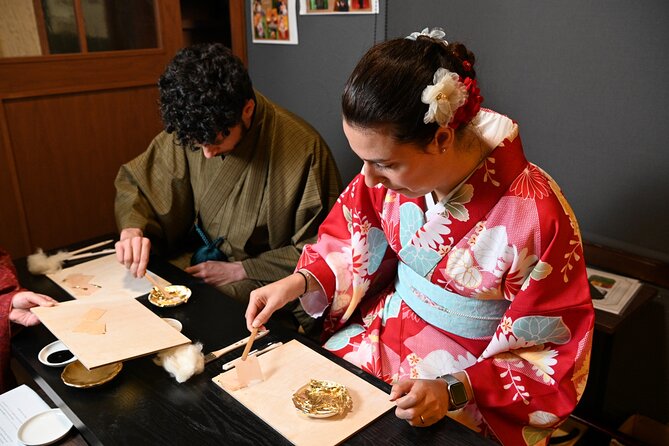
Gold leaf art is a hands-on workshop where you decorate a small plate with high-purity gold leaf. It’s listed at 130 minutes and gives you a tangible souvenir to take home. The fine material makes the task a different sort of challenge from calligraphy: you’re working with delicate gold leaf, not just watching a demonstration.
The Nishiki walking tour lasts 150 minutes and pairs the tea ceremony with a guided look at the market and surrounding streets. Nishiki is often called Kyoto’s Kitchen, and the tour also takes in local shrines and historic shops. If you want the ceremony to connect with the food culture and everyday streets around it, this is the most place-focused option. It also means more time on your feet and in a busy area.
Choose based on what you want to remember. Calligraphy suits you if you like the idea of a personal paper keepsake. Gold leaf offers a small decorated plate. The walking tour gives you context for the market and nearby neighborhood rather than an object to take home.
More kimono rentals and experiences in Kyoto:
- Kimono Tea Ceremony at Kyoto Maikoya, NISHIKI
★ 5.0 · 911 reviews - Kyoto: Kimono Rental with Hairstyling and Accessories
★ 4.8 · 653 reviews - Kyoto: Kimono Tea Ceremony at Orizuruya Gion
★ 4.9 · 618 reviews - KYOTO Tea Ceremony with kimono near by Imamiya Jinjya Shrine
★ 5.0 · 343 reviews
What the price includes, and how to judge the value
At $50.58 per person, the price covers more than a short tea tasting. Every plan includes kimono rental, and women receive free hair styling. You also get English guidance, the tea ceremony, matcha preparation, and traditional sweets; the selected add-on provides another activity.
That combination makes the price reasonable if you want several cultural elements in one booking. Kimono dressing, hair styling, tea, and a workshop or market walk would take more planning to arrange separately. You’re also paying for staff assistance and a small-group format, not simply a bowl of matcha.
Value depends on your expectations. If your main goal is a deep, extended study of tea ceremony, you may want a more specialized class. If you want a taste of traditional dress, tea, and another Kyoto art or neighborhood, this offers a convenient way to fit them together. The calligraphy and gold leaf versions include a hands-on activity, while the market option adds a guided walk.
The experience is listed at approximately two hours and 30 minutes, but individual components differ: the tea ceremony is about 90 minutes, gold leaf is listed at 130 minutes, and the Nishiki walk at 150 minutes. Keep that in mind when arranging the rest of your day.
Practical details that can shape your visit
Arrive at least 10 minutes before your reservation. The meeting point is Nishiki Orizuruya, and the activity ends there. The location is near public transportation, and its short walk from Nishiki Market makes it easy to combine with time in central Kyoto.
Children aged 5 and older can join, but there is no child discount. The small group size can make the ceremony manageable for a family, and staff have been kind with children. The kimono and hair styling may be a particular draw for younger participants, while the quiet ceremony asks everyone to slow down and follow the demonstration.
Sitting on the floor may be part of the tea-room setting. A chair has been provided for someone who could not sit on the floor, but that should not be treated as a guaranteed arrangement. If this matters to you, check with the provider before your visit.
The activity can be cancelled with a full refund in severe weather or a natural disaster such as a typhoon. Otherwise, the booking is non-refundable and cannot be changed, so be certain of your plans before paying.
Who should book this experience?
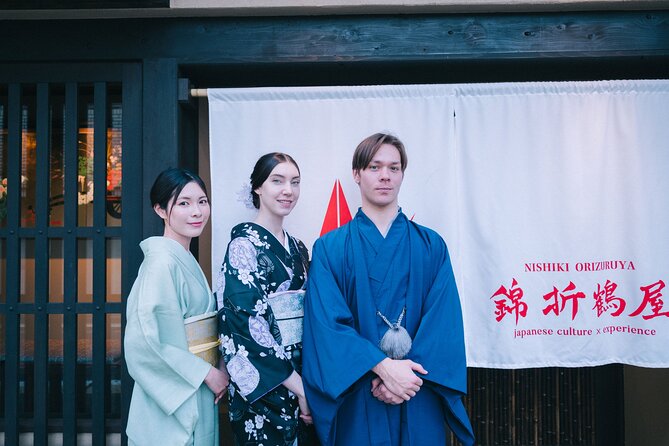
I’d choose this for a first visit to Kyoto if you want to take part in traditional arts without committing to a full day of instruction. The ceremony, kimono dressing, and choice of add-on make a tidy introduction, and the English guidance helps you follow what is happening.
It’s especially suited to families, couples, and small groups who enjoy dressing up, taking photos, or trying a hands-on activity together. The market walk is the best fit if you want a broader sense of the neighborhood. Pick calligraphy or gold leaf if you’d rather stay focused on making something.
If you’re seeking a highly technical tea lesson, or you dislike formal clothing and posed photos, this may not be the right match. But for a measured, welcoming encounter with Kyoto’s tea culture, it offers more than a quick ceremonial demonstration.
Should you book the Kyoto tea ceremony?
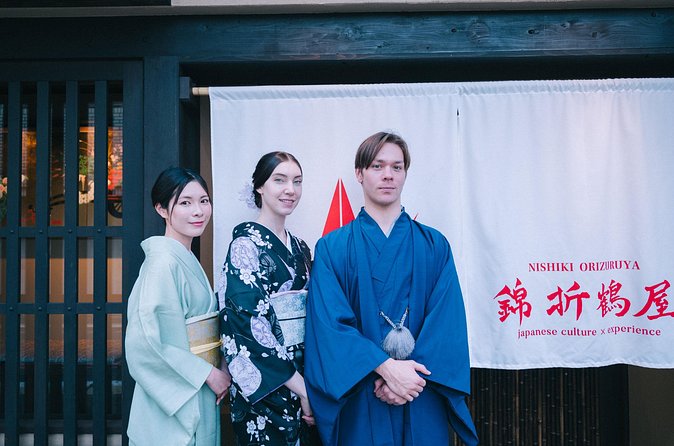
Book it if the combination is what appeals: kimono, hair styling for women, a guided tea ceremony, and a second activity that suits your interests. The small group and hands-on matcha preparation make the ceremony feel participatory, while the central location keeps the day easy to plan.
Before booking, decide which add-on you want and allow enough time for its stated duration. If sitting on the floor is difficult, ask about seating in advance. This is a good-value cultural stop for visitors who want to try several Kyoto traditions in one visit, as long as they’re comfortable with an introduction rather than an intensive course.
FAQ
How long does the experience take?
The overall activity is listed at approximately two hours and 30 minutes. The tea ceremony is about 90 minutes, while the gold-leaf activity is listed at 130 minutes and the Nishiki walking tour at 150 minutes.
What is included in every plan?
Every plan includes kimono rental, English guidance, and the tea ceremony. Women also receive free hair styling.
Can I make my own matcha?
Yes. You’ll watch a tea ceremony demonstration and then prepare your own matcha using a bamboo whisk.
What sweets are served?
The tea is paired with traditional wagashi from a confectioner that has been making sweets for 100 years. The sweets are seasonal.
What activities can I add after the tea ceremony?
You can choose Japanese calligraphy, a gold-leaf workshop, or a guided walk through Nishiki Market and the surrounding area.
Where does the activity start and finish?
It starts at Nishiki Orizuruya, 452 Jūmonjichō, Nakagyo Ward, Kyoto, and ends back at the same meeting point.
Can children join?
Children aged 5 and older may join. There is no child discount.
How many people can take part?
The maximum group size is 10 people.
Can I cancel or change my booking?
The experience is non-refundable and cannot be changed. It is cancelled with a full refund in severe weather or a natural disaster such as a typhoon.
Newly added in Kyoto
- Uji: Private immersion into Kyoto’s tea and reglious culture★ 5.0 · 17 reviews
- Whisk Your Own Matcha: A Zen Matcha Experience at Temple★ 3.6 · 7 reviews
- Kyoto tea town for matcha lovers★ 5.0 · 16 reviews
- Treasures of Kyoto: Gion & historical Walking Tour★ 5.0 · 6 reviews
- Kyoto Matcha Green Tea Tour★ 4.5 · 23 reviews
- Uji and Wazuka Matcha Farm Half Day Private Guided Tour★ 5.0 · 21 reviews
- Uji Tea Ceremony and UNESCO Heritage Walking Tour★ 5.0 · 20 reviews
- Utilising upcycled Matcha! Creating matcha incense (Uji, Kyoto)★ 5.0 · 6 reviews
Kyoto Tea Ceremonies, compared.

Tea Ceremony in a Traditional Tea House in Kiyomizu
Read our review →

World Heritage Kyoto & Nara Uji Authentic Matcha Experience
Read our review →

Arashiyama Bamboo Forest, Monkeys, Matcha & Temple Tour
Read our review →
Tea Museum Tickets and Matcha Grinding Experience
Read our review →Browse the lists this tour appears in