
Reviewed · KYOTO TEA CEREMONIES
Kimono Tea Ceremony at Kyoto Maikoya, Karasuma Shijo
A kimono changes the feel of a tea ceremony from something you watch into something you take part in. At Kyoto Maikoya, staff help you dress and style your hair before a tea master leads you through the preparation and etiquette of matcha.
I like two things here: you get to make your own bowl of matcha, not just observe, and the kimono dressing gives the ceremony a more personal, memorable setting. The small-group format is intended to keep the session relaxed, with a maximum of four participants.
One thing to weigh: the schedule moves through several stages in about 90 minutes, so it is a structured introduction rather than a long, quiet tea gathering. There has also been at least one report of a larger group than expected, so confirm the group size if that matters to you.
At a glance
- Kimono and hair styling are included: Staff help you choose an outfit and get dressed before the ceremony.
- You prepare your own matcha: The tea master explains the steps and guides you as you whisk.
- The ceremony has a cultural focus: Expect explanations of the tools, gestures, history, and etiquette.
- Tea and snacks are part of the session: You taste the matcha you make with traditional snacks.
- The meeting point is near Karasuma Shijo: The session starts and ends at Maikoya in Shimogyo Ward.
- Plan for about 90 minutes: The activity is not suitable for children under six, and tripods are not allowed.
From kimono fitting to tea bowl
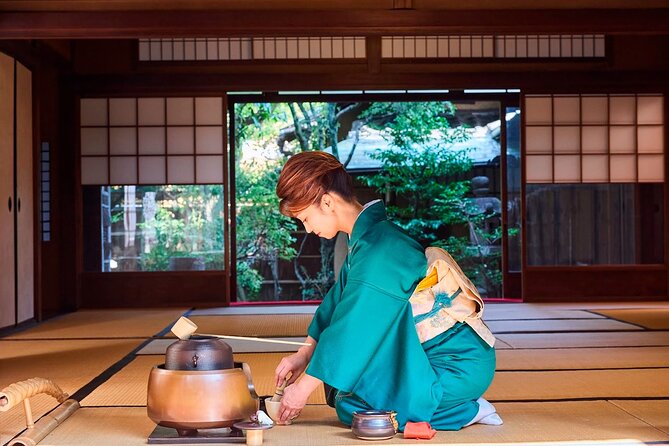
This activity brings together two familiar Kyoto images, a kimono and a matcha ceremony, but the value is in how they connect. You are not simply dressing up for a photograph, nor watching a demonstration from the sidelines. You learn a little about the clothing and the tea, then take part in the central action by preparing your own bowl.
The visit begins at Kimono Tea Ceremony Maikoya Karasuma Shijo, at 220 Itoyachō in Kyoto’s Shimogyo Ward. The activity ends at the same meeting point, so you do not need to arrange a separate return transfer. Transportation and hotel pickup are not included.
The full session lasts about an hour and a half. That is a useful fit between larger Kyoto sights: enough time for dressing, instruction, and tea, without taking up half a day. The pace is organized, though, and you should not expect a long stretch of unhurried contemplation.
More tea ceremonies in Kyoto:
- Kyoto: Tea Ceremony in a Traditional Tea House in Kiyomizu
★ 4.9 · 3,519 reviews - Kyoto: Tea Ceremony Ju-An at Jotokuji Temple
★ 4.9 · 3,207 reviews - Kyoto: 45-Minute Tea Ceremony Lesson Experience
★ 4.3 · 2,378 reviews
Choosing a kimono and getting dressed
A selection of kimonos is available, and staff help you choose and put one on. Simple hairstyling is included, too. These details make the activity more than a tea lesson, especially if you want a cultural photograph or simply want to know how the clothing changes the mood of the ceremony.
The preparation is one of the parts participants praise most. The dressing staff are described as friendly and skilled, and the outfit, hair, shoes, and accessories can make the transition into the ceremony feel special. One practical caveat: the kimonos are selected for a visitor activity, not presented as expensive heirloom garments. If you expect a bespoke costume fitting, adjust your expectations. The goal is to help you take part and look the part, not to provide a private wardrobe consultation.
Allow yourself to be guided through the process. Choosing an outfit is part of the fun, but the staff are there to help with the dressing and styling. If your priority is the tea lesson rather than the costume, you can still enjoy the ceremony, though the dressing portion is a significant part of the appeal.
Learning what happens in a tea ceremony
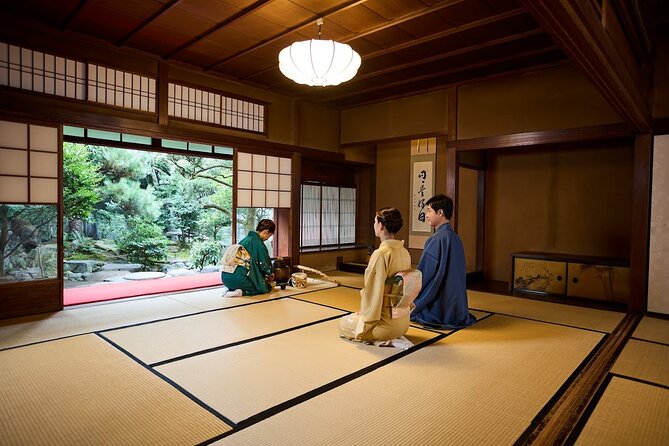
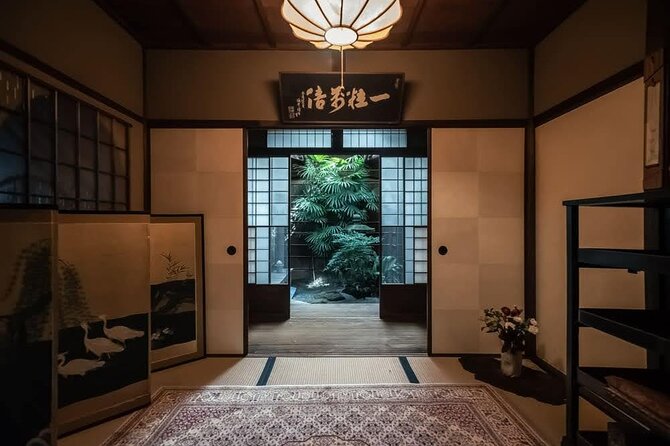
Once dressed, you join the tea ceremony in a tatami room. A professional tea master leads the session, explaining the tools, movements, and customs involved. The focus is not only on what to do, but on why certain gestures and manners matter.
That context helps make the ceremony legible. Without an explanation, the measured movements can seem like a sequence of formal steps. With guidance, you can see how attention, hospitality, and respect shape the preparation and serving of tea. The session also introduces the history of tea ceremony and its connection to Kyoto’s cultural heritage.
The teaching style is meant to be approachable, not stiff. The tea master explains proper etiquette and may bring humor to the lesson, while staff help make the activity accessible to an international audience. Hosts named Yuki and Miki have led sessions, but the person guiding your visit may be someone else. The important point is that the format includes explanation in addition to demonstration.
You will have a chance to observe the tea master before making matcha yourself. Watch the way the tools are handled and how each movement fits into the ritual. The lesson gives you a basic framework for understanding the ceremony, rather than claiming to make you an expert in a single visit.
Making and tasting your own matcha
The hands-on part is the heart of the activity. With the tea master’s help, you use the utensils to prepare a bowl of matcha. You are guided through the process rather than left to guess, which makes this a good introduction even if you have never handled the equipment.
The taste is part of the lesson, too. You drink the green tea you have prepared and enjoy it with traditional snacks. If you already like matcha, you may appreciate the chance to taste it in a setting where preparation and etiquette are explained. If you are unsure about the flavor, the ceremony still gives you a useful way to encounter it, though the tea itself is central to the activity.
You do not need to arrive with prior knowledge. The point is to learn the basic sequence and try it for yourself. That modest, practical goal is what makes the session worthwhile: you leave with a clearer sense of how matcha is prepared and how the ceremony differs from simply ordering a cup at a café.
More kimono rentals and experiences in Kyoto:
- Kimono Tea Ceremony at Kyoto Maikoya, NISHIKI
★ 5.0 · 911 reviews - Kyoto: Kimono Rental with Hairstyling and Accessories
★ 4.8 · 653 reviews - Kyoto: Kimono Tea Ceremony at Orizuruya Gion
★ 4.9 · 618 reviews - KYOTO Tea Ceremony with kimono near by Imamiya Jinjya Shrine
★ 5.0 · 343 reviews
The group size and the pace
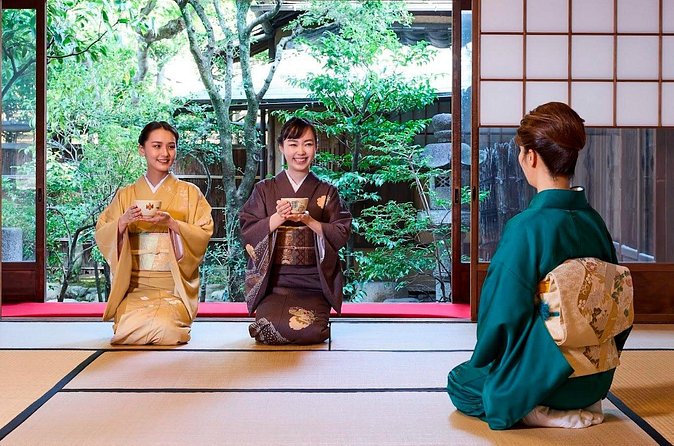
The activity is listed with a maximum of four participants, a small group size that should make it easier to see the demonstration and ask questions. There is a detail worth checking if group size is important to you: one participant described arriving in a much larger group, then having the arrangement corrected to four. That appears to have been an exception, but it is a reason to confirm the expected group size with the operator before you book.
The pace is planned and efficient. Dressing, the tea lesson, and your own preparation all fit into roughly 90 minutes. That structure suits a busy Kyoto schedule, but it can feel quick if you hoped to linger over every part of the ceremony. Think of it as a compact cultural introduction, not an extended retreat.
Some of the session is social and photo-friendly. You will be wearing a kimono, and there are opportunities for pictures, but photography and video may be limited during the ceremony. Follow the tea master’s directions about when it is appropriate to record. Tripods are not allowed.
What the price covers
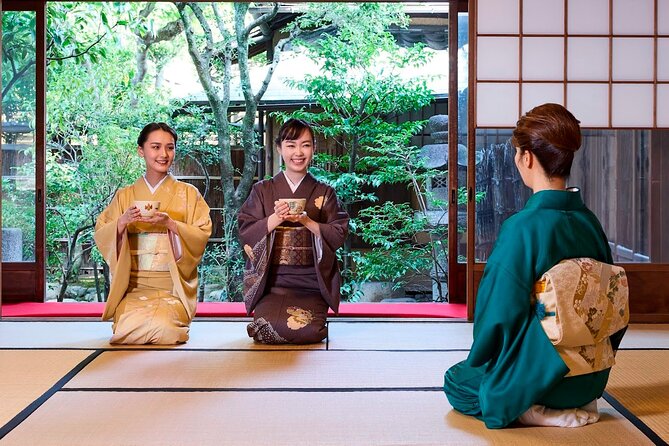
At $65.39 per person, this is a paid cultural activity rather than a low-cost tea tasting. The price includes the kimono costume, simple hairstyling, green tea, utensils, and snacks. It also covers the staff time involved in helping you dress and teaching the ceremony.
The value depends on what you want from the visit. If you are interested in both kimono dressing and a guided tea lesson, combining them in one booking makes practical sense. You are paying for a sequence of activities and instruction, not just a bowl of matcha. If you mainly want to taste tea or watch a ceremony, the cost may feel high for a 90-minute session.
I would consider it especially good value for a first visit to Kyoto, a family outing with older children, or a short cultural activity between sightseeing stops. It also works for a solo visitor: you can join the small group, learn at your own pace, and take part without needing to bring a companion.
Who should book this Kyoto activity
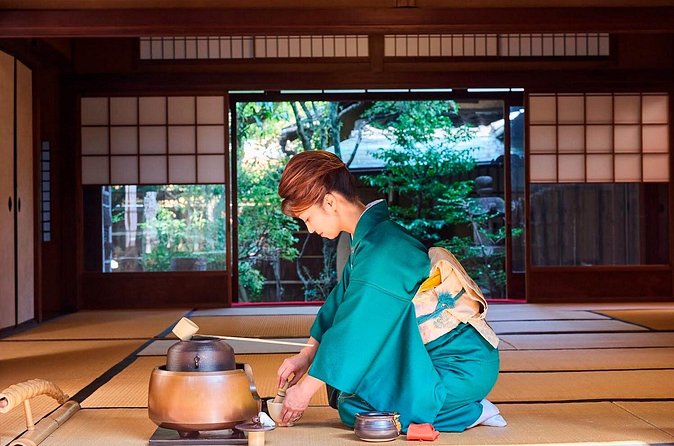
This session suits people curious about Japanese customs who want more than a quick photo opportunity. The dressing and ceremony make it a natural choice for a couple, friends, or family members who enjoy hands-on activities. It can also appeal to people who do not usually drink matcha, since the kimono and the explanation are substantial parts of the visit.
Families should note the age rule: children under six are not permitted. A 13-year-old enjoyed the activity, but that does not guarantee every teenager will be interested. The session involves listening, following instructions, and taking part in a formal ritual, so consider your child’s patience and interest before booking.
If sitting on the floor is difficult, one participant found that small chairs were allowed. Since that arrangement is not promised in the activity details, ask the operator ahead of time if you need a seat. The ceremony takes place in a tatami room, and the format may involve sitting low to the floor.
Getting there and planning the visit
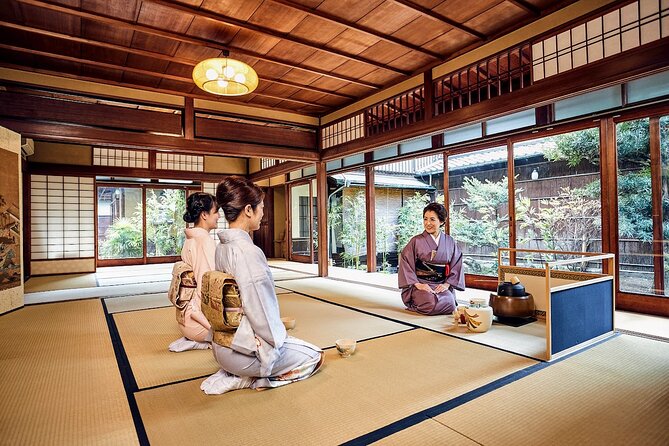
The meeting point is Maikoya Karasuma Shijo, 220 Itoyachō, Shimogyo Ward, Kyoto, 600-8432. The location is near public transportation. One person described it as an easy walk of about 25 minutes from Kyoto Station, but your route and travel time will depend on where you start, so check a map before setting out.
The activity ends back at the meeting point. There is no hotel pickup or drop-off, and transportation is not included. Book with enough time to reach the address without rushing; arriving flustered is not the best preparation for a ceremony built around calm attention.
You receive confirmation at booking, and the ticket is mobile. Free cancellation is available up to 24 hours before the start time for a full refund. Changes made less than 24 hours before the activity are not accepted, and cancellations inside that window are not refunded. The cutoff follows local time.
Should you book it?
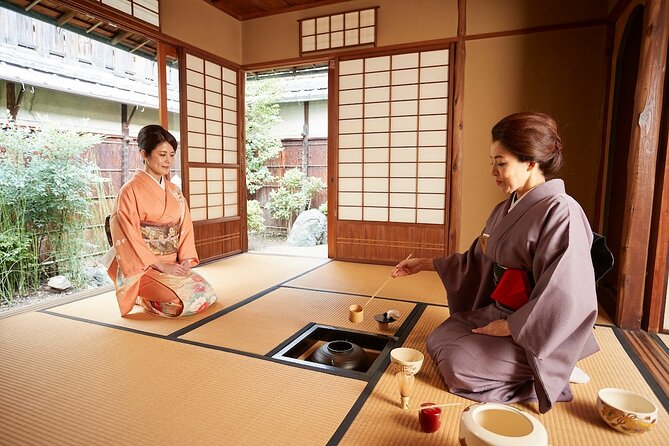
Book this if you want a compact, participatory introduction to matcha and like the idea of wearing a kimono while you learn. The combination is the strength: staff help you dress, a tea master explains the customs, and you prepare and taste your own bowl. At $65.39, it is easiest to justify when you value both the clothing and the instruction.
Skip it if you want a long, quiet ceremony, dislike structured group activities, or mainly want an inexpensive cup of tea. Before booking, confirm the group size if a very small session is essential, and ask about seating if sitting on tatami could be uncomfortable. For a first taste of Kyoto’s tea culture, this is a practical and engaging way to spend an hour and a half.
FAQ
How long does the kimono tea ceremony last?
The activity lasts about 1 hour and 30 minutes.
What is included in the price?
The price includes a kimono costume, simple hairstyling, green tea, utensils, and snacks. Transportation and hotel pickup or drop-off are not included.
Where does the activity begin and end?
It begins at Kimono Tea Ceremony Maikoya Karasuma Shijo, 220 Itoyachō, Shimogyo Ward, Kyoto. It ends back at the same meeting point.
Are children allowed to join?
Children under six are not permitted to take part.
How many people are in the group?
The activity is listed with a maximum of four participants. If the exact group size is important to you, confirm it with the operator before booking.
Can I take photos or videos during the ceremony?
Photo and video recording may be limited. Follow the tea master’s instructions about when recording is appropriate. Tripods are not allowed.
Can I cancel for a refund?
You can cancel at least 24 hours before the start time for a full refund. Cancellations or changes made less than 24 hours before the activity are not accepted for a refund or change.
Newly added in Kyoto
- Uji: Private immersion into Kyoto’s tea and reglious culture★ 5.0 · 17 reviews
- Whisk Your Own Matcha: A Zen Matcha Experience at Temple★ 3.6 · 7 reviews
- Kyoto tea town for matcha lovers★ 5.0 · 16 reviews
- Treasures of Kyoto: Gion & historical Walking Tour★ 5.0 · 6 reviews
- Kyoto Matcha Green Tea Tour★ 4.5 · 23 reviews
- Uji and Wazuka Matcha Farm Half Day Private Guided Tour★ 5.0 · 21 reviews
- Uji Tea Ceremony and UNESCO Heritage Walking Tour★ 5.0 · 20 reviews
- Utilising upcycled Matcha! Creating matcha incense (Uji, Kyoto)★ 5.0 · 6 reviews
Kyoto Tea Ceremonies, compared.

Tea Ceremony in a Traditional Tea House in Kiyomizu
Read our review →

World Heritage Kyoto & Nara Uji Authentic Matcha Experience
Read our review →

Arashiyama Bamboo Forest, Monkeys, Matcha & Temple Tour
Read our review →
Tea Museum Tickets and Matcha Grinding Experience
Read our review →Browse the lists this tour appears in