
Reviewed · KYOTO TEA CEREMONIES
2 Types of Japanese Sweets making and Tea Ceremony
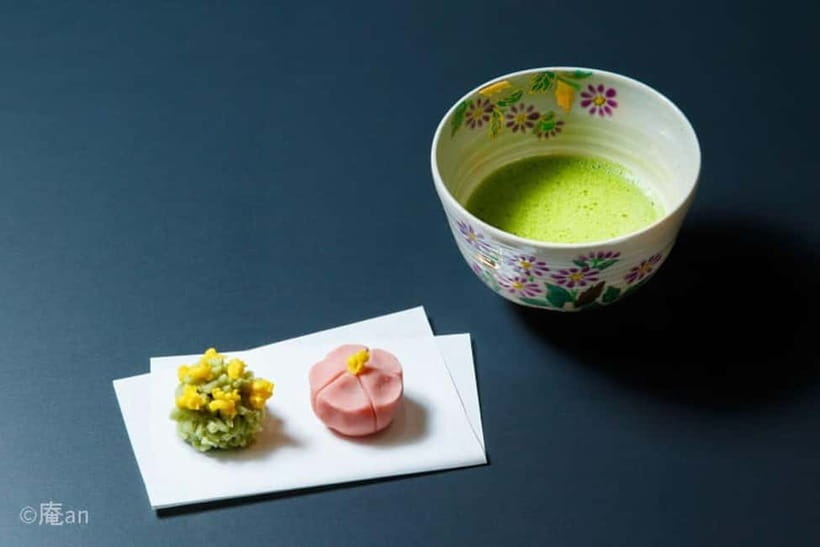
A lump of bean paste becomes a flower, a small seasonal sweet, or a sculpted mound in this hands-on Kyoto workshop. In 125 minutes, you make three sweets across two styles, then prepare matcha after a demonstration of how the tea is ground.
I like the mix of making sweets and preparing your own tea, and the use of Wasanbon sugar and bean paste from long-established Kyoto shops gives the session a clear link to local food traditions. The main caveat: the tea portion is a casual, explanatory experience, not necessarily the formal ceremony some people picture, and the room can feel like a classroom if the group is noisy.
At a glance
- Three sweets, two methods: Make dry, pressed Wasanbon ohigashi, then shape two seasonal nerikiri sweets from white or red bean paste.
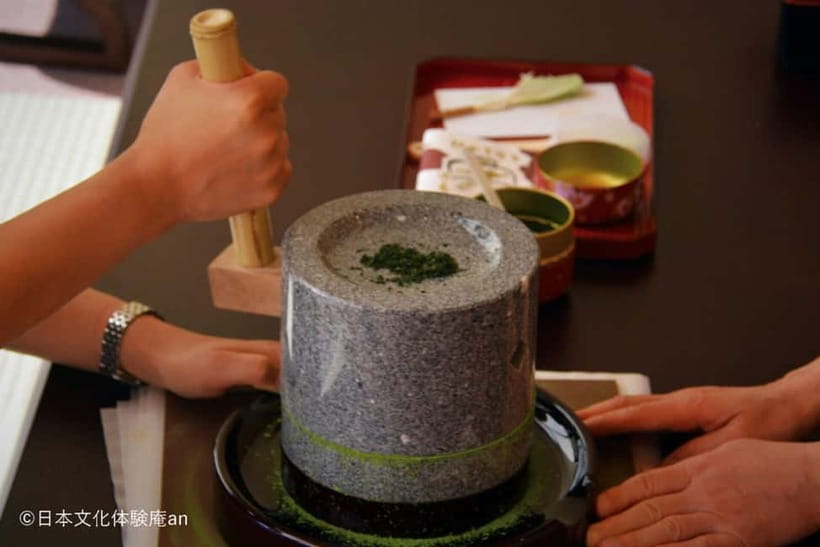
- Matcha from leaf to cup: Watch a grinding demonstration, then make your own tea as part of a relaxed tea experience.
- A compact Kyoto activity: The workshop lasts 125 minutes and starts a one-minute walk from Exit 1 of Gojo Station.
- Useful English support, not guaranteed fluency: Instruction is in Japanese, with English translation provided as much as possible. Contact the provider in advance if English support matters to you.
- A few small extras cost more: Coloring is 200 yen, a takeout box is 100 yen, and a completion certificate is 300 yen.
- Good value for a hands-on class: At $28 per person, the price covers the sweet-making and tea activities, rather than just a demonstration.
Three crafts in one Kyoto workshop
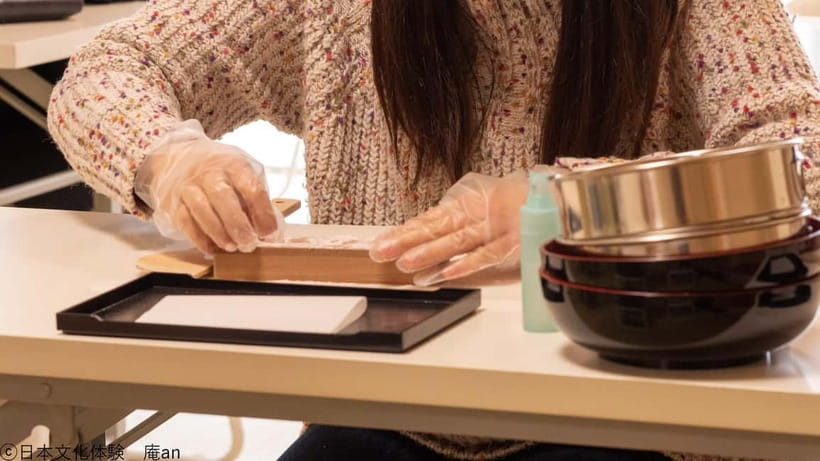
This experience combines three related activities: making ohigashi, shaping nerikiri, and preparing matcha. The sweets are not just a snack at the end. You handle the ingredients and take part in the process, which makes the workshop more engaging than a short demonstration.
The sweet-making uses two distinct techniques. Ohigashi is a dry-style sweet made with Wasanbon, a traditional Japanese sugar. Nerikiri uses white or red bean paste, which you shape into two sweets inspired by the season. The ingredients are a useful part of the story: the bean paste comes from long-established Kyoto shops, while the matcha is described as single-origin.
The class is also a practical introduction to the role of sweets alongside tea. You make the food, hear about the tea, and prepare a cup yourself. That combination gives you more to do than a standard tasting, though the experience is still a short introductory workshop rather than an in-depth course in Japanese confectionery or tea practice.
More tea ceremonies in Kyoto:
- Kyoto: Tea Ceremony in a Traditional Tea House in Kiyomizu
★ 4.9 · 3,519 reviews - Kyoto: Tea Ceremony Ju-An at Jotokuji Temple
★ 4.9 · 3,207 reviews - Kyoto: 45-Minute Tea Ceremony Lesson Experience
★ 4.3 · 2,378 reviews
The first sweet: Wasanbon ohigashi
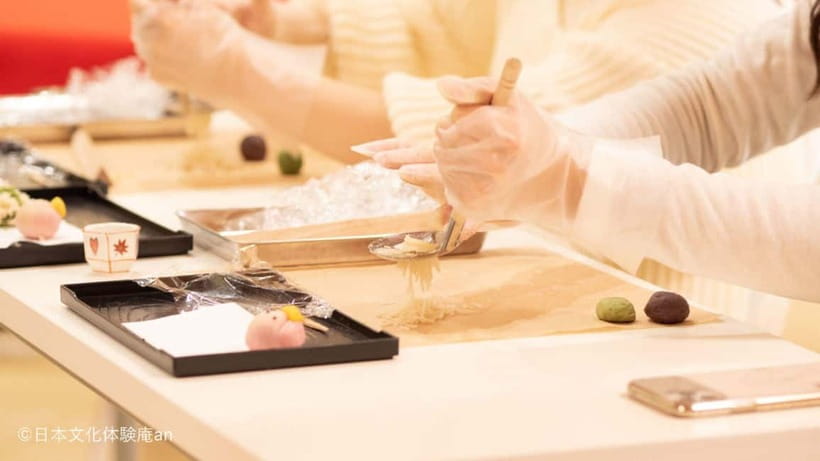
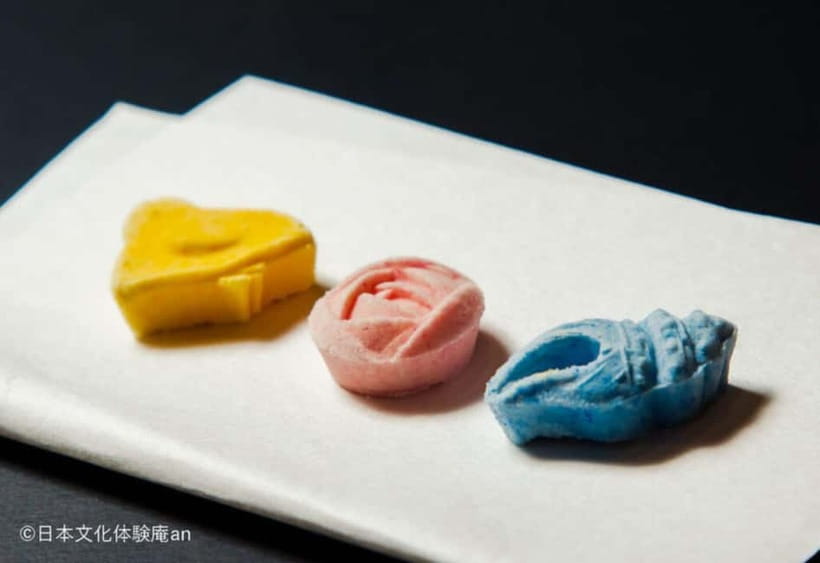
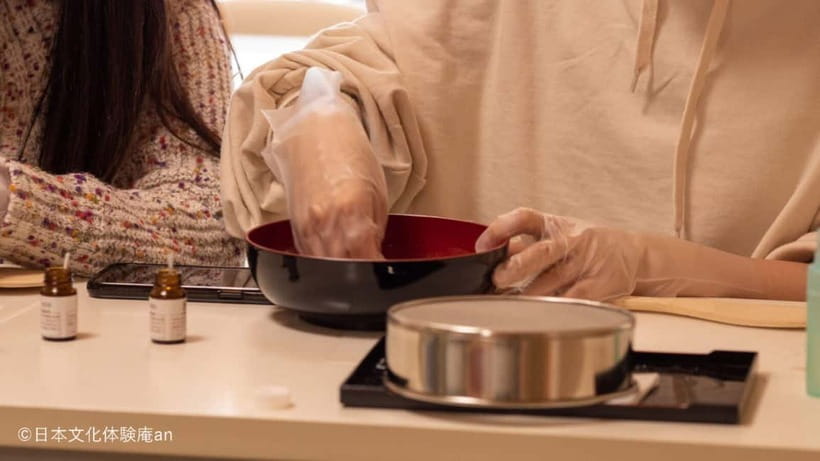
The workshop begins with an explanation of traditional Japanese sweets, followed by the making of ohigashi. This dry confection is made with Wasanbon, a traditional sugar valued for its fine texture and delicate sweetness. Here, the point is not only to taste it, but to see how a simple ingredient can be formed into a finished sweet.
You have about 20 minutes for this first activity before a break. That quick start gets your hands involved early and gives you a contrast with the softer, more sculptural nerikiri that follows. If you have never made Japanese sweets, this is a helpful way to see that wagashi includes more than the familiar bean-paste shapes found in shop windows.
The supplied details do not spell out the exact molds, tools, or finished designs used for ohigashi, so don’t expect a particular shape or a long technical lesson. Think of this part as a short, guided introduction to one traditional method. If you want to add color to your sweets, that costs an extra 200 yen.
Shaping two seasonal nerikiri
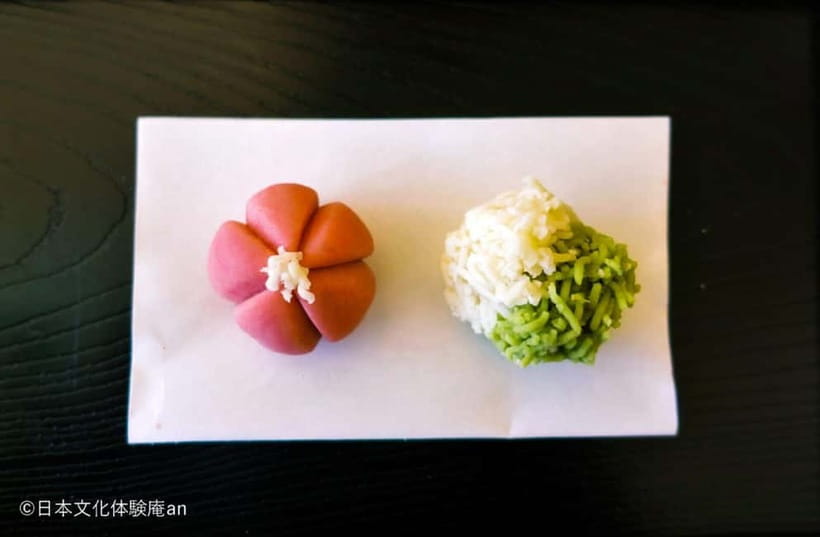
After the first sweet and a break, you make two nerikiri: one flower-shaped sweet and one called kinton nerikiri. Both are made from white or red bean paste, and the designs are intended to match the season. This is the most hands-on part of the class, since you are shaping the sweets rather than simply watching them being made.
Nerikiri is a good format for a short cultural workshop because the finished pieces can express a season or motif through their form. You don’t need to know the names of every flower or seasonal reference to enjoy the craft, but the instructor’s explanation can help you notice why the shapes matter. Instruction is in Japanese, and English translation is offered as much as possible. One session was translated throughout, while another instructor was described as having good English. If detailed explanations are important to you, contact the provider before booking.
The class schedule sets aside about 55 minutes for the two nerikiri activities, with a break after them. That gives you more time with the bean paste than with the ohigashi, but the class is still paced as a group activity. Don’t expect a private lesson or unlimited time to perfect each shape. The appeal is making the sweets yourself and seeing how different the two styles feel in your hands.
Matcha, made by you
The tea portion comes after a second break. The instructor explains tea, demonstrates grinding matcha, and then leads a casual tea experience in which you prepare your own cup. The matcha is single-origin, a detail that gives the tasting a more specific focus than a generic powdered tea demonstration.
It’s worth setting your expectations correctly. This is presented as a tea ceremony experience, but the format is informal and includes an explanation and the chance to make a cup of matcha yourself. One attendee expected a more traditional, formal ceremony and found the session closer to an informative demonstration followed by tea preparation. If your main goal is to study formal tea ceremony etiquette, this may not be the right class. If you want an accessible introduction to matcha and a chance to try making it, the format makes more sense.
The full schedule gives around 20 minutes to the tea explanation, grinding demonstration, tea activity, and photos. That’s enough for a taste of the subject, not a deep lesson. You then have time to eat and drink before leaving, so the experience ends with a chance to enjoy the sweets you have made.
More cooking classes in Kyoto:
- Ramen Cooking Class at Ramen Factory in Kyoto
★ 5.0 · 1,937 reviews - Sushi Making in Kyoto! Same-day bookings welcome!
★ 5.0 · 713 reviews - Kyoto: Ramen Cooking Class at a Ramen Factory with Souvenir
★ 4.9 · 532 reviews - Kyoto: Ramen, Gyoza, and Onigiri Cooking Class
★ 5.0 · 445 reviews
A 125-minute pace with breaks
The planned schedule is fairly structured. You begin with an explanation of Japanese sweets, make ohigashi, and take a short break. Next come the flower-shaped nerikiri and kinton nerikiri, followed by another break. The final stretch covers tea, the grinding demonstration, the tea experience, and photos.
The session is listed as 125 minutes, with the formal activity ending at about the 115-minute mark and eating and drinking time continuing until departure. This distinction matters if you are planning the rest of your day: allow the full two hours and five minutes, rather than assuming the class ends as soon as the last sweet is shaped.
The breaks make the class less intense, but they also mean this is not two hours of continuous instruction. You may appreciate the pauses if you want time to reset between different activities. If you prefer a quiet, intimate lesson, be aware that the experience is group-based and the room can feel busy or classroom-like. One person found the other participants noisy and disrespectful, which is a reminder that the atmosphere depends partly on the group.
Is $28 good value?
At $28 per person, the price covers three kinds of activity: making ohigashi, making two nerikiri, and preparing matcha. That is a solid package if you want to do something hands-on in Kyoto and leave with a better sense of how sweets and tea fit together. The instructor-led format and use of Kyoto-sourced bean paste also make the class more specific than a general craft activity.
The value is strongest if you want variety within a short visit. You get two different sweet-making techniques and a tea activity without needing to book separate experiences. One person who took the class called it good value for making three sweets and learning about matcha. That assessment makes sense, especially if you count the chance to make the sweets yourself as part of the price.
Budget a little extra if you want add-ons. Coloring costs 200 yen, a takeout box costs 100 yen, and a completion certificate costs 300 yen. The included experience is the core activity; those extras are optional. If you are choosing between this and a more formal tea ceremony, compare what you want most. This class spreads its time across sweets and tea, rather than focusing solely on tea.
English, atmosphere, and expectations
The instructor is listed as Japanese, and English translation is provided as much as possible. The experience can therefore work for English-speaking visitors, but the level of translation may vary. Contact the provider ahead of time if you need more detailed English instruction, and keep in mind that one session’s strong translation does not guarantee the same experience every time.
The atmosphere also depends on the group. Some people find the format friendly and informative; others may find the room clinical or too much like a classroom. You are there to learn by doing, but the class is not described as a private or intimate session. If you are comfortable sharing a space and following a set schedule, that is unlikely to be a problem. If you want a quiet, one-on-one cultural encounter, you may prefer a smaller or more formal option.
A useful expectation to carry in: this is an approachable introduction, not a specialist course. You’ll get to handle the ingredients, try the shapes, see matcha being ground, and make tea. You won’t necessarily receive a detailed explanation in English or a full traditional tea ceremony.
Finding the venue and planning your visit
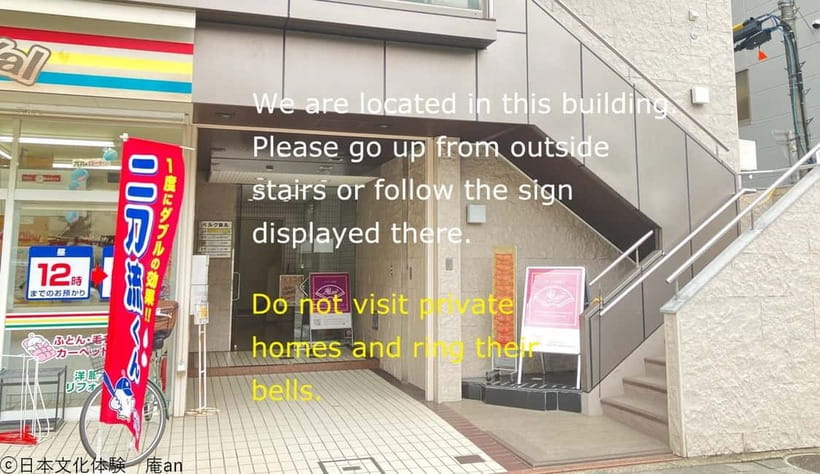
The meeting point is a one-minute walk from Exit 1 of Gojo Station on the Karasuma subway line. The entrance faces Gojo-dori, the main street, so the directions are straightforward once you are at the station. The venue is in Kyoto, on Honshu.
The activity is listed as wheelchair accessible, but the building has no elevator and you must use stairs to reach each venue. Those details do not sit comfortably together, so contact the provider before booking if step-free access is necessary. Do not rely on the accessibility label alone.
The operating hours are 10:00 to 17:00. Reservations received after 17:00 are processed the next day, so leave time for a response if you are arranging a last-minute visit. Arrive on time: the class will not be held for late arrivals, and those who are not taking part in the experience cannot enter. Children under two who sit on a parent’s lap are free.
You can cancel up to 24 hours in advance for a full refund, and the booking option allows you to reserve without paying immediately. The provider also notes that cancellation fees can apply, so check the terms for your booking and keep the deadline in mind. If you need to change your date after a fee has been incurred, a separate charge may apply.
Who should book this class?
I’d choose this workshop if you want to make something, not just watch a demonstration, and you’re curious about both Japanese sweets and matcha. It suits a first visit to Kyoto, a rainy-day plan, or a break from sightseeing that still gives you a practical connection to local food culture. The mix of three activities is especially appealing if you have limited time and don’t want to devote a whole afternoon to one subject.
It may be less suitable if your priority is a formal tea ceremony, detailed instruction in English, or a very quiet setting. The class is short and structured, translation can vary, and the group atmosphere is not fully within the instructor’s control. Check the stairs issue directly if mobility access matters.
For most people who want an approachable cultural activity, I’d book it. You get to make three sweets, use traditional ingredients, and prepare matcha in one compact session. Just go for the hands-on introduction, not a formal tea-school lesson.
FAQ
How long does the experience last?
The full experience lasts 125 minutes, including time to eat and drink before leaving.
What sweets will I make?
You’ll make dry-style ohigashi from Wasanbon sugar, then two seasonal nerikiri: a flower-shaped sweet and a kinton nerikiri.
Is matcha included?
Yes. The experience includes a matcha grinding demonstration, an explanation of tea, and the chance to prepare your own matcha.
Is the tea ceremony formal?
The experience is described as a casual tea experience. It includes instruction and making a cup of matcha, but it may not be the formal ceremony some people expect.
Is English instruction available?
The instructor is Japanese, and English translation is provided as much as possible. Contact the provider in advance if you would like to request English support.
Where is the meeting point?
It is a one-minute walk from Exit 1 of Gojo Station on the Karasuma subway line. The entrance faces Gojo-dori.
Are there extra costs or access considerations?
Coloring costs 200 yen, a takeout box 100 yen, and a completion certificate 300 yen. The activity is listed as wheelchair accessible, but the building has no elevator and stairs are required, so confirm access with the provider before booking.
Newly added in Kyoto
- Uji: Private immersion into Kyoto’s tea and reglious culture★ 5.0 · 17 reviews
- Whisk Your Own Matcha: A Zen Matcha Experience at Temple★ 3.6 · 7 reviews
- Kyoto tea town for matcha lovers★ 5.0 · 16 reviews
- Treasures of Kyoto: Gion & historical Walking Tour★ 5.0 · 6 reviews
- Kyoto Matcha Green Tea Tour★ 4.5 · 23 reviews
- Uji and Wazuka Matcha Farm Half Day Private Guided Tour★ 5.0 · 21 reviews
- Uji Tea Ceremony and UNESCO Heritage Walking Tour★ 5.0 · 20 reviews
- Utilising upcycled Matcha! Creating matcha incense (Uji, Kyoto)★ 5.0 · 6 reviews
Kyoto Tea Ceremonies, compared.

Tea Ceremony in a Traditional Tea House in Kiyomizu
Read our review →


World Heritage Kyoto & Nara Uji Authentic Matcha Experience
Read our review →


Arashiyama Bamboo Forest, Monkeys, Matcha & Temple Tour
Read our review →
Tea Museum Tickets and Matcha Grinding Experience
Read our review →Browse the lists this tour appears in