
Reviewed · KYOTO CRAFT WORKSHOPS
Kyoto : Chopsticks Making Workshop in Gion with Engraving Option
Making chopsticks by hand is a small, satisfying way to meet Japanese craft through the work itself. I like that you shape the wood with a traditional kanna hand plane, then sand and oil the finished pair, and that English-speaking staff guide beginners through each step.
I also like the practical souvenir: you leave with something you made and can use, not just another trinket. One thing to keep in mind is that wood availability may vary. Two wood types are included at no extra cost, but one participant found only one of the advertised choices available.
Key points to know
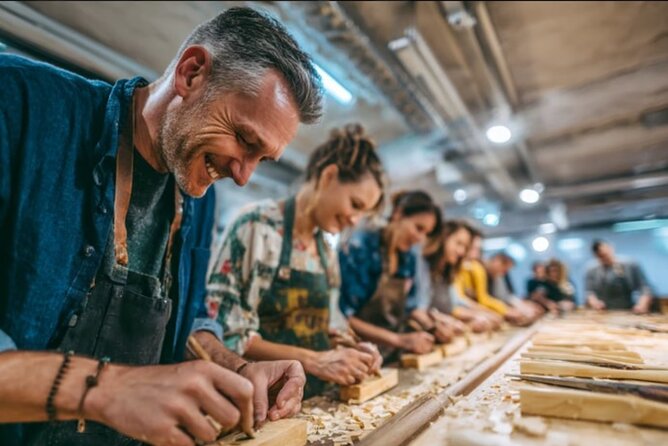
- The work is hands-on: You shape wooden blanks with a kanna plane, then sand, finish, and oil them.
- Beginners are welcome: The instructor explains each stage, and no woodworking experience is required.
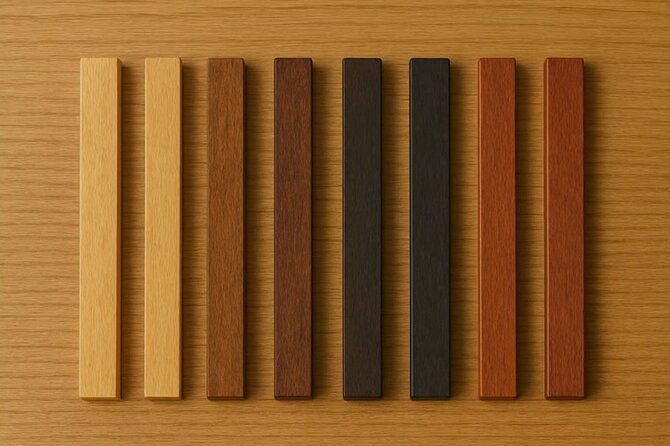
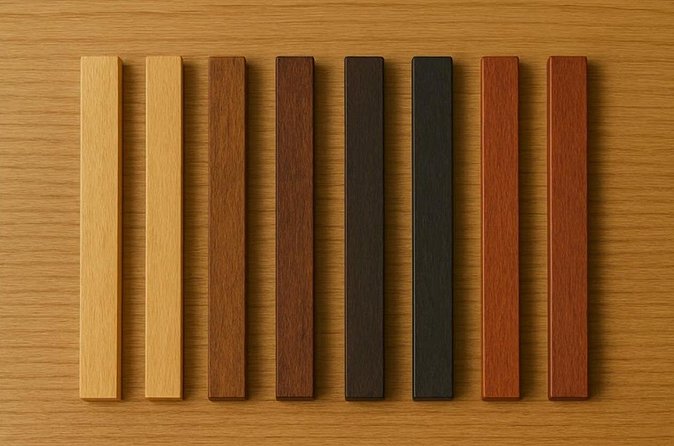
- Wood choice affects the result: Japanese woods offer different colors, grains, and textures. Two types are included, with premium options available for an extra charge.
- Engraving is optional: Add a name in Japanese or your native language for a more personal keepsake.
- It fits a short Kyoto break: Plan for about an hour at the Gion workshop, with the activity ending where it begins.
- The group can be sizeable: The maximum is 32 participants, so expect a shared workshop rather than a private lesson.
From a wooden blank to a usable pair
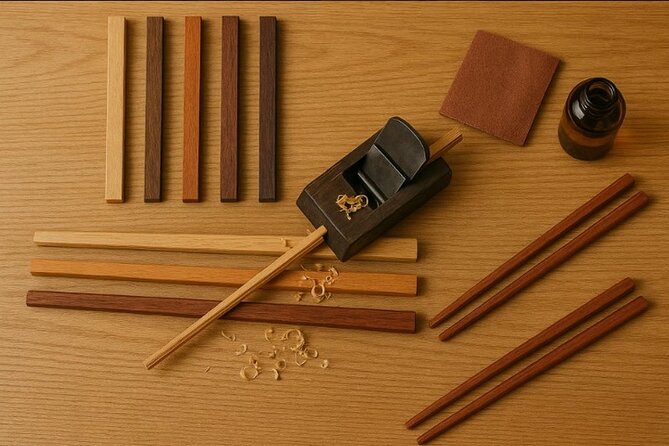
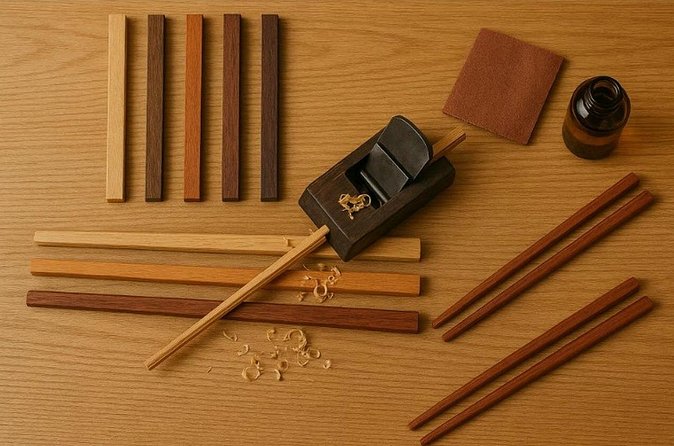
The workshop begins with a simple piece of wood and a choice: which color and grain do you want to work with? You can select from a range of Japanese woods, with lighter and darker tones among the options. The choice matters because the grain and natural color remain visible in the finished chopsticks. The wood is not just a starting material; it gives your pair its own character.
Two wood types are included in the base price. Premium woods are available as an optional upgrade, so ask what is on offer before settling on a selection if a particular look matters to you. Availability can vary. One person found that only one of the two included choices was available during their visit, so it is sensible to arrive open to alternatives.
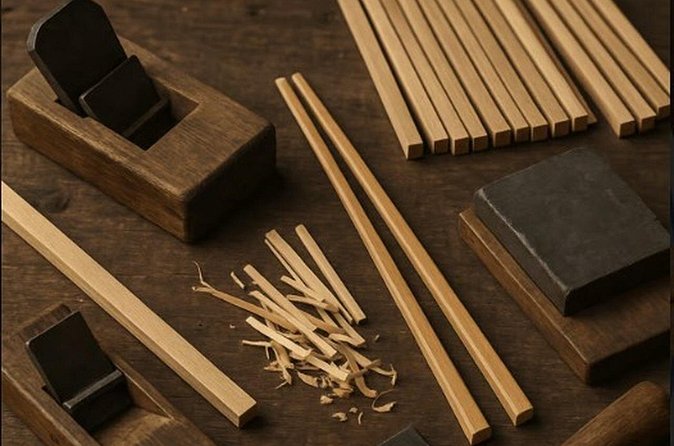
Once you have chosen, you place the blanks on a stand and begin shaping them with a traditional kanna, a Japanese hand plane. Rather than pressing a button or watching a demonstration from a distance, you do the careful work yourself. You feel the wood under the tool and see its shape change. The instructor guides the process, which makes the task approachable even if your only previous woodworking experience is assembling flat-pack furniture.
The carving is the heart of the hour. It asks for attention, but the workshop is designed for first-timers, and staff are available to help. Go slowly and follow the directions rather than trying to rush toward a finished souvenir. This is a short craft session, not a test of skill. The pleasure comes from watching a rough blank take shape under your hands.
More Gion tours in Kyoto:
- Kyoto Geisha Walking Tour: Gion District & Hidden Gems
★ 4.7 · 3,273 reviews - Kyoto: Gion Magical Night Walking Tour with Geisha Trivia
★ 4.9 · 2,393 reviews - Kyoto: Gion Geisha District Walking Tour – Stories of Geisha
★ 4.7 · 2,187 reviews
Sanding, oiling, and the finishing touch
After shaping, you smooth the chopsticks with sandpaper, including their surfaces and edges. This stage turns a roughly carved object into something more comfortable to hold and use. It also gives you a chance to refine the feel of the pair. Sand carefully and pay attention to the edges; small finishing steps are what make the object feel personal rather than factory-made.
The next step is applying natural oil. It protects the wood and brings out its color and grain, leaving a soft, polished finish. The sequence is straightforward: choose, shape, sand, oil. In about an hour, you get a clear sense of how a useful everyday object can begin as a piece of wood and emerge through patient handwork.
You can also choose to have your name engraved, in Japanese or in your native language. That detail can make the chopsticks a more personal memento, especially if you are making them as a gift or marking a Kyoto visit. Engraving is described as an option, so check whether it costs extra and how it fits into the session before booking if it is important to you.
What the hour feels like
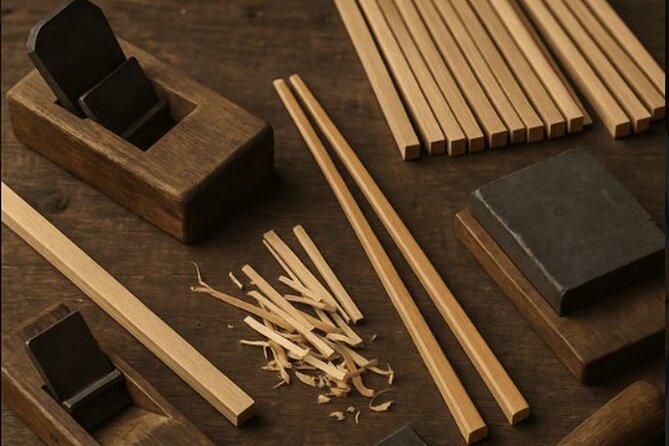
The pace is calm and instructional. You are not expected to arrive knowing how to use a plane, and the English-speaking staff help keep each step clear. That support is useful even for confident do-it-yourselfers: shaping a matched pair takes more care than simply whittling one stick, and a little guidance can help you avoid uneven results.
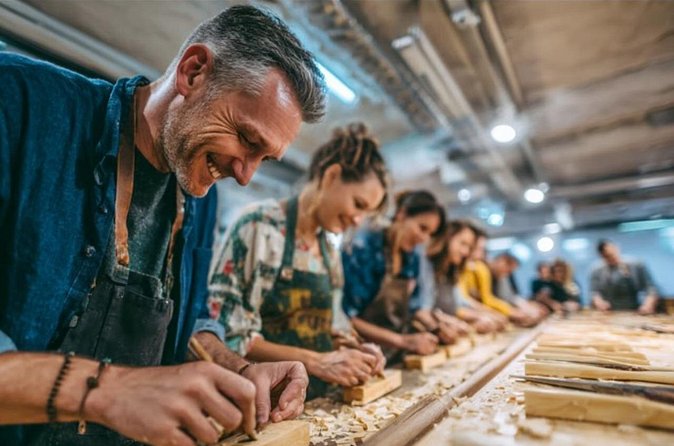
The experience is also social. The workshop can accommodate up to 32 people, so you may be sharing the space and instruction with a fairly large group. That has a practical upside: it can work for families or a group of friends who want to make something together. The trade-off is that the setting may feel more like a group workshop than a one-on-one craft lesson. If you want an intimate, highly individualized session, the maximum group size is worth considering.
Families are a natural fit if everyone is comfortable taking part in a hands-on activity and following the instructor’s directions. The process has several stages, so it offers more to do than a quick demonstration. The patient teaching and optional engraving can also make the finished pair meaningful to children, though the activity is not described with a specific age range.
A Gion activity with a useful souvenir
The workshop is at ZEN Chopsticks Making Workshop, in the Yasaka Koji South area of Gion, Higashiyama Ward. It is near public transportation, and the activity ends at the same meeting point. Since the session lasts about an hour, it is easy to fit into a day of exploring Kyoto without setting aside half a day.
That short duration is part of the value. At $15.25 per person, the price buys more than a finished item: it includes a guided, hands-on process and the chance to learn how the chopsticks are shaped and finished. Two types of wood are included at no extra cost. If you choose premium wood or engraving, those may affect the final cost, so confirm the options before making your selections.
This is a better fit for someone who wants to participate in making a souvenir than for someone who simply wants to shop for one. The finished chopsticks are functional, and you can add a personal engraving, but the main appeal is the hour spent working with wood. You will get more from it if you enjoy careful, tactile tasks and are happy to let the instructor set the pace.
The format may feel somewhat production-line-like when the workshop is busy. That is a fair trade-off for a short, accessible activity at a modest price, but set your expectations accordingly. You are signing up for a friendly group craft session, not a private apprenticeship in woodworking. Reviews of the experience often praise the staff’s patience and warmth, and several people especially value the engraved chopsticks as a souvenir.
More craft workshops in Kyoto:
- Kyoto: Calligraphy class at Buddhist temple in city center
★ 5.0 · 167 reviews - Kyoto: Beginner Knife Sharpening & Handle Fitting Workshop
★ 4.9 · 141 reviews - Kyoto: Small-Group Authentic Sushi Making Workshop
★ 5.0 · 137 reviews - Kyoto: Japanese Archery Workshop with Experienced Instructor
★ 4.9 · 132 reviews
Who should book this workshop
I would consider this a strong choice if you want a compact cultural activity in Gion, especially on a day when you have time between larger sights. It suits first-time makers, families, couples, and anyone who prefers a personal keepsake to a ready-made purchase. You do not need special skills, and the English-speaking staff make the instructions accessible.
It is less compelling if your priority is a deep technical lesson, a guaranteed choice of a particular wood, or a private session. The group limit is 32, and wood availability can vary. If either the exact material or engraving is central to your decision, ask about availability and any extra charges before you go.
The main appeal is the balance of craft, guidance, and a useful result in about an hour. You shape the chopsticks yourself, learn the basic stages, and take home an object tied to your time in Kyoto. For $15.25, that is good value, provided you come for the process as much as the souvenir.
Practical details before you go
Booking confirmation is received at the time of booking, and free cancellation is available until 24 hours before the experience starts. Changes or cancellations made less than 24 hours in advance are not accepted for a refund. The cut-off follows local time in Kyoto.
The activity is listed as suitable for most participants and is near public transportation. It starts and ends at ZEN Chopsticks Making Workshop, at Yasaka Koji South, machi-71-13 Tamamizu, Higashiyama Ward, Kyoto, 605-0851, Japan. Allow about one hour for the workshop itself.
Should you book it?
Book this if you want a relaxed, beginner-friendly craft session and a souvenir you can actually use. The hand-planing, sanding, and oiling give you a real role in making the final pair, while the English-speaking staff help keep the process manageable.
Skip it if you are looking for a private, highly technical woodworking class or need a specific wood to be guaranteed. For most visitors with an hour to spare in Gion, though, it is a practical, personal way to take a little piece of Japanese craft home.
FAQ
How long does the workshop take?
The workshop lasts about one hour.
Where does the activity start?
It starts at ZEN Chopsticks Making Workshop in the Yasaka Koji South area of Gion, Higashiyama Ward, Kyoto.
Where does the activity end?
It ends back at the meeting point.
Do I need woodworking experience?
No. The workshop is designed for beginners, and no woodworking experience is required.
What will I do during the workshop?
You choose wood, shape the chopsticks with a traditional kanna hand plane, sand them, and apply natural oil.
Are different types of wood available?
Yes. You can choose from Japanese woods with different colors, grains, and textures. Two types are included at no extra cost, and premium woods are available as an optional upgrade. Availability may vary.
Can I have my name engraved?
Name engraving is available as an option, in Japanese or your native language. Check whether it carries an extra charge.
Is the workshop taught in English?
English-speaking staff are available to assist throughout the activity.
How many people can join?
The activity has a maximum group size of 32 participants.
Can I cancel for a full refund?
Yes, if you cancel at least 24 hours before the start time. Cancellations or changes made less than 24 hours beforehand are not accepted for a refund.
Newly added in Kyoto
- Uji: Private immersion into Kyoto’s tea and reglious culture★ 5.0 · 17 reviews
- Whisk Your Own Matcha: A Zen Matcha Experience at Temple★ 3.6 · 7 reviews
- Kyoto tea town for matcha lovers★ 5.0 · 16 reviews
- Treasures of Kyoto: Gion & historical Walking Tour★ 5.0 · 6 reviews
- Uji and Wazuka Matcha Farm Half Day Private Guided Tour★ 5.0 · 21 reviews
- Kyoto Matcha Green Tea Tour★ 4.5 · 23 reviews
- Uji Tea Ceremony and UNESCO Heritage Walking Tour★ 5.0 · 20 reviews
- Utilising upcycled Matcha! Creating matcha incense (Uji, Kyoto)★ 5.0 · 6 reviews
Kyoto Craft Workshops, compared.
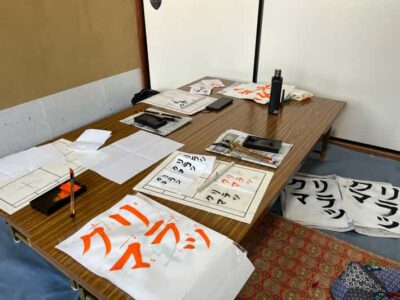
Calligraphy class at Buddhist temple in city center
Read our review →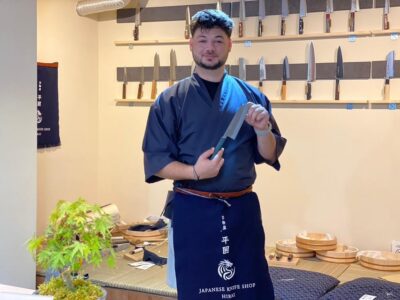
Beginner Knife Sharpening & Handle Fitting Workshop
Read our review →
Japanese Archery Workshop with Experienced Instructor
Read our review →
Kyoto Michelin Ramen Workshop or Painting Ramen Essentials
Read our review →
Browse the lists this tour appears in