
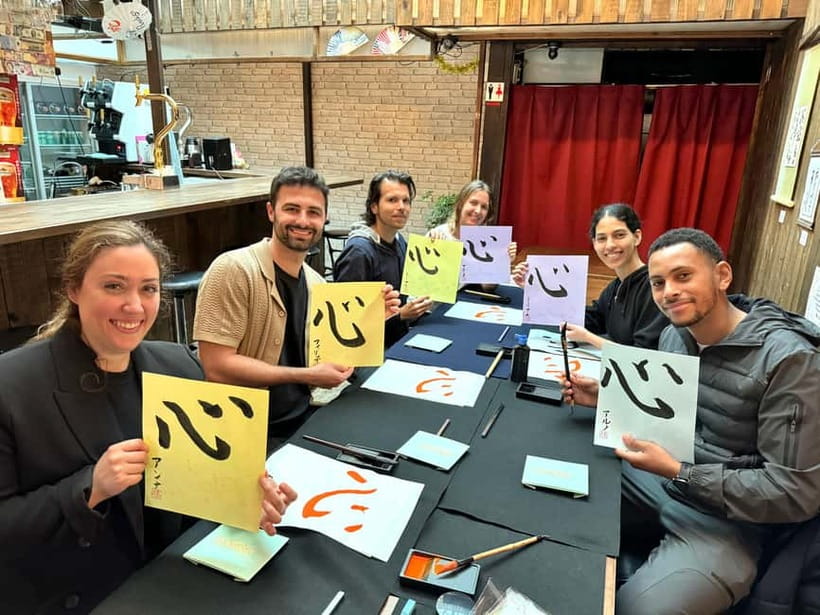
Reviewed · KYOTO CRAFT WORKSHOPS
Kyoto: Japanese Calligraphy Workshop
Calligraphy gives you a quiet, hands-on way to meet Japanese culture: you learn to guide ink and brush into deliberate strokes, then turn those exercises into a character you can take home. At Gojo Paradiso, the class moves from a short introduction to practice and a finished piece, with a teacher there to help you along.
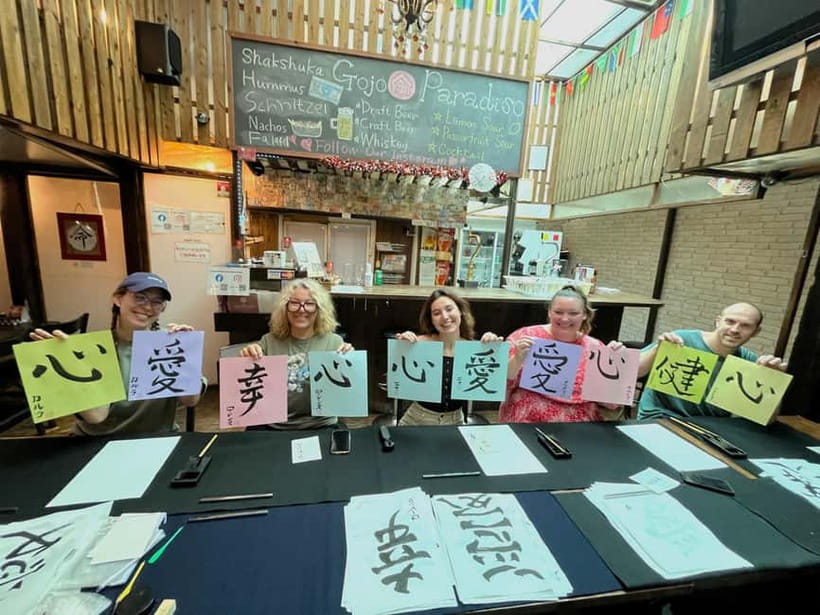
I especially like that beginners get step-by-step instruction, rather than being left to guess how the brush should move. I also like the personal keepsake: participants have written a kanji character and their names, then taken home work on rice paper.
The main consideration is time. The session lasts one to two hours, and the pace and final activity may depend on the class. It is not suitable for children under 10, and you need to reserve at least a day ahead.
At a glance
- Start with brush basics: Practice foundational strokes before moving on to kanji.
- Small class size: The group is limited to 10, allowing room for individual guidance.
- Take home your work: Your finished calligraphy is a tangible memento of Kyoto.
- Meet by the Takase River: Gojo Paradiso is on Kiyamachi Street, a short walk from Keihan Kiyomizu Gojo Station.
- Bring no supplies: Brush, paper, and other necessary materials are provided.
A Kyoto workshop built around the brush
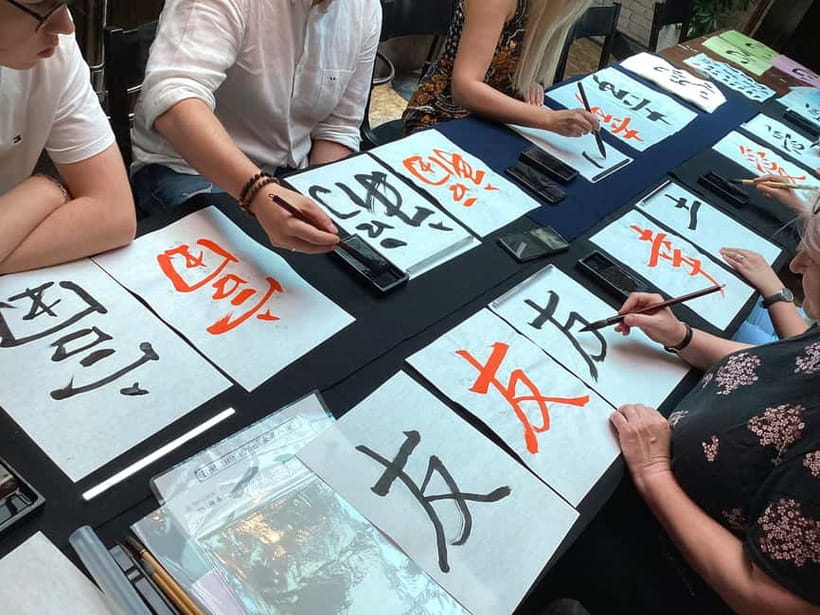
Shodo, Japanese calligraphy, is more than a way to write characters neatly. The brush, ink, and paper make each stroke visible, so the act of writing calls for attention to movement and form. This workshop gives you a practical introduction, not just a demonstration to watch from the sidelines.
That hands-on approach is the draw. You begin by learning about calligraphy’s history and meaning, then try basic brush strokes yourself. Once you have practiced, you work toward a character and a finished piece. The sequence makes sense for a first encounter: learn a little context, try the essential motions, then use them in a result you can keep.
The class is held at Gojo Paradiso, along the Takase River on Kiyamachi Street. It is a central Kyoto setting, but the appeal here is less about sightseeing than about setting aside an hour or two to make something. If your itinerary is full of temples and walks, this gives you a different kind of cultural experience.
More craft workshops in Kyoto:
- Kyoto : Chopsticks Making Workshop in Gion with Engraving Option
★ 5.0 · 958 reviews - Kyoto: Calligraphy class at Buddhist temple in city center
★ 5.0 · 167 reviews - Kyoto: Beginner Knife Sharpening & Handle Fitting Workshop
★ 4.9 · 141 reviews
From first strokes to finished kanji
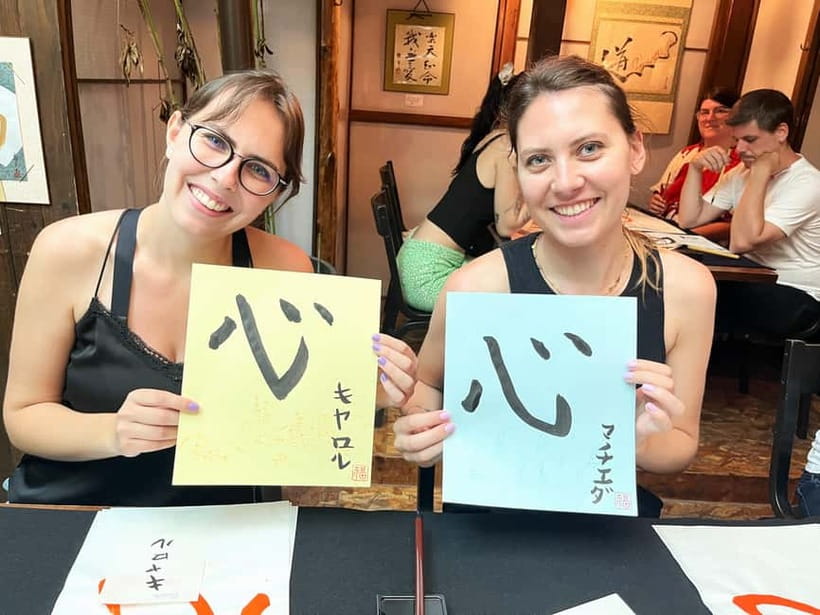
Expect to begin with an introduction to calligraphy, including its history and meaning. That context helps explain why the workshop emphasizes controlled strokes rather than simply copying a character as quickly as possible. You do not need prior experience; instruction is designed for beginners as well as people who have practiced before.
Next come the basic brush exercises. This is where the teacher’s guidance matters. A brush can feel unfamiliar if you are used to a pen, and breaking the work into individual strokes gives you a manageable way to learn. The class is small, with a maximum of 10 participants, and instructors have been described as patient and encouraging, with time spent helping people individually.
After practicing, you move on to making kanji. Participants have also had the chance to write their names in Japanese, a personal touch that can make the finished work feel more closely tied to your trip. The exact character or name you create is not specified in advance, so think of this as guided practice and a creative souvenir, not a set calligraphy commission.
The final stage is a chance to take photos, look around the gallery, and place special orders. Your own work is the main takeaway, but the workshop also gives you some time to appreciate the setting and see more calligraphy. A participant has described taking home a piece on beautiful rice paper, with their name signed in kanji and the work stamped by the teacher. Those finishing touches may depend on the session, so enjoy them if offered without assuming every class includes the same extras.
Patient teaching makes a difference
A beginner class succeeds or fails on the quality of its instruction. Here, the teaching is a central part of the experience: clear demonstrations, step-by-step guidance, and encouragement to keep trying. The instructor speaks English and Japanese, which makes the workshop accessible to visitors who do not speak Japanese.
Takako is named as an instructor associated with the workshop. She has been described as having a calligraphy degree and awards, and as a patient, supportive teacher. Some sessions have also had helpers. Staffing can vary, but the small group limit gives the instructor a better chance to offer personal attention than a large demonstration would.
That matters because calligraphy is a skill you learn by doing, and your first brush strokes may not look the way you expect. The useful part is not producing perfect work on the first try. It is getting an explanation, trying again, and seeing how adjustments change the character. The class is meant to be welcoming to beginners, not a test of artistic talent.
A keepsake with more meaning than a souvenir
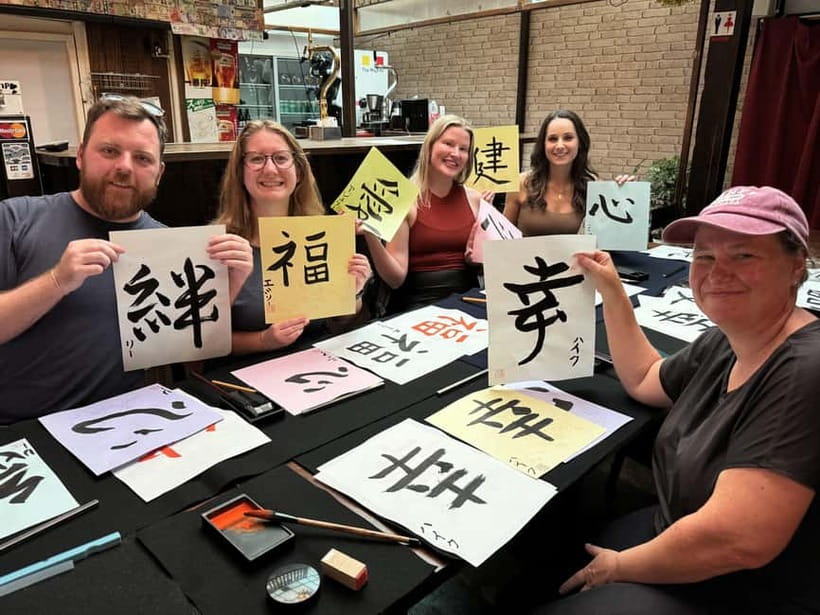
The finished work is a strong reason to book. You leave with something you made, rather than another small item bought on a shopping street. A piece of calligraphy can also serve as a reminder of the time and attention the activity required, which gives it more personal meaning than a standard souvenir.
There is a nice balance between learning and making. You practice the building blocks first, but the workshop does not stop at drills. The final piece gives you a purpose for those exercises. In some sessions, the teacher has also helped participants write their names in kanji and stamped the work, adding a personal finish.
Some participants have received a handmade calligraphy gift from the instructor, but that should be treated as a possible extra, not a guaranteed inclusion. The confirmed takeaway is your own creation. If you would like to continue learning after the class, the experience can also give you a feel for whether calligraphy is something you want to practice at home.
More Kyoto tours in Kyoto:
- PERFECT KYOTO 1-Day Bus Tour
★ 5.0 · 13,518 reviews - Kyoto: Fushimi Inari, Kinkakuji, Bamboo Grove 1 Day Bus Tour
★ 4.8 · 4,316 reviews - Kyoto: Tea Ceremony in a Traditional Tea House in Kiyomizu
★ 4.9 · 3,519 reviews - Kyoto Geisha Walking Tour: Gion District & Hidden Gems
★ 4.7 · 3,273 reviews
What $32 buys you
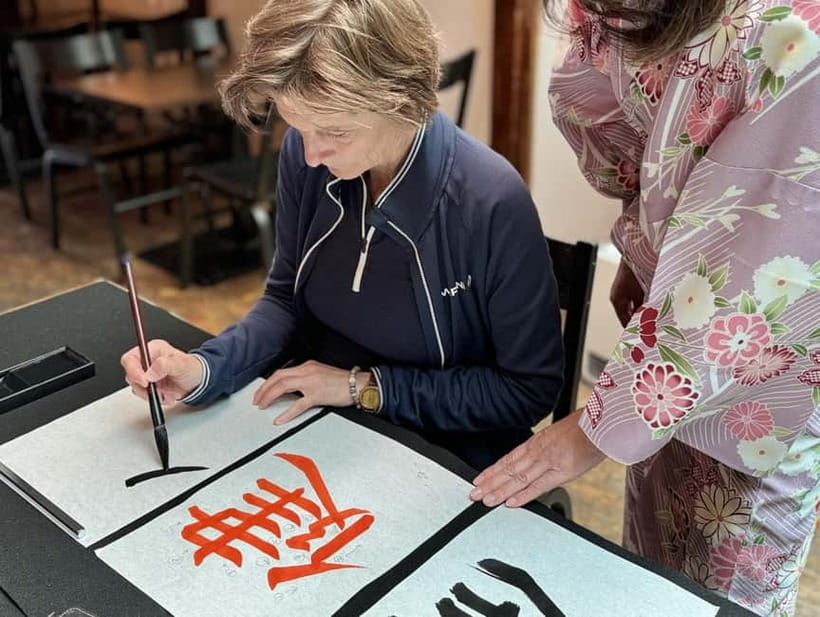
At $32 per person, the price covers the instructor, all necessary supplies, and a cultural activity lasting one to two hours. You are not paying only for access to a room and materials. You are paying for instruction in a craft that is difficult to pick up by watching alone, plus the chance to complete a piece with guidance.
The value is especially good if you want an activity that combines learning with a take-home result. Materials are included, so you do not need to find a brush or paper before arriving. Classes have used plenty of good-quality supplies, and the finished work can be a more memorable souvenir than something you could easily buy elsewhere.
Keep expectations in proportion. This is an introductory workshop, not a course that will make you an accomplished calligrapher in an afternoon. The session gives you a taste of the art, a chance to practice with a teacher, and a finished piece. If you want extended study or detailed instruction on many characters, one or two hours may feel brief.
Finding Gojo Paradiso and planning your visit
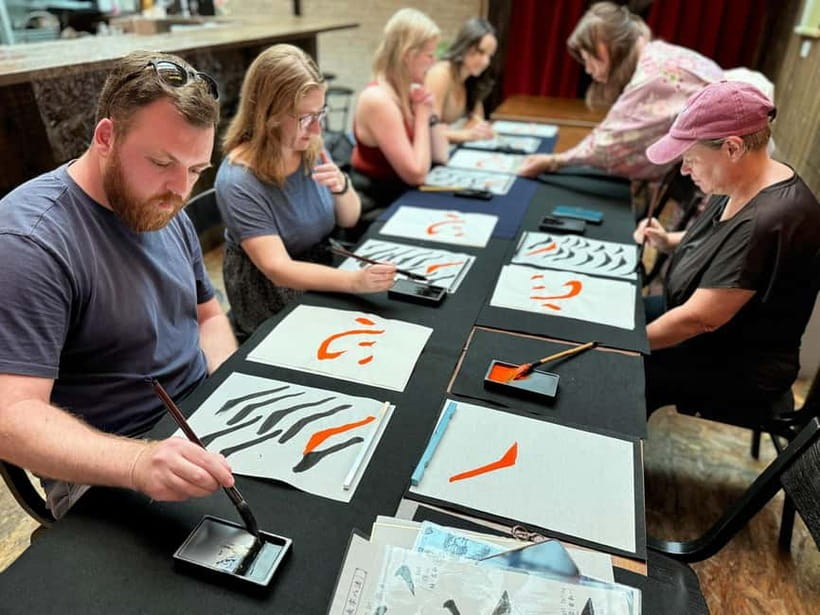
Gojo Paradiso is on Kiyamachi Street beside the Takase River. From Keihan Kiyomizu Gojo Station, the walk is about five minutes, with the venue listed as 386 meters away. Keihan Shichijo Station is about a 10-minute walk. Those distances make the workshop easy to fit into a central Kyoto day without setting aside time for a long transfer.
The session lasts between one and two hours, and you need to check available starting times when choosing a date. Allow a little flexibility around the class if you want time for photos or to browse the gallery afterward. The workshop has a maximum of 10 participants, so it is a smaller group rather than a large tour.
Reserve at least one day in advance. You can reserve now and pay later, which is useful if you are still arranging the rest of your Kyoto plans. Free cancellation is available up to 24 hours before the activity for a full refund. The workshop is wheelchair accessible, and instruction is available in English and Japanese.
Who will enjoy this class most
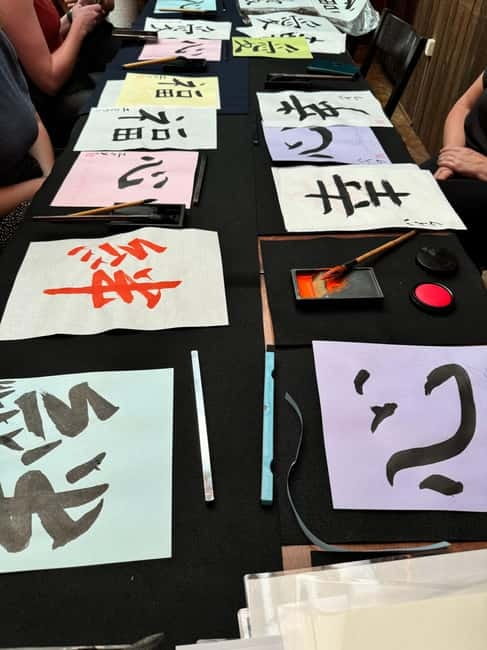
This is a good fit if you want a cultural activity that asks you to participate, but does not require experience. Couples, solo visitors, and friends can all work at their own pace while sharing the same class. The small group size and individual help make it especially appealing if you feel uncertain about trying a traditional art form.
It also suits a Kyoto itinerary that already includes plenty of sightseeing. Calligraphy offers a slower change of pace, and the result is something personal to carry home. If you have children under 10, this activity is not suitable for them. Older children may find the hands-on element appealing, but the supplied information does not specify a special youth program.
You may want to choose another activity if your main goal is a long, technical course, or if you prefer to observe rather than make something yourself. This class is introductory and participatory. Its value lies in the teacher’s guidance, the chance to try the brush, and the piece you create, not in covering every aspect of shodo.
Should you book the calligraphy workshop?
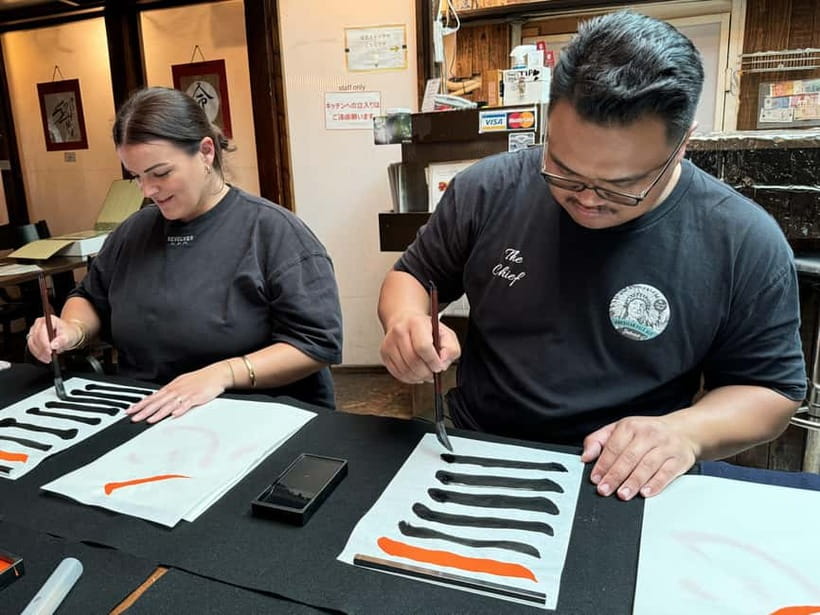
Book it if you are curious about Japanese calligraphy and want a beginner-friendly activity with a clear take-home result. At $32, the included instruction and supplies make the price reasonable, while the one-to-two-hour format is easy to fit between other plans. The small class limit, English-language teaching, and accessible central location all help.
Skip it if you are looking for a full course or need an activity for a child under 10. Otherwise, this is a practical, thoughtful way to do more than look at Kyoto’s culture from the outside: you get a brush in hand, a teacher to guide you, and a piece of your own to bring home.
FAQ
How much does the workshop cost?
The price is $32 per person.
How long does the calligraphy class last?
The duration is one to two hours. Check availability for the starting times offered on your date.
Where does the workshop meet?
It meets at Gojo Paradiso on Kiyamachi Street, along the Takase River in Kyoto.
How do I get to Gojo Paradiso by train?
It is about a five-minute walk from Keihan Kiyomizu Gojo Station and a 10-minute walk from Keihan Shichijo Station.
Is the class suitable for beginners?
Yes. The instructor guides you step by step, starting with basic brush strokes before moving on to kanji.
What languages does the instructor speak?
Instruction is available in English and Japanese.
Are calligraphy materials included?
Yes. All necessary supplies are included.
Can I take my calligraphy home?
Yes. You can take home the calligraphy you create during the workshop.
Is the activity suitable for children?
It is not suitable for children under 10.
How far ahead do I need to reserve?
A reservation is required at least one day in advance.
Newly added in Kyoto
- Uji: Private immersion into Kyoto’s tea and reglious culture★ 5.0 · 17 reviews
- Whisk Your Own Matcha: A Zen Matcha Experience at Temple★ 3.6 · 7 reviews
- Kyoto tea town for matcha lovers★ 5.0 · 16 reviews
- Treasures of Kyoto: Gion & historical Walking Tour★ 5.0 · 6 reviews
- Kyoto Matcha Green Tea Tour★ 4.5 · 23 reviews
- Uji and Wazuka Matcha Farm Half Day Private Guided Tour★ 5.0 · 21 reviews
- Uji Tea Ceremony and UNESCO Heritage Walking Tour★ 5.0 · 20 reviews
- Utilising upcycled Matcha! Creating matcha incense (Uji, Kyoto)★ 5.0 · 6 reviews
Kyoto Craft Workshops, compared.
Chopsticks Making Workshop in Gion with Engraving Option
Read our review →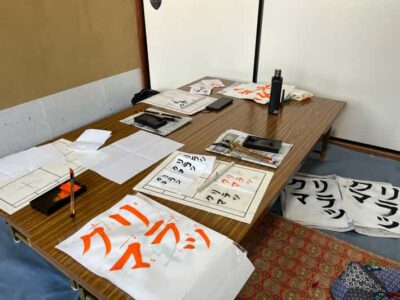
Calligraphy class at Buddhist temple in city center
Read our review →
Beginner Knife Sharpening & Handle Fitting Workshop
Read our review →
Japanese Archery Workshop with Experienced Instructor
Read our review →
Kyoto Michelin Ramen Workshop or Painting Ramen Essentials
Read our review →
Browse the lists this tour appears in