
Reviewed · KYOTO SAMURAI & NINJA EXPERIENCES
Samurai Training with Modern day Musashi in Kyoto
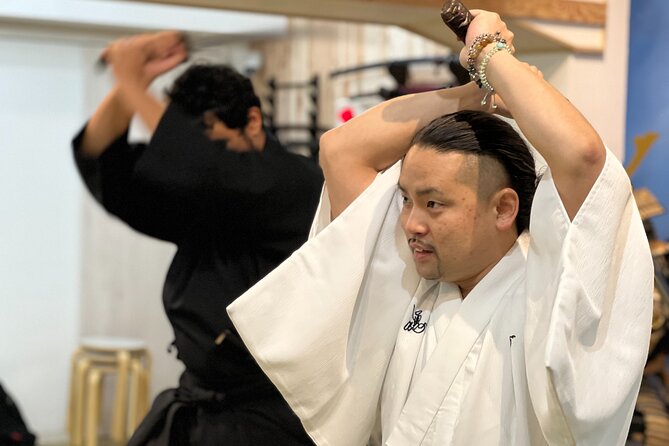
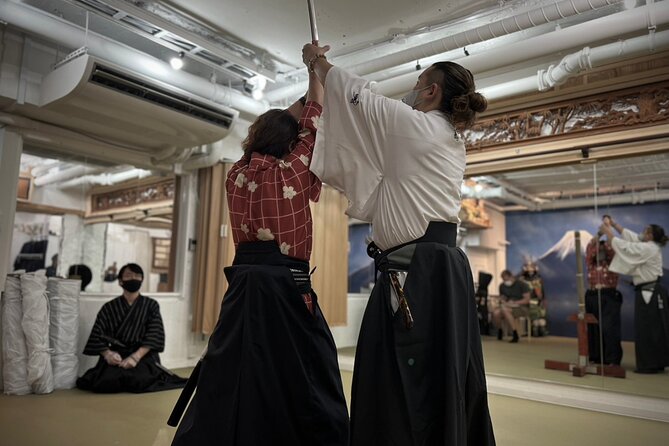
A lesson in a real Kyoto dojo is a different proposition from a quick samurai photo stop. At Yushinkan, Yushin Sensei and his team introduce sword etiquette and technique, then help you practise a short kata in training clothes. The class also includes a sword performance, with a two-katana display among its advertised highlights.
I like two things in particular: you train inside an actual dojo, with its own community and Shinto shrine, and the instruction combines hands-on practice with history rather than treating the sword as a costume prop. The teaching team, including Jordan and John, has been praised for making the session friendly while still taking form and safety seriously.
One point to keep in mind: you won’t cut mats with a real katana. That activity is not currently offered, so book for instruction, cultural context, and a demonstration, not for a live cutting lesson. The advertised class size is small, though it can reach nine participants.
What to know before you book
- You practise in a working dojo: This is a martial arts training space, not a purpose-built tourist stage.
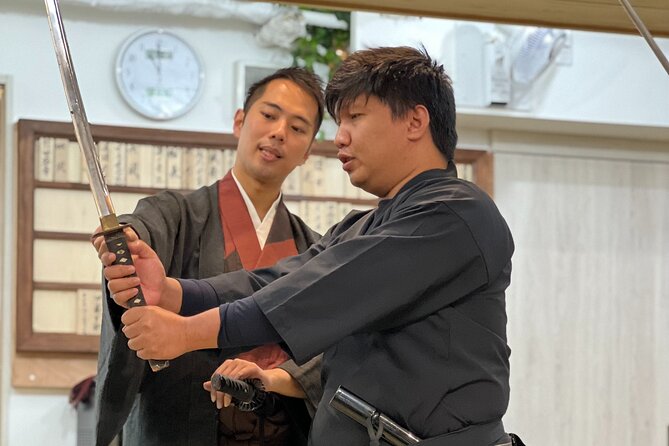
- The session blends talk and practice: Expect samurai culture and sword background alongside instruction in drawing, sheathing, and wielding.
- You learn a short kata: The goal is to practise a real form, with instructors correcting technique and answering questions.
- Yushin Sensei leads the instruction: Jordan and other team members may also help teach and interpret.
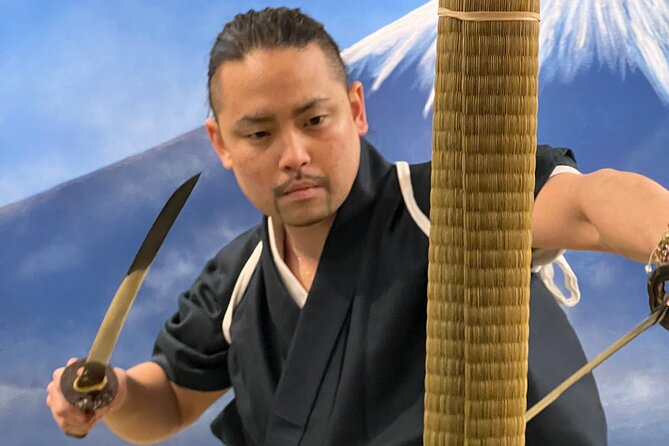
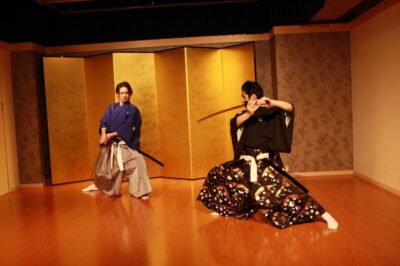
- The master performs with a sword: The demonstration is part of the experience, but mat cutting is not currently offered.
- Plan for about 1 hour 45 minutes: The session can run from 1.5 to 2 hours, depending on the number of participants.
Inside Yushinkan, a real Kyoto dojo
The setting is central Kyoto, at 452-4 Matsugaechō in Nakagyo Ward. The dojo is in the basement level of a complex, and the meeting point is also where the experience ends. The location is near public transportation, but check the address carefully before setting out so you arrive ready to begin rather than hunting for the entrance.
The space itself is part of the appeal. A working dojo has a different feel from a staged display: it is a place where students practise, and the walls carry wooden name plaques. One participant also noted a Shinto shrine inside. These details help put the lesson in context, though the dojo is not a museum and the session is not a long historical lecture.
You are there to learn a little, not to become a swordsman in one afternoon. That modest aim is a strength. A focused class lets you handle the basics with care, ask questions, and get a sense of how martial practice differs from the simplified samurai imagery you may have seen elsewhere.
More samurai and ninja experiences in Kyoto:
- Kyoto Samurai Experience
★ 5.0 · 1,294 reviews - Kyoto: Kendo and Samurai Experience with Uniform and Gear
★ 4.9 · 815 reviews - Kyoto: Samurai Sword Class by Experts in Traditional Arts
★ 4.9 · 657 reviews
Changing into dōgi, obi, and hakama
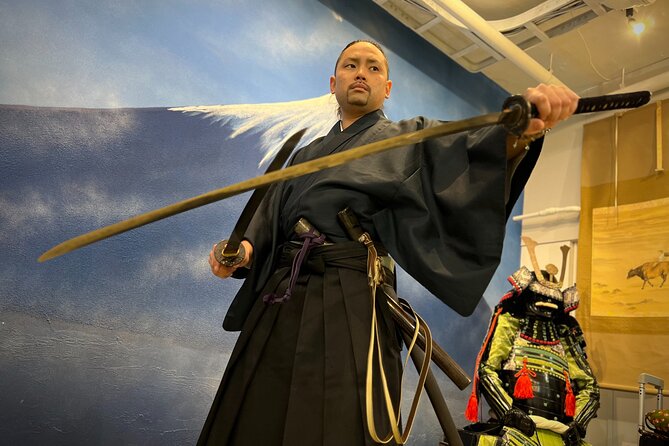
The session begins by getting dressed in samurai training gear: dōgi, obi, and hakama. This adds a welcome sense of occasion, especially for families and teenagers, and gives you a chance to see how the clothing feels while moving through a kata. It is more than a photo opportunity, but do not expect a full historical costume fitting or a theatrical transformation.
The practical value is that you begin to approach the activity as training. Once dressed, you are working through instruction in a dojo rather than simply posing with a sword. Several families have found this part especially fun for children, and the minimum age is 12.
The experience calls for a moderate level of physical fitness. You do not need to be a martial arts expert, but you should be comfortable standing and following movement instructions. If you have concerns about taking part physically, check with the provider before booking; the information provided does not specify adaptations.
A short lesson in samurai culture and sword safety
Before the kata, the instructors explain aspects of samurai culture and swordsmanship. The historical discussion covers what the sword was used for and who could use one, along with information about samurai swords and their construction. The lesson brings together the object in your hands and the culture around it, which makes the practice more than a sequence of movements.
Safety is a central part of learning to handle a sword. You are taught how to draw, sheath, and wield it, with attention to form and control. The specific practice equipment may vary, but the dojo has described its training as using iaito, which allow authentic practice without the sharp edge of a live blade.
That distinction matters. Some older descriptions of the experience refer to real swords or mat cutting, but mat cutting with a real katana is not currently offered. The present experience is best understood as safe training with a performance by the master, not a chance to try a sharp sword yourself.
Drawing, sheathing, and learning a kata
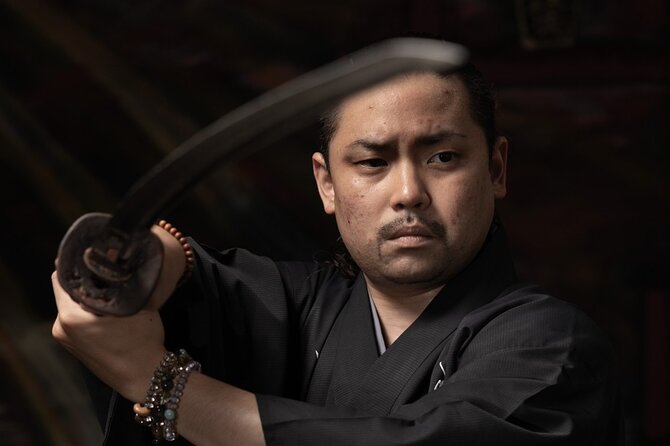
The hands-on portion is the heart of the class. You learn basic handling, then work toward an actual katana kata, a formal sequence of movements. Instructors demonstrate and help you correct your form. The pace is intended to leave room for questions, rather than rush everyone through a routine for a quick photo.
A kata is useful for beginners because it gives the movements a structure. You can see how posture, timing, and controlled handling fit together, even in a short lesson. The practice is introductory, of course; it is not a substitute for regular training. But it offers a genuine glimpse of how sword instruction is taught inside a dojo.
The class is described as small, with six participants per class as the usual aim. The stated maximum is nine, and the group may exceed six in some circumstances. If personal attention is a priority, ask about the expected group size when you book. The instructors have been praised for noticing details and giving corrections, but the more people in the room, the less one-to-one time each person can expect.
More Kyoto tours in Kyoto:
- PERFECT KYOTO 1-Day Bus Tour
★ 5.0 · 13,518 reviews - Kyoto: Fushimi Inari, Kinkakuji, Bamboo Grove 1 Day Bus Tour
★ 4.8 · 4,316 reviews - Kyoto: Tea Ceremony in a Traditional Tea House in Kiyomizu
★ 4.9 · 3,519 reviews - Kyoto Geisha Walking Tour: Gion District & Hidden Gems
★ 4.7 · 3,273 reviews
Yushin Sensei’s sword demonstration
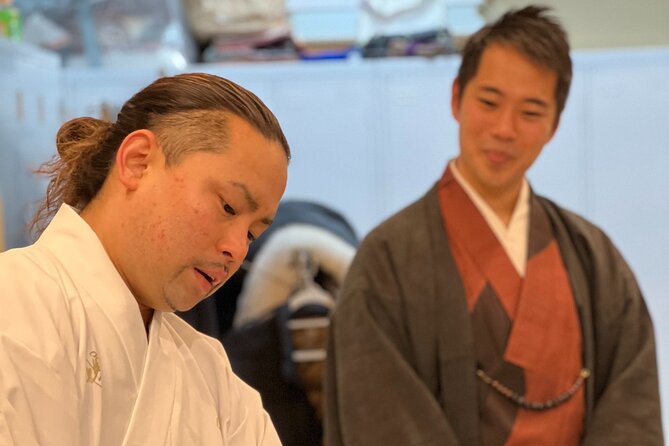
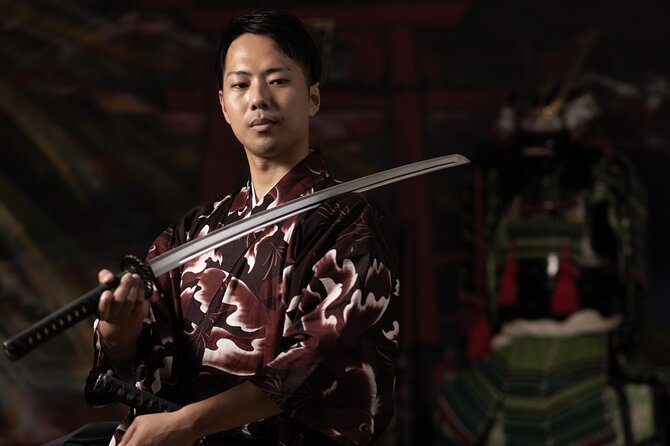
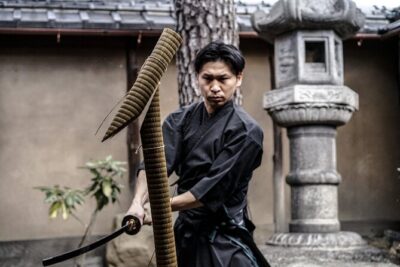
The master’s performance is the visual high point. Yushin Sensei demonstrates his skill, with a two-katana performance named as a special feature. The display gives you a chance to see movements performed with speed and control after you have tried a beginner’s version yourself.
There is an important distinction between a sword performance and a cutting demonstration. Mat cutting with a real katana is not currently part of the session. Some past descriptions refer to cutting, but that should not shape your expectations for a current booking. If you are interested in the mechanics and craft of Japanese swords, you may also have the chance to see a historical sword and hear about its parts and how swords are made, as described by participants in the experience.
Photos and video have been allowed during the lesson, according to one account, but do not assume every moment is available for filming. Follow the instructors’ guidance in the dojo. Being present for the demonstration is worth more than trying to record every movement.
How much time and money to allow
The price is $132.65 per person, and the session lasts about 1 hour 45 minutes. The stated time can range from 1.5 to 2 hours depending on the number of participants. In other words, leave a little breathing room in your Kyoto plans rather than scheduling a tight connection immediately afterward.
For the price, you are paying for an instructor-led activity in a real dojo, a chance to wear training gear, hands-on practice, historical context, and a master’s performance. That is stronger value if you want to learn and ask questions than if you are looking only for a brief costume photo. The personal instruction and working-dojo setting are the main reasons this experience may justify its cost.
The value also depends on what you expect from a samurai activity. If your priority is a sharp-sword cutting lesson, this is not the right fit at present. If you want a safe introduction to sword handling and a short kata, with context from people who practise the art, the session offers more substance than a staged demonstration alone.
Who will enjoy this class most
I would put this high on the list for families with teenagers, martial arts fans, and anyone curious about Japanese sword practice beyond screen versions of samurai life. The minimum age is 12, and families with children and teens have taken part. Parents can enjoy the history and technique too, rather than just watching from the side.
You do not need martial arts experience. In fact, the class is designed to teach basic technique, and the team has worked with both beginners and people who have trained in martial arts for years. Experienced practitioners may appreciate the chance to compare a short kata with the work they already know, while newcomers can focus on safe handling and form.
The atmosphere sounds warm and informal, but the dojo takes its practice seriously. That balance suits people who want to have fun without feeling that the art is being reduced to a costume show. If you prefer a passive cultural presentation, or you are mainly seeking mat cutting, choose a different activity.
Getting there and booking wisely
The meeting point is 452-4 Matsugaechō, Nakagyo Ward, Kyoto, 604-8034, Japan, and the activity returns to the same place. It is near public transportation. The confirmation is received within 48 hours of booking, subject to availability, so allow time for that response when arranging your schedule.
You must be at least 12 years old, and participants should have a moderate fitness level. The group maximum is nine. Free cancellation is available up to 24 hours before the start time; cancellations made less than 24 hours in advance are not refundable, and changes within that window are not accepted.
Book this if you want to do more than watch: you’ll dress for practice, learn safe sword handling, and try a kata under the guidance of Yushin Sensei and his team. For a central Kyoto experience that joins hands-on instruction with a real dojo setting, the price is reasonable. Skip it if your main goal is cutting mats with a sharp katana, since that is not currently offered.
FAQ
How long does the samurai training last?
The experience takes about 1 hour 45 minutes. The stated range is 1.5 to 2 hours, depending on the number of participants.
Where does the activity take place?
It takes place at Yushinkan, at 452-4 Matsugaechō, Nakagyo Ward, Kyoto. The activity ends back at the meeting point.
How much does it cost?
The listed price is $132.65 per person.
What is the minimum age?
Participants must be 12 years old or older.
How many people can join?
The maximum group size is nine. Six participants per class is the usual aim, though the group may be larger in some circumstances.
Do I need martial arts experience?
No experience requirement is stated. The class teaches basic sword handling and a short kata, and participants should have a moderate level of physical fitness.
What will I wear?
You will put on samurai training gear: dōgi, obi, and hakama.
Will I use a real katana?
The experience includes training in sword handling, and the provider describes its practice as using iaito for safe, authentic practice. The information does not guarantee that each participant will handle a live katana.
Is mat cutting with a real katana included?
No. Mat cutting with a real katana is not currently offered.
Can I cancel for a refund?
You can cancel at least 24 hours before the start time for a full refund. Cancellations made less than 24 hours before the activity are not refundable.
Newly added in Kyoto
- Uji: Private immersion into Kyoto’s tea and reglious culture★ 5.0 · 17 reviews
- Whisk Your Own Matcha: A Zen Matcha Experience at Temple★ 3.6 · 7 reviews
- Kyoto tea town for matcha lovers★ 5.0 · 16 reviews
- Treasures of Kyoto: Gion & historical Walking Tour★ 5.0 · 6 reviews
- Kyoto Matcha Green Tea Tour★ 4.5 · 23 reviews
- Uji and Wazuka Matcha Farm Half Day Private Guided Tour★ 5.0 · 21 reviews
- Uji Tea Ceremony and UNESCO Heritage Walking Tour★ 5.0 · 20 reviews
- Utilising upcycled Matcha! Creating matcha incense (Uji, Kyoto)★ 5.0 · 6 reviews
Kyoto Samurai & Ninja Experiences, compared.
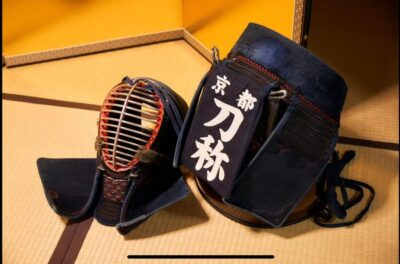
Kendo and Samurai Experience with Uniform and Gear
Read our review →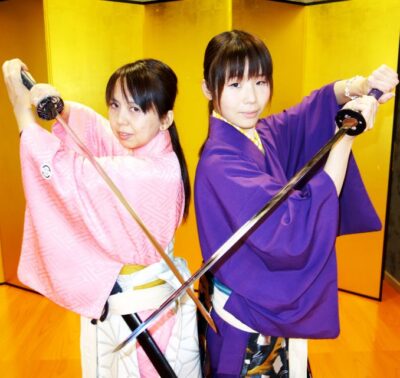
Samurai Sword Class by Experts in Traditional Arts
Read our review →
Skip the lines Basic Ticket at SAMURAI NINJA MUSEUM KYOTO
Read our review →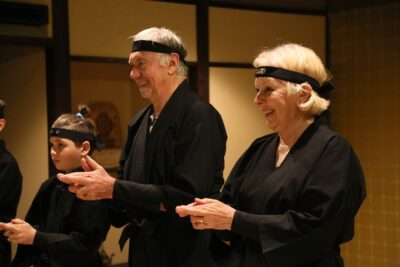
Ninja 1-hour Hands-on Lesson by Japanese master in Kyoto -Entry
Read our review →
Browse the lists this tour appears in