
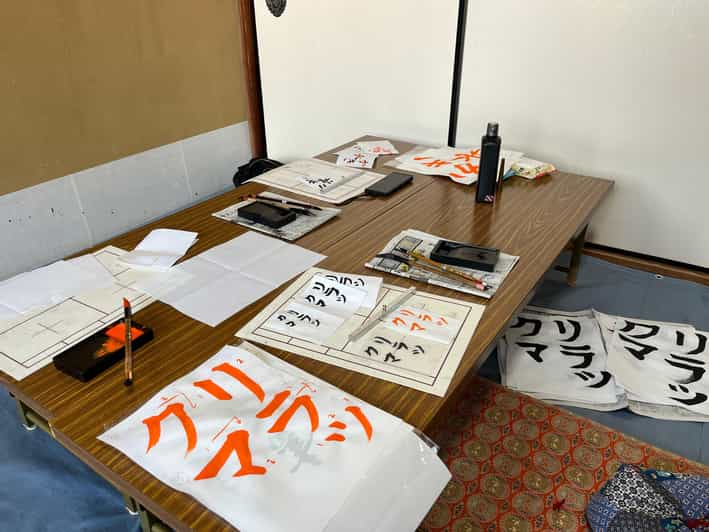
Reviewed · KYOTO CRAFT WORKSHOPS
Kyoto: Calligraphy class at Buddhist temple in city center
A brush, a pool of black ink, and a quiet room inside a Buddhist temple make an appealing change of pace from Kyoto’s crowded streets. In this 70-minute class, you learn basic calligraphy technique, choose a kanji or word, and create a finished piece to take home.
I like two things in particular: the small group size, which leaves room for individual pointers, and the fact that your souvenir is made by you, not pulled from a shop shelf. The temple setting adds a cultural dimension without turning the lesson into a lecture.
One consideration: much of the class takes place seated on tatami, usually on a floor cushion. Desks are available but limited, so check that this setup will work for you before booking.
What makes this class worth your time
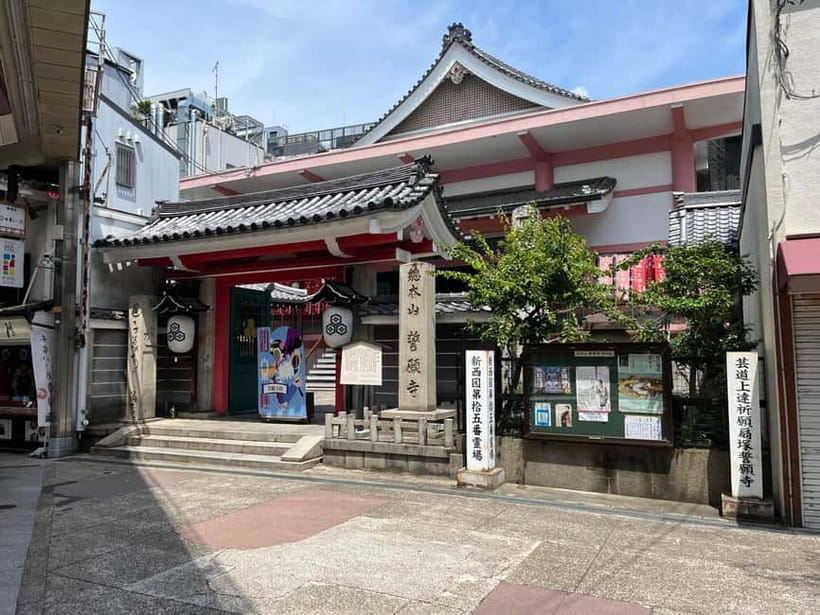
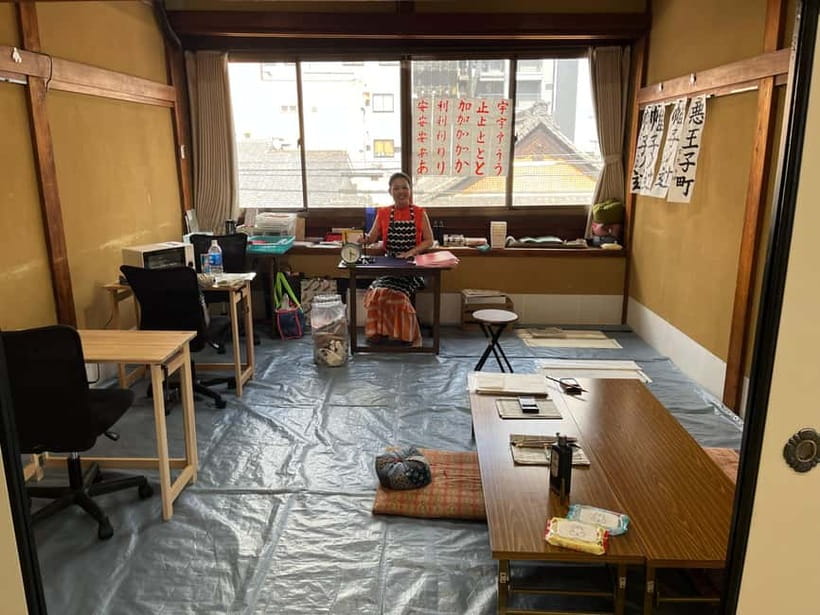
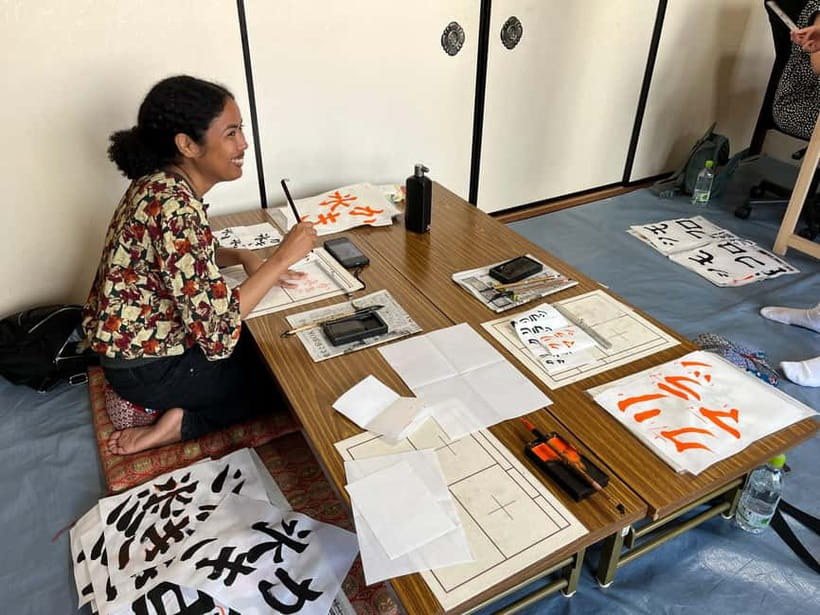
- You write in a temple room: The workshop takes place in a Japanese-style room with tatami flooring at Seigan-ji, in the central Shinkyogoku shopping street.
- You create a personal souvenir: After practicing, you write your chosen character on a special square shikishi board and take it home.
- The group is capped at six: A small class gives the teacher and translator time to offer individual guidance.
- You learn by doing: The lesson moves from basic brush strokes to a finished piece, so beginners have a clear path into the art.
- The teacher adds a second keepsake: You also receive a keychain featuring your chosen character, made by the teacher.
- Bring a few word ideas: You can choose from examples provided, but having several characters or words in mind helps you make the most of the short session.
A quiet room in the middle of central Kyoto
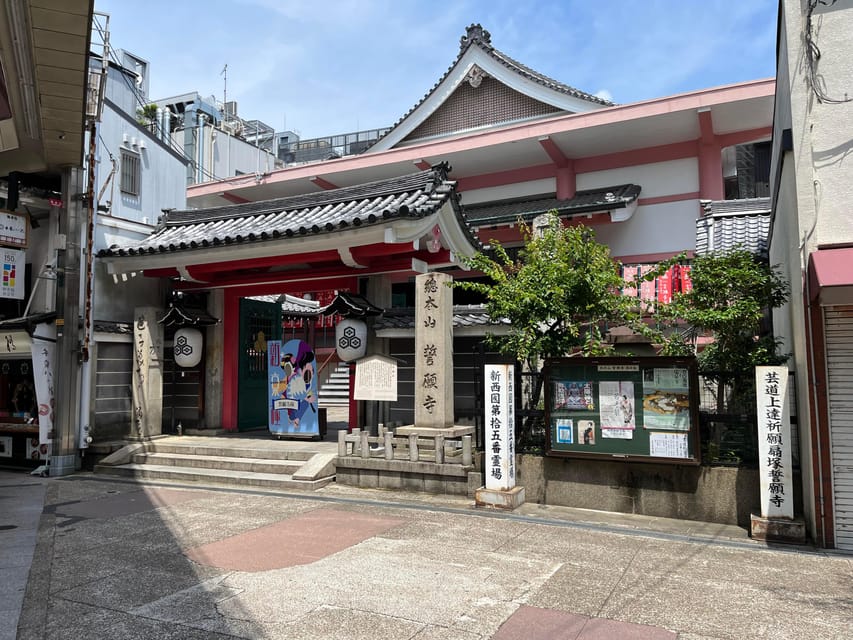
The class meets outside Seigan-ji Temple, under the covered roof of the Shinkyogoku shopping street. Look for the person holding a red lantern on a stick in front of the temple. Wait outside rather than climbing the stairs or asking temple staff or monks about the workshop. The meeting instructions on your voucher matter here, so read them before setting out.
That location is part of the appeal. You are not heading to a remote studio or a large visitor center. The temple is in the heart of the city, close to the everyday flow of shops and foot traffic, but the workshop itself takes place in a traditional Japanese room. The contrast helps the class feel like a pause in your sightseeing day.
You should expect a calm, focused atmosphere rather than complete silence. The group settles into writing, and people tend to concentrate on getting the brush to behave. That makes this a good choice if you want a hands-on activity that is quieter than a food tour or a busy market visit.
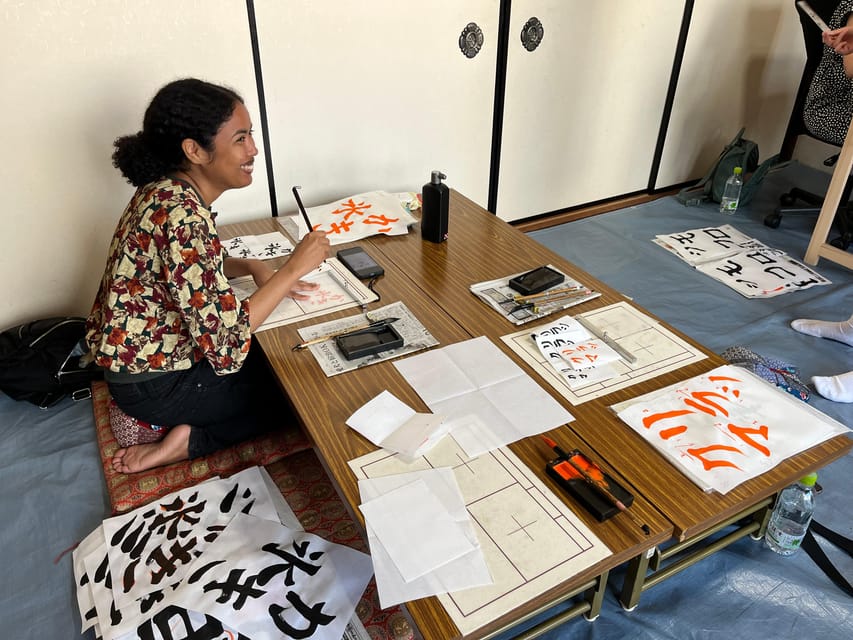
The setting is a washitsu, a Japanese-style room with tatami flooring. Most participants sit on the floor on a zabuton, or cushion, while a limited number of desks are available. The description identifies the activity as wheelchair accessible, but floor seating is the usual arrangement. If sitting low is difficult for you, contact the organizer before booking to clarify what seating can be arranged.
More craft workshops in Kyoto:
- Kyoto : Chopsticks Making Workshop in Gion with Engraving Option
★ 5.0 · 958 reviews - Kyoto: Beginner Knife Sharpening & Handle Fitting Workshop
★ 4.9 · 141 reviews - Kyoto: Small-Group Authentic Sushi Making Workshop
★ 5.0 · 137 reviews
From brush basics to your chosen kanji
The lesson lasts about 70 minutes, so it is focused rather than sprawling. It begins with introductions to the calligraphy teacher and translator, then moves directly into choosing a word or kanji. A few ideas prepared in advance can save decision time and give you more practice with the character you actually want to take home.
The teacher has more than a decade of calligraphy experience. Imai Sensei is named by participants as one of the instructors, and translators help explain the lesson in English, Spanish, Japanese, or Dutch, depending on the session. The teacher may speak Japanese while the translator carries the instruction across, so you can follow each step without needing prior knowledge of the language.
Next comes a practical introduction to the tools. The class provides washi paper, brush, ink, bunchi, and shitakami, along with examples of kanji to choose from. The point is not just to put ink on paper. You learn how the brush is held and used, and how calligraphy connects characters, movement, and expression.
You begin with basic lines before attempting your chosen word or character. This gradual approach is useful because calligraphy can look deceptively simple. A brushstroke that appears effortless in the teacher’s hands may take several tries when you are controlling the ink yourself. Mistakes are part of the practice, not a sign that you have failed the class.
The teacher demonstrates the technique, then guides you as you practice. Translators help make the directions clear, and the small group means there is room for personal tips. Beginners are welcome. You do not need to arrive with artistic experience, but you should be ready to slow down and pay attention to the pressure and direction of each stroke.
There is one practical trick to the practice period: do not keep writing simply because there is more paper. You need enough repetition to feel ready for the final piece, but too much can tire your arm and make your finished work less steady. A few thoughtful attempts are better than a marathon of practice.
Left-handed participants may find the usual brush approach more challenging, since the technique is generally easier with the right hand. One left-handed participant tried writing with both hands, but your experience may vary. If this could be an issue for you, ask the instructor for guidance rather than assuming you must switch hands.
Your finished piece is the souvenir
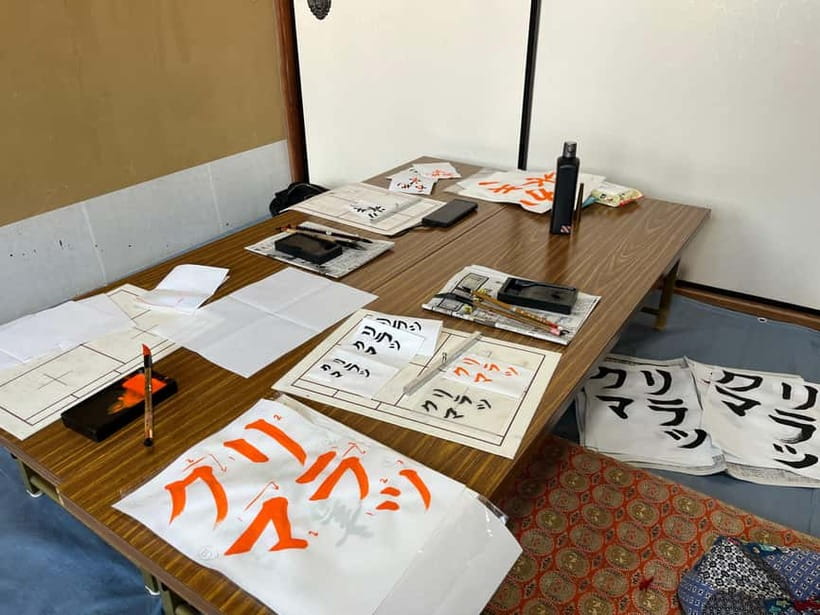
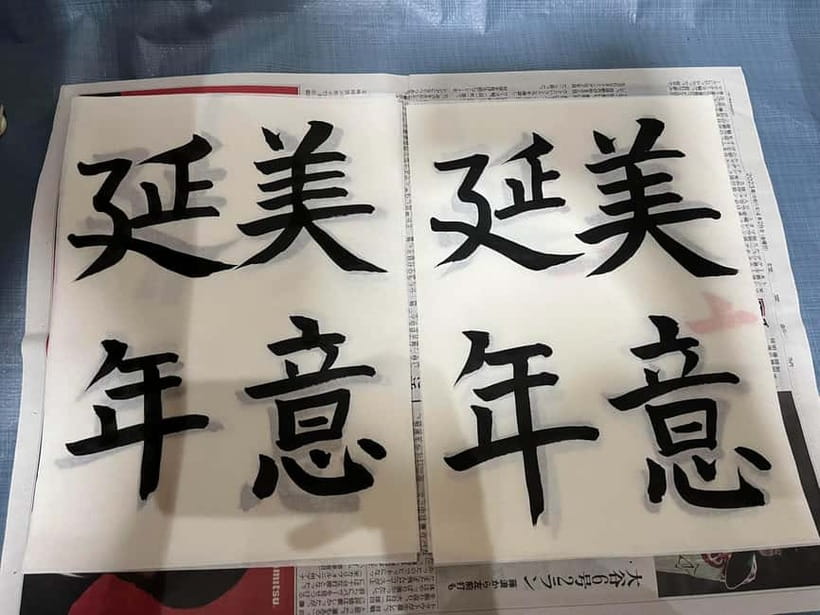
Once you have practiced the lines and your chosen character, you move to the final work. You write it on a shikishi, a special square board designed for display. This is the part that gives the session a satisfying finish: you leave with a personal artwork rather than only a memory of watching someone else demonstrate.
Your piece will reflect your own hand, not a perfect copy of the teacher’s work. That is part of the pleasure. The aim is to use what you learned and make a character that feels meaningful to you, whether you choose a name, a word, or another kanji from the examples.
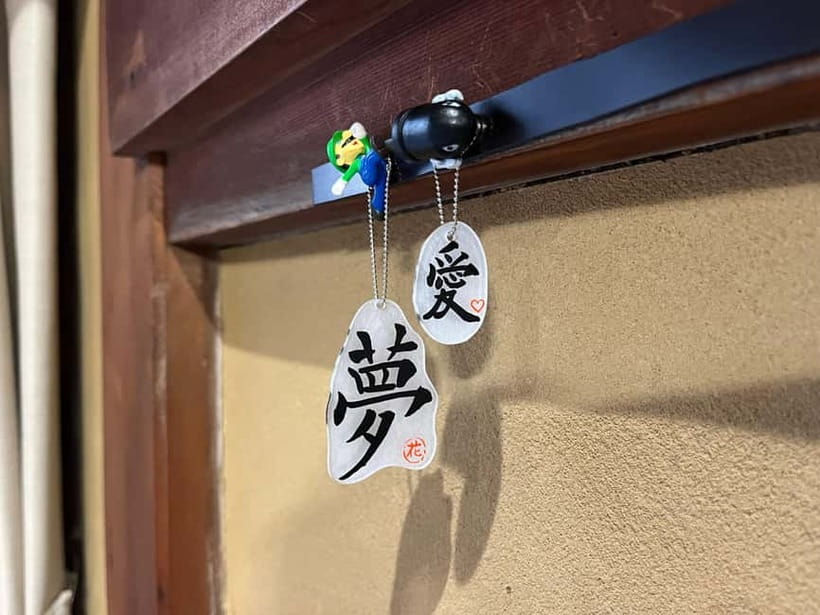
The teacher also makes a keychain with your chosen character as a small gift. Between the board and the keychain, you have two take-home reminders of the class. The board is the more substantial keepsake, and it can be displayed at home; the keychain is a compact extra that is easy to pack.
Photos may be taken during the session, and instructors or translators have helped participants capture the process. Treat this as a possible bonus rather than a guaranteed service, since the core activity is the lesson and artwork.
What $55 buys you
At $55 per person, this is not a bargain-basement craft activity, but the price includes a teacher-led lesson, translation, all listed calligraphy materials, practice time, a finished shikishi artwork, and the made-for-you keychain. The group size, capped at six, also gives you a better chance of receiving practical feedback than you would in a large demonstration.
The value depends on what you want from your Kyoto day. If you are mainly looking for a cheap activity to fill an hour, this may feel like a significant spend. If you want a guided introduction to a traditional art and a handmade souvenir with a personal connection, the price is easier to justify.
The lesson also gives you a little context for an art form that is part of Japanese education and culture. You get an introduction to the tools, the structure and origins of kanji, and the way a written character can express something beyond its literal meaning. In 70 minutes, you will not become a calligrapher, but you can understand more about the care behind the marks.
Food and drinks are not included. There are vending machines outside the temple if you want a drink, so plan a snack or meal separately. The workshop is short enough to fit between other central Kyoto plans, but it is best approached as a focused activity rather than a meal stop.
More temple and shrine tours in Kyoto:
- Kyoto: Tea Ceremony Ju-An at Jotokuji Temple
★ 4.9 · 3,207 reviews - World Heritage Kyoto & Nara Uji Authentic Matcha Experience
★ 5.0 · 1,573 reviews - Arashiyama Bamboo, Temple, Monkeys, or Secret Sake Brewery
★ 4.8 · 886 reviews - Kyoto: Arashiyama Bamboo Forest, Monkeys, Matcha & Temple Tour
★ 5.0 · 759 reviews
Who will enjoy the class most
This is a strong fit for couples, solo visitors, and small groups who want to make something rather than only look at it. It can also work well for families with older children who are comfortable sitting quietly, listening to instructions, and practicing with care. The experience is not suitable for children under five, and it is not recommended for visually impaired people.
You do not need to know Japanese or have studied art. The teacher’s demonstrations and the translator’s explanations make the process accessible to beginners. If you have a particular word in mind, think it through before class. You can also choose from the examples, but arriving with a few possibilities leaves more time for the brushwork.
The atmosphere suits people who enjoy concentration and a little trial and error. Calligraphy is harder than it looks, and the final piece may not match the graceful demonstration. That is no reason to stay away. The teacher guides you step by step, and the reward is a finished work that carries your own effort.
If you want a lively, talk-heavy activity, this may feel subdued. Participants tend to focus while writing, and the room is quiet even though it is not a silent session. If a calm hour sounds welcome after a day of walking through Kyoto, that focus is a plus.
Practical details before you book
The session runs for about 70 minutes, with starting times varying by availability. It is led in English, Spanish, Japanese, or Dutch, and the group is limited to six people. Smoking, vaping, alcohol, drugs, and bare feet are not allowed.
Wear something you can sit comfortably in, and keep the floor seating in mind. The booking information says the activity is wheelchair accessible, while also noting that most people sit on cushions on tatami and only a few desks are available. If you need a specific seating arrangement, confirm it with the organizer in advance.
The meeting point is easy to miss if you head straight inside. Wait in front of Seigan-ji under the covered shopping street, and look for the red lantern held on a stick. Do not go up the temple stairs or interrupt the temple staff to ask for the workshop. For any uncertainty, use the organizer’s contact details and the instructions on your voucher.
The booking allows free cancellation up to 24 hours beforehand, and you can reserve now and pay later. Those terms are useful if your Kyoto plans are still shifting, though the most important preparation is simple: read the meeting information and decide what character you would like to write.
Should you book this Kyoto calligraphy class?
Book it if you want a small, hands-on introduction to Japanese calligraphy in a temple setting, and you like the idea of taking home a piece you made yourself. The patient, step-by-step teaching, translation, and limited group size make it approachable for beginners, while the final shikishi board gives the short class a clear purpose.
Skip it if floor seating is uncomfortable for you and you cannot confirm a suitable desk, or if you prefer a high-energy activity with lots of conversation. For many visitors, this offers a worthwhile balance: a little cultural context, a calm hour away from the street, and a souvenir with more meaning than something bought on the way back to the hotel.
FAQ
How long is the calligraphy class?
The class lasts about 70 minutes.
Where does the class meet?
Meet in front of Seigan-ji Temple in the Shinkyogoku shopping street. Look for the person holding a red lantern on a stick under the covered street.
Should I go inside the temple to find the workshop?
No. Wait in front of the temple, and do not climb the stairs or ask the monks or temple workers about the class.
What languages are available?
Instruction is available in English, Spanish, Japanese, and Dutch. A translator helps explain the teacher’s guidance.
What will I make and take home?
You write your chosen character on a special square shikishi board and take it home. You also receive a keychain made by the teacher with your chosen character.
Are calligraphy materials included?
Yes. Washi, a brush, ink, bunchi, and shitakami are provided, along with explanations, practice, and kanji examples.
Is the class suitable for children?
It is not suitable for children under five. Children older than that should be comfortable following instructions and taking part in a quiet, focused activity.
Is food or drink provided?
No. Food and drinks are not included. Vending machines are available outside the temple.
Newly added in Kyoto
- Uji: Private immersion into Kyoto’s tea and reglious culture★ 5.0 · 17 reviews
- Whisk Your Own Matcha: A Zen Matcha Experience at Temple★ 3.6 · 7 reviews
- Kyoto tea town for matcha lovers★ 5.0 · 16 reviews
- Treasures of Kyoto: Gion & historical Walking Tour★ 5.0 · 6 reviews
- Kyoto Matcha Green Tea Tour★ 4.5 · 23 reviews
- Uji and Wazuka Matcha Farm Half Day Private Guided Tour★ 5.0 · 21 reviews
- Uji Tea Ceremony and UNESCO Heritage Walking Tour★ 5.0 · 20 reviews
- Utilising upcycled Matcha! Creating matcha incense (Uji, Kyoto)★ 5.0 · 6 reviews
Kyoto Craft Workshops, compared.
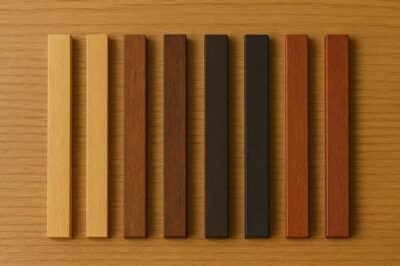
Chopsticks Making Workshop in Gion with Engraving Option
Read our review →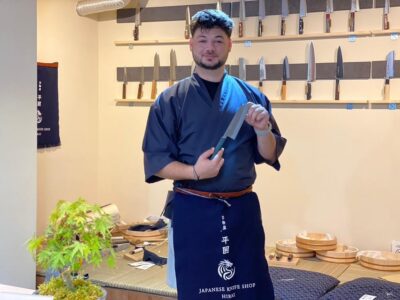
Beginner Knife Sharpening & Handle Fitting Workshop
Read our review →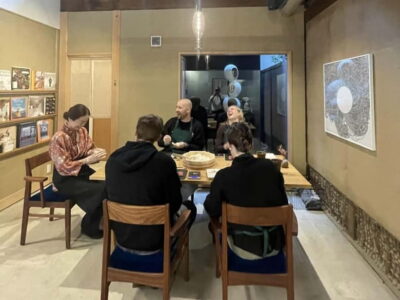
Japanese Archery Workshop with Experienced Instructor
Read our review →
Kyoto Michelin Ramen Workshop or Painting Ramen Essentials
Read our review →
Browse the lists this tour appears in