
Reviewed · KYOTO TEA CEREMONIES
Japanese Traditional Sweets making with Tatedashi Matcha
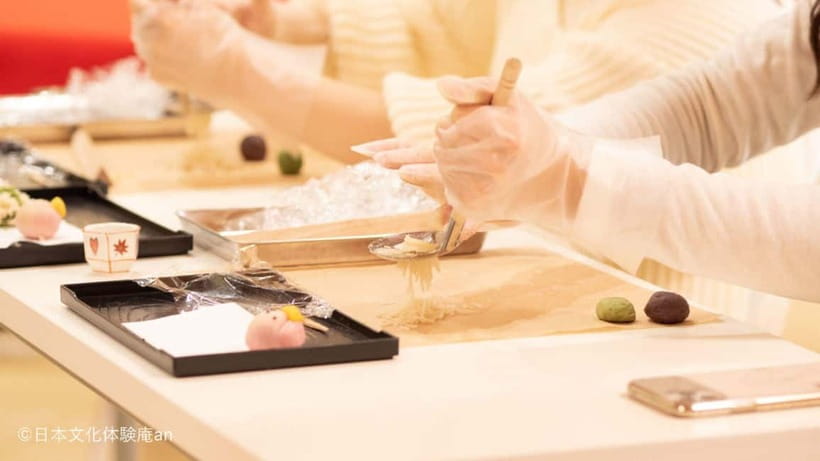
Nerikiri is the star here: you shape two seasonal Japanese sweets yourself, then sit down to eat them with Tatedashi Matcha. It’s a hands-on way to spend an hour in Kyoto, and the finished sweets are meant to be as pleasing to look at as they are to taste.
I like two things about this class: you work with white and red bean paste from long-established Kyoto shops, and you get to eat your creations on the spot rather than just admire them. The short format also makes it an easy break from sightseeing.
The main caveat is that the group can feel crowded, and the hands-on work may seem more like shaping dough than learning the sweets’ ingredients or background. If that kind of practical activity sounds fun, you’ll likely enjoy it; if you want a detailed food history lesson, this may not be the right fit.
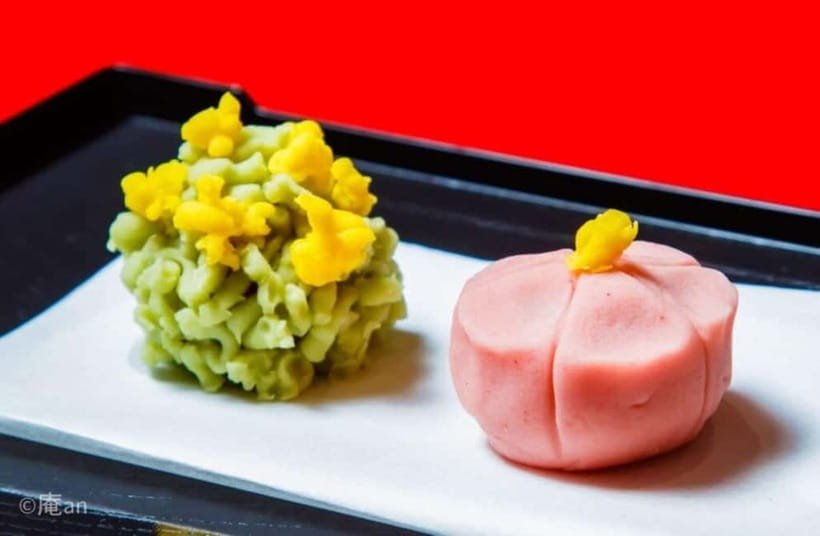
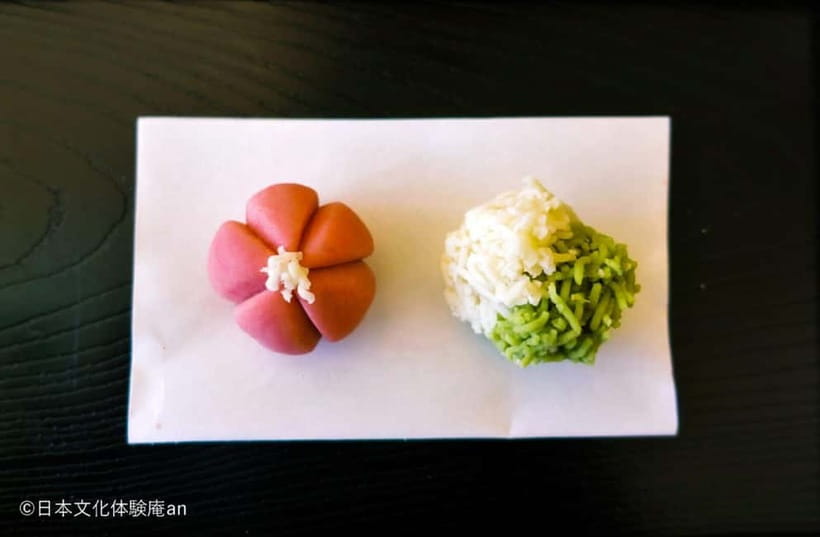
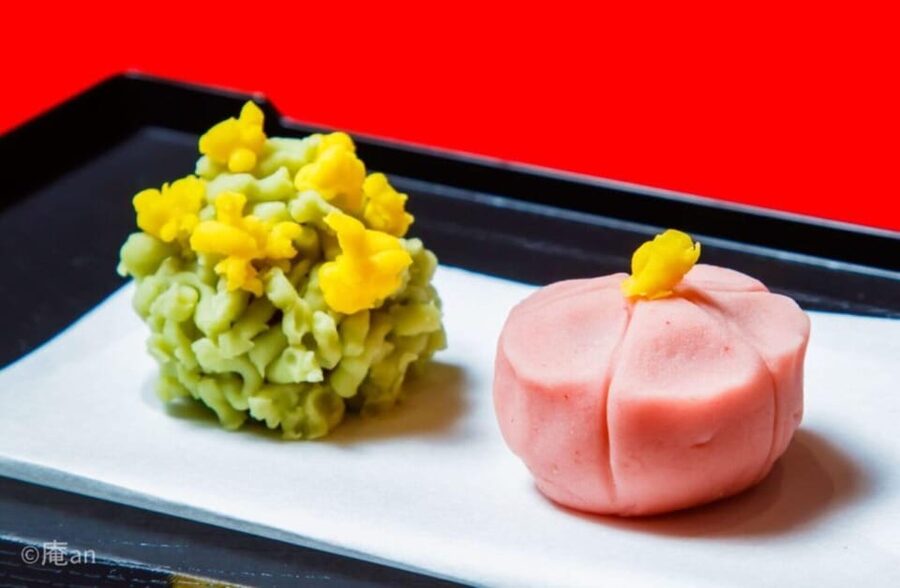
- Make two seasonal nerikiri: Your projects are a flower-shaped sweet and a kinton nerikiri.
- Use Kyoto-made bean paste: The class uses white and red bean paste from long-established local shops.
- Drink matcha and eat your work: Tatedashi Matcha is included, along with time to enjoy your sweets.
- Plan for 65 minutes: Making takes most of the session, followed by matcha and eating time.
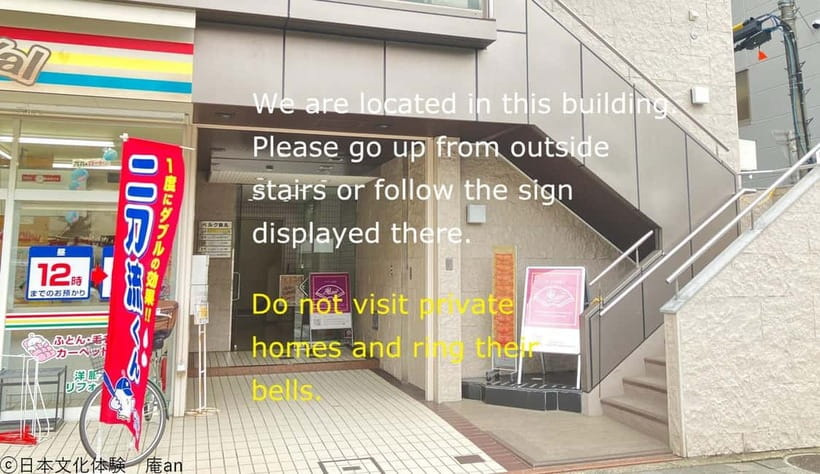
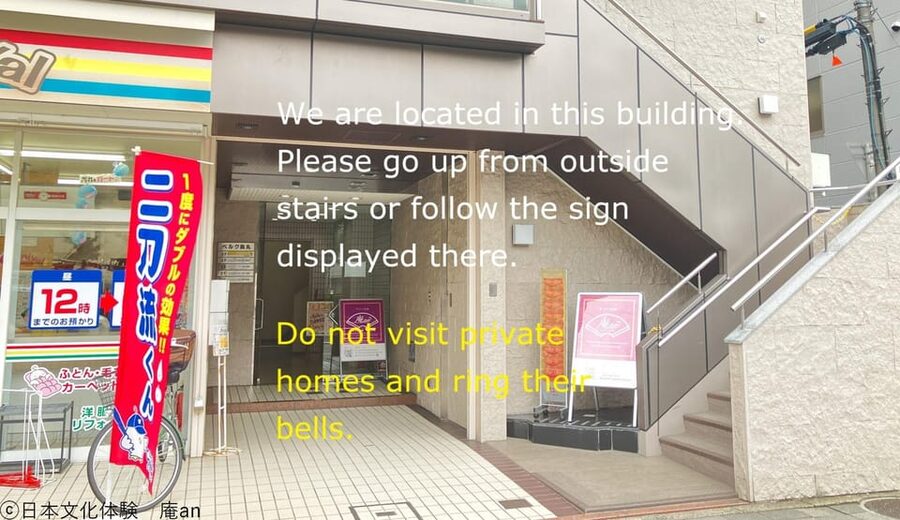
- Find the venue by Gojo Station: It’s a one-minute walk from Exit 1, with its entrance facing Gojo-dori.
- Check the access details: The activity is marked wheelchair accessible, but the building has no elevator and requires stairs.
A small Kyoto class with a sweet payoff
This is a focused activity, not a full cooking course. You make two Japanese sweets called nerikiri, with seasonal designs, and then enjoy them with matcha. The class is short enough to fit between other plans, but tactile enough to give you something more than a quick demonstration.
The seasonal angle gives the craft its purpose. These sweets are shaped to reflect the time of year, so the finished pieces are not just snacks. They’re small edible designs. You’ll make one flower-shaped nerikiri and one kinton nerikiri, using white and red bean paste made by established Kyoto shops.
That local ingredient detail matters. You’re not simply pressing generic dough into a mold. The class uses ingredients associated with traditional Japanese sweets, and you get to see how the paste behaves as you form it. Still, the session is designed for participation and enjoyment, not a long technical lesson on sweet-making.
One past participant found the activity felt like shaping play dough and wished they knew more about what was inside it. That’s a fair expectation to set: you’ll work directly with the sweets, but the supplied details don’t promise a deep explanation of ingredients or the history of nerikiri. If you like making things with your hands, that may be a plus. If you’re looking for a lecture on Japanese confectionery, it may feel light.
From explanation to two handmade sweets
The class begins with an explanation of Japanese traditional sweets. This gives you an introduction before you start shaping, though the instructor’s language is Japanese. English translation is available as much as possible, and you can contact the provider if you’d like it added. If you need a detailed English explanation, ask ahead rather than counting on every detail being translated during the session.
Next comes the flower-shaped nerikiri. This is the first chance to work with the bean paste and turn it into a seasonal design. The goal is not just to make something edible, but to shape a small sweet you’ll want to place on a plate and photograph. Don’t expect a perfect result on your first try. The pleasure is in making it yourself.
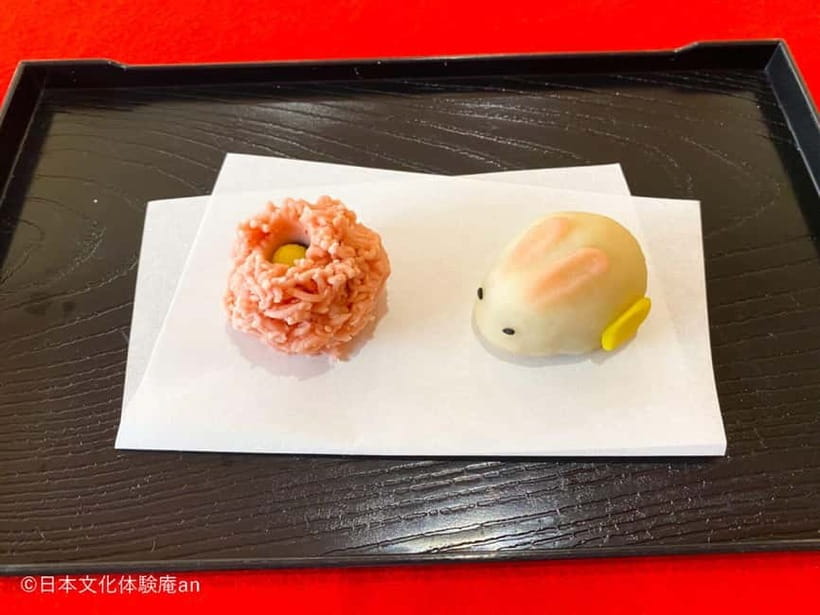
The second project is a kinton nerikiri. You’ll make two distinct sweets, rather than repeating one design, which gives the class some variety. The exact seasonal forms can change, so you shouldn’t assume a specific motif will be offered on your date.
There’s time for pictures before the making portion wraps up at about the 55-minute mark. That’s a useful detail if you like to document your work: you can photograph the sweets before eating them. The final ten minutes are set aside for Tatedashi Matcha and eating. You can enjoy both sweets at the venue, so there’s no need to carry them around Kyoto unless you choose to buy a take-out box.
More tea ceremonies in Kyoto:
- Kyoto: Tea Ceremony in a Traditional Tea House in Kiyomizu
★ 4.9 · 3,519 reviews - Kyoto: Tea Ceremony Ju-An at Jotokuji Temple
★ 4.9 · 3,207 reviews - Kyoto: 45-Minute Tea Ceremony Lesson Experience
★ 4.3 · 2,378 reviews
Matcha makes the class feel like a complete break
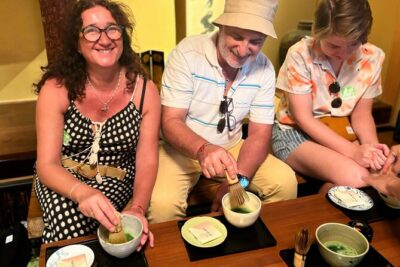
The matcha is included in the price, so this is more than a craft session. You finish by sitting down with your handmade sweets and a serving of Tatedashi Matcha. The combination gives the activity a natural ending: first make something, then take a few minutes to enjoy it.
The schedule is compact, but that can be a benefit. At 65 minutes, the class can offer a change of pace without claiming half a day of your itinerary. One participant described it as a simple but enjoyable pause from a busy sightseeing schedule. That’s the right way to think of it: a small, hands-on interlude, not a major attraction in itself.
Another positive point is taste. People who enjoyed the class singled out the sweets as tasty, and the use of Kyoto-made bean paste gives the activity a clear connection to local food craft. You’re not just making a keepsake; the finished product is meant to be eaten.
If you don’t want to eat your sweets right away, a take-out box costs 100 JPY. An experience completion certificate is also available for 300 JPY. Neither is included in the $14 per-person price.
How the $14 price compares
At $14 per person, the value comes from the combination of guided making, two sweets, and matcha, all within a little over an hour. You’re paying for an activity rather than a meal, but the chance to work with traditional ingredients and then taste the result makes the cost reasonable for a short Kyoto experience.
The price is particularly appealing if you want a low-commitment activity or are traveling with someone who enjoys crafts and sweets. It’s also easy to fit into a day because the class lasts just over an hour. The added box and certificate are optional extras, so you can keep the total close to the advertised price if you eat your sweets there and skip the certificate.
Value depends on what you want to learn. If your priority is a calm, guided activity with something tasty at the end, the price is easy to justify. If you’re hoping for an in-depth lesson on the history and methods of Japanese confectionery, the short format and limited English translation may leave you wanting more.
Gojo Station is close, but check the stairs
The meeting point is a one-minute walk from Exit 1 of Gojo Station on the Subway Karasuma Line. Look for the entrance facing Gojo-dori, the main street. That short walk makes the class straightforward to reach if you’re already in the area or using the subway.
The venue information needs a little attention if mobility is a concern. The activity is marked wheelchair accessible, but the building has no elevator and reaching each venue requires stairs. Those details don’t fully align, so contact the provider before booking if you need step-free access. Don’t rely on the accessibility label alone.
The class operates from 10:00 to 17:00. A reservation received after 17:00 is processed the next day, so leave time if you’re booking late. The instructor’s language is Japanese, with English translation provided as much as possible.
Arrive on time. The provider says the class cannot be held to accommodate delays. If you’re coming from another part of Kyoto, allow a buffer for the subway, finding the correct exit, and locating the street-facing entrance.
More cooking classes in Kyoto:
- Ramen Cooking Class at Ramen Factory in Kyoto
★ 5.0 · 1,937 reviews - Sushi Making in Kyoto! Same-day bookings welcome!
★ 5.0 · 713 reviews - Kyoto: Ramen Cooking Class at a Ramen Factory with Souvenir
★ 4.9 · 532 reviews - Kyoto: Ramen, Gyoza, and Onigiri Cooking Class
★ 5.0 · 445 reviews
Group size and expectations matter
The main drawback to weigh is the possibility of a crowded class. The group size is not specified, but one participant found there were too many people in a session. If you prefer plenty of individual attention or quiet workspace, this is worth considering. You can contact the provider to ask about the expected group size for your chosen date.
The simple format also sets a limit on how much instruction you’ll get. You’ll have an explanation and guidance while making two sweets, but the class is only 65 minutes long. It’s best suited to someone who wants to try the craft, not master it in one visit.
Families may find the hands-on nature appealing, but the details say people who aren’t participating cannot enter. Children under two who sit on a parent’s lap are free; other nonparticipants should not plan to wait inside. Check the age and participation arrangements with the provider if you’re booking for a family group.
Cancellation is free up to 24 hours in advance. The provider also notes that cancellation fees apply outside the stated free-cancellation period, and a fee may apply if you change the date or time after a cancellation fee has already been incurred. Read the terms before booking, especially if your Kyoto plans are still shifting.
Who should book this class
I’d choose this class if you’re curious about Japanese sweets, enjoy small craft activities, or want a brief indoor break near Gojo Station. It works especially well if you value the chance to make something yourself and eat it right away. The matcha, two designs, and Kyoto-made bean paste give the hour a clear focus.
Think twice if you want a quiet, highly detailed lesson or need guaranteed one-to-one instruction. The group may feel crowded, and the making can be more about shaping than learning the full story behind the sweets. For most people who are happy with a simple, cheerful activity, that’s a reasonable trade-off.
FAQ
How long does the Japanese sweets class last?
The full activity lasts 65 minutes. The sweets-making portion ends at about 55 minutes, followed by Tatedashi Matcha and time to eat.
What will I make?
You’ll make two seasonal nerikiri sweets: a flower-shaped sweet and a kinton nerikiri. The specific seasonal designs may vary.
Is matcha included?
Yes. Tatedashi Matcha is included, along with time to eat your handmade sweets at the venue.
Where is the meeting point?
The venue is a one-minute walk from Exit 1 of Gojo Station on the Subway Karasuma Line. The entrance faces Gojo-dori.
Is the class taught in English?
The instructor’s language is Japanese. English translation is provided as much as possible, and you can contact the provider if you’d like it added.
Can I take my sweets home?
You can eat them at the venue. A take-out box is available for 100 JPY.
Is the venue wheelchair accessible?
The activity is marked wheelchair accessible, but the building has no elevator and requires stairs to reach each venue. Contact the provider before booking to clarify access needs.
Newly added in Kyoto
- Uji: Private immersion into Kyoto’s tea and reglious culture★ 5.0 · 17 reviews
- Whisk Your Own Matcha: A Zen Matcha Experience at Temple★ 3.6 · 7 reviews
- Kyoto tea town for matcha lovers★ 5.0 · 16 reviews
- Treasures of Kyoto: Gion & historical Walking Tour★ 5.0 · 6 reviews
- Kyoto Matcha Green Tea Tour★ 4.5 · 23 reviews
- Uji and Wazuka Matcha Farm Half Day Private Guided Tour★ 5.0 · 21 reviews
- Uji Tea Ceremony and UNESCO Heritage Walking Tour★ 5.0 · 20 reviews
- Utilising upcycled Matcha! Creating matcha incense (Uji, Kyoto)★ 5.0 · 6 reviews
Kyoto Tea Ceremonies, compared.

Tea Ceremony in a Traditional Tea House in Kiyomizu
Read our review →

World Heritage Kyoto & Nara Uji Authentic Matcha Experience
Read our review →

Arashiyama Bamboo Forest, Monkeys, Matcha & Temple Tour
Read our review →
Tea Museum Tickets and Matcha Grinding Experience
Read our review →Browse the lists this tour appears in