
Reviewed · KYOTO TEA CEREMONIES
Kyoto: Kimono Tea Ceremony with Matcha and Sweet
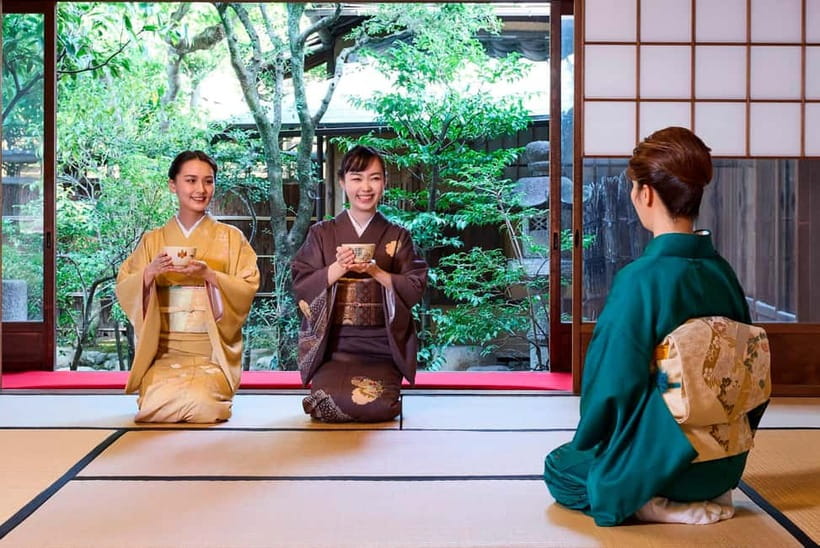
A Kyoto tea ceremony offers more than a pretty kimono photo: you get to learn the ritual, then make a bowl of matcha yourself. I like the hands-on preparation and the way the tea master explains the ceremony’s tools and etiquette in English. The kimono dressing also gives the experience a sense of occasion before you even enter the tea room.
One point to weigh is the group size. Sessions can include about 12 to 14 people, so this is a guided cultural activity rather than a private ceremony. You’ll also need to be comfortable with the timing: although it is advertised as 90 minutes, the experience can last up to two hours.
At a glance
- Pick your kimono: Staff help you get dressed before the ceremony, and women with long hair can have it styled.
- Learn by watching, then doing: A tea master demonstrates the ritual before you prepare your own matcha.
- Taste seasonal wagashi: The traditional sweets change in flavor, color, and design with the season.
- Get English guidance: The instructor speaks English, with bilingual staff on hand to help.
- Plan for a group: Expect around 12 to 14 participants in a combined session.
- Allow extra time: The session is described as lasting 90 minutes, but can run 90 to 120 minutes.
Choosing a kimono before the tea
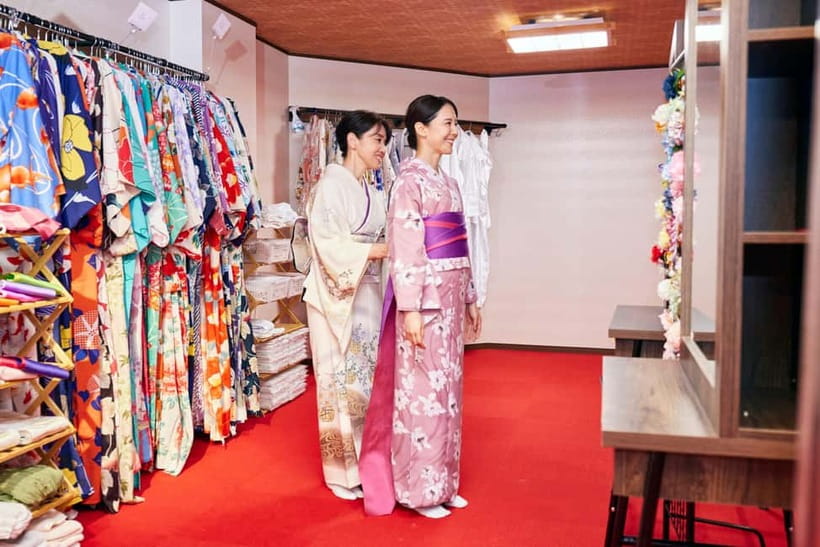
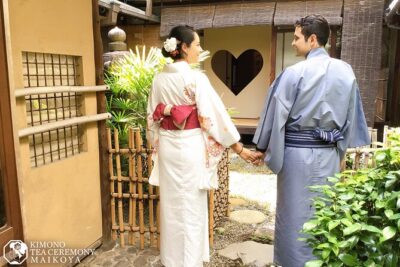
The experience begins with dressing, not with a cup of tea. You choose a kimono from the available selection, and staff help you put it on. That assistance matters: traditional clothing has layers and ties that can be tricky to manage on your own, especially if you have never worn it before.
Women with long hair can also have it styled. Hair styling is included, but it is limited to long hair, so do not count on a salon-style appointment or a particular look. If you want time for photos, consider arriving ready for the day rather than expecting a long pause to get changed, fix makeup, and plan a photo shoot.
The dressing is part of the cultural experience, not just a costume change. Wearing a kimono gives you a more immediate sense of how clothing shapes posture and movement during the ceremony. It can also make the ritual feel less like a demonstration from the sidelines.
There is a practical trade-off: dressing takes time from the session, and the overall activity may run longer than 90 minutes. If you have a tight schedule afterward, leave room for the longer estimate rather than booking a close-timed activity.
More tea ceremonies in Kyoto:
- Kyoto: Tea Ceremony in a Traditional Tea House in Kiyomizu
★ 4.9 · 3,519 reviews - Kyoto: Tea Ceremony Ju-An at Jotokuji Temple
★ 4.9 · 3,207 reviews - Kyoto: 45-Minute Tea Ceremony Lesson Experience
★ 4.3 · 2,378 reviews
Entering the tea room
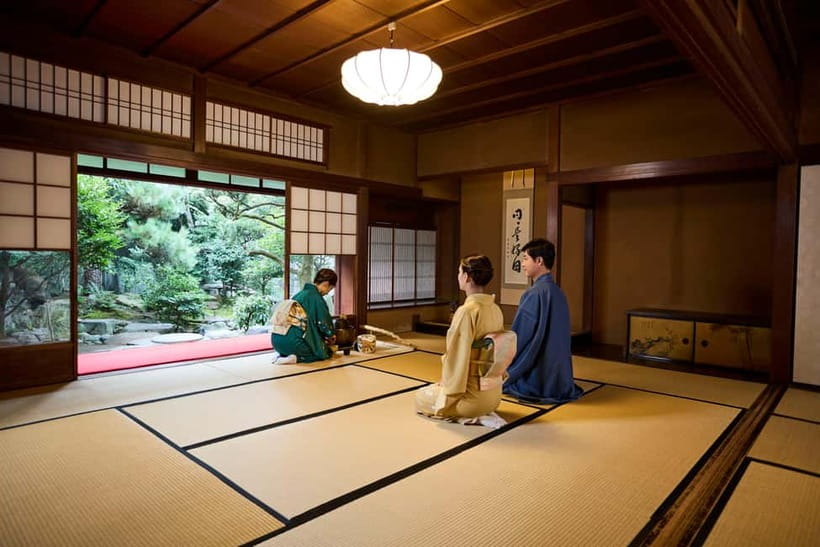
Once dressed, you move into a traditional tea room, where the utensils are arranged for the ceremony. The room’s setting helps focus attention on the ritual: the placement of tools, the measured movements, and the quiet pace all have a role.
Sitting on tatami mats is customary, but you do not have to sit on the floor if that is uncomfortable. Bamboo chairs are available by advance request. Make that request before the session, rather than assuming a chair will be ready when you arrive.
The group size affects the feel of the room. With around 12 to 14 people, the tea master can guide a shared session, but you should not expect the quiet intimacy of a private lesson. If you are hoping for one-on-one instruction or a ceremony just for your party, this format may not be the right fit.
Watching the tea master at work
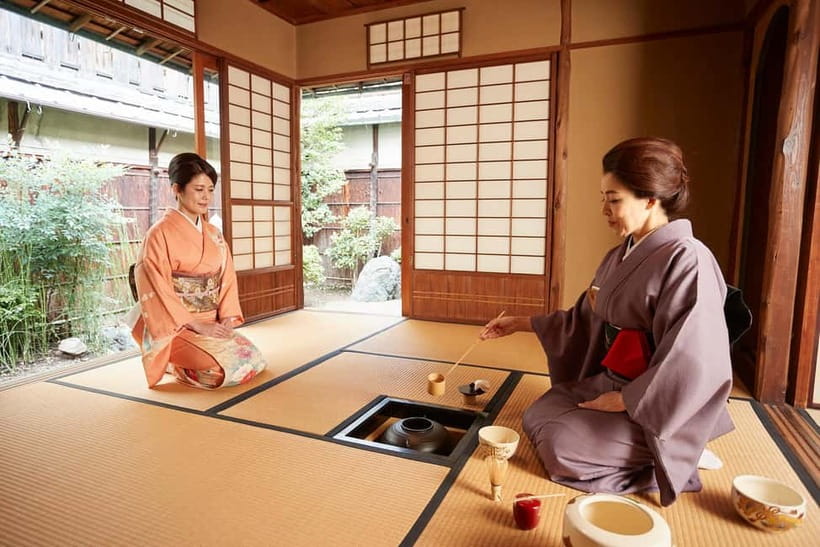
The tea master leads the ceremony and explains its history, tools, and etiquette in English. You are not asked to know the rules in advance. The point is to understand why particular movements and objects matter, not to pass a test in perfect tea-room manners.
Names associated with sessions include Maki and Megumi, though the tea master may vary on your date. The important thing is that the format includes English guidance throughout, so you can follow the steps and ask questions as the ritual unfolds.
You’ll hear about the Zen principles that shape the ceremony: wa, harmony; kei, respect; sei, purity; and jaku, tranquility. These ideas give context to the careful movements. The ceremony is not simply about making a drink; it is also a practice of attention, courtesy, and calm.
Expect a blend of explanation and demonstration. This is useful if you want cultural context, but it is still a short introduction, not an in-depth course in tea practice. You’ll leave with a clearer sense of the ritual’s structure, not a complete grounding in every school or custom.
Making your own matcha
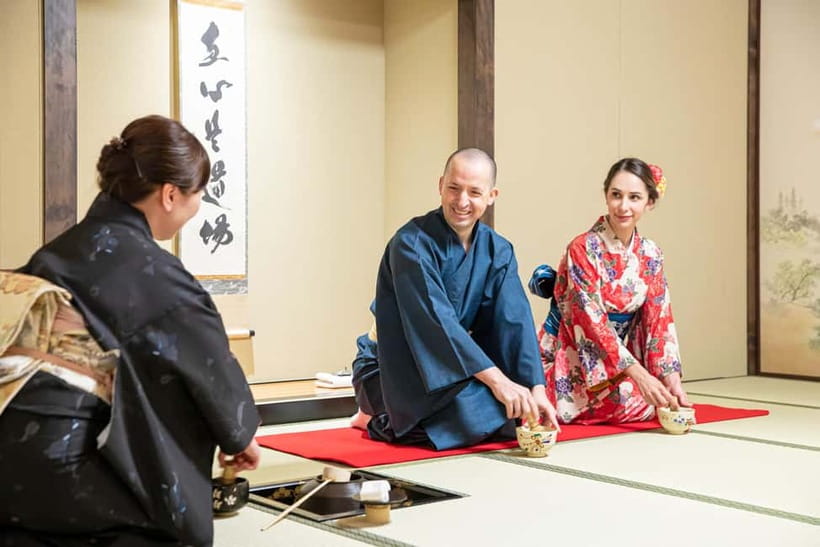
After watching the tea-making process, you get to prepare your own bowl using premium matcha. That hands-on step is a strong reason to choose this activity over a ceremony where you only watch the host. You see the process, then try it yourself with the tea master’s guidance.
Matcha preparation rewards a steady hand and a little patience. The goal is not just to drink a cup, but to notice how the tools and method contribute to the finished tea. You do not need prior experience, and the English instruction helps you follow the steps.
There is a distinction worth understanding before you book: the tea master leads the ceremony, but you also take part by making your own matcha. If you want to sit back and be served throughout, this may not match your idea of a tea ceremony. If you like learning by doing, the participation is a plus.
More kimono rentals and experiences in Kyoto:
- Kimono Tea Ceremony at Kyoto Maikoya, NISHIKI
★ 5.0 · 911 reviews - Kyoto: Kimono Rental with Hairstyling and Accessories
★ 4.8 · 653 reviews - Kyoto: Kimono Tea Ceremony at Orizuruya Gion
★ 4.9 · 618 reviews - KYOTO Tea Ceremony with kimono near by Imamiya Jinjya Shrine
★ 5.0 · 343 reviews
Savoring seasonal wagashi
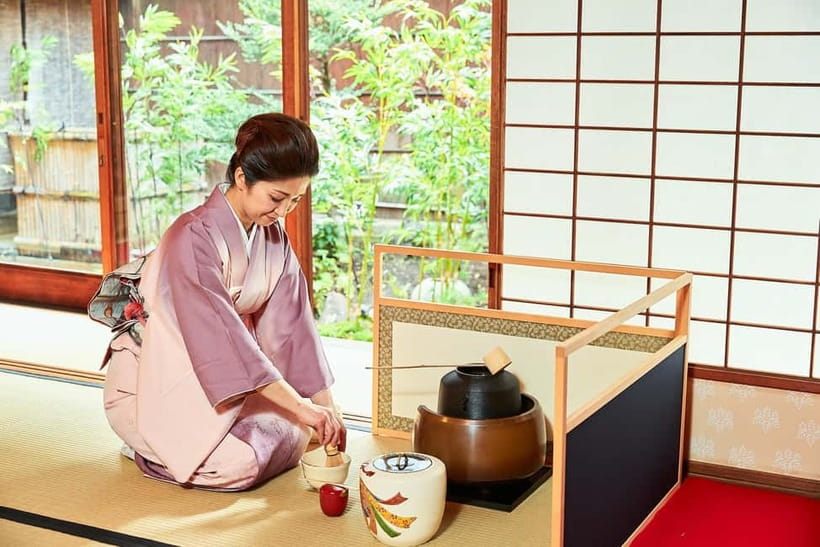
The matcha is served with wagashi, traditional Japanese sweets. Their flavor, color, and design change with the seasons, so the sweet is not necessarily the same from one time of year to another. It adds a small but memorable lesson in how Japanese food presentation can reflect the calendar.
The sweet is more than a treat on the side. In a tea ceremony, it balances the tea and gives you another way to notice the care put into the experience. You may find its flavor or texture different from familiar Western desserts, which is part of the pleasure of trying it in context.
Because the selection is seasonal, you cannot choose a particular sweet in advance. Go with curiosity rather than expecting a fixed menu. The tea and wagashi together make a simple tasting, not a full meal, so plan your day’s food accordingly.
What $66 buys you
At $66 per person, the price covers kimono dressing, the tea ceremony led by a tea master, hands-on matcha preparation, Japanese sweets, and bilingual staff assistance. Hair styling is included for women with long hair. Transportation to and from the venue is not included.
I see the value in the combination. You are paying for several linked parts of a cultural activity, rather than only a short tea tasting: dressing, an English explanation, a guided ritual, and your own matcha preparation. The kimono also helps make the experience feel distinct from a standard food or drink stop.
The value depends on what you want from Kyoto. If you are interested in Japanese customs but have limited time, this packages a few related experiences into one session. If you already plan to rent a kimono separately or attend a longer tea lesson, compare what each option includes before deciding.
Keep the group size in mind when judging the price. Around 12 to 14 participants can mean less individual attention than a private booking, but it also gives the session a shared, welcoming feel. The price is most persuasive if you value the dressing and cultural explanation as much as the tea itself.
Timing, comfort, and who should book
The listed duration is 90 minutes, while the full experience can take 90 to 120 minutes. The kimono dressing is part of that visit, so give yourself a generous window. Starting times vary, and you need to check availability for the date you want.
Children under 7 are not allowed. For older children, the combination of dressing, listening, and taking part in a quiet ritual will suit those who can stay engaged for the session. The activity is a better fit for curious children than for very young kids who need room to move around.
This experience suits first-time visitors who want a guided introduction to tea culture without needing to arrange each part themselves. It also works well for couples, friends, and families with older children who enjoy dressing up and taking photos. If you prefer a very small group, a longer lesson, or a ceremony without the kimono element, look for a different format.
Should you book this Kyoto tea ceremony?
Book it if you want a practical, friendly introduction to tea ceremony customs, with the added pleasure of wearing a kimono and preparing matcha yourself. The strongest parts are the English guidance, the chance to understand the meaning behind the ritual, and the seasonal sweet that completes the tasting.
Think twice if you want a private or highly formal ceremony, or if your schedule cannot absorb a possible two-hour visit. For most curious visitors, though, the mix of clothing, instruction, and participation makes this a worthwhile way to spend part of a Kyoto day.
FAQ
How long does the experience last?
It is listed as 90 minutes, but the full experience can take about 90 to 120 minutes. Allow extra time if you have plans afterward.
Is the tea ceremony taught in English?
Yes. The instructor speaks English, and bilingual staff assist during the experience.
Do I get to wear a kimono?
Yes. Choosing a kimono and getting help dressing are included.
Do I make the matcha myself?
Yes. The tea master demonstrates the process, then you prepare your own bowl using premium matcha.
Can I sit on a chair instead of the tatami?
Bamboo chairs are available by advance request. Ask for one before your session.
Are young children allowed?
Children under 7 are not allowed to join the experience.
Newly added in Kyoto
- Uji: Private immersion into Kyoto’s tea and reglious culture★ 5.0 · 17 reviews
- Whisk Your Own Matcha: A Zen Matcha Experience at Temple★ 3.6 · 7 reviews
- Kyoto tea town for matcha lovers★ 5.0 · 16 reviews
- Treasures of Kyoto: Gion & historical Walking Tour★ 5.0 · 6 reviews
- Kyoto Matcha Green Tea Tour★ 4.5 · 23 reviews
- Uji and Wazuka Matcha Farm Half Day Private Guided Tour★ 5.0 · 21 reviews
- Uji Tea Ceremony and UNESCO Heritage Walking Tour★ 5.0 · 20 reviews
- Utilising upcycled Matcha! Creating matcha incense (Uji, Kyoto)★ 5.0 · 6 reviews
Kyoto Tea Ceremonies, compared.

Tea Ceremony in a Traditional Tea House in Kiyomizu
Read our review →

World Heritage Kyoto & Nara Uji Authentic Matcha Experience
Read our review →

Arashiyama Bamboo Forest, Monkeys, Matcha & Temple Tour
Read our review →
Tea Museum Tickets and Matcha Grinding Experience
Read our review →Browse the lists this tour appears in