
Reviewed · KYOTO TEA CEREMONIES
Kyoto : Okada Tea Ceremony & Kimono
A kimono and a tea ceremony make a natural pairing in Kyoto: first you get dressed, then you sit down to learn what the tea customs mean. This small-group experience puts both parts in one place, with Okada guiding the ceremony and matcha and sweets included.
I like that the kimono rental shop is right beside the tea venue, so you do not have to cross town in formal dress. I also like that you can keep the kimono until 6:00 PM, turning a roughly two-and-a-half-hour booking into extra time to stroll nearby.
One consideration: getting dressed takes about one to one and a half hours, so this is not a quick add-on. If you are short on time, plan around the full visit rather than treating it as a one-hour tea stop.
Key points to know before you book
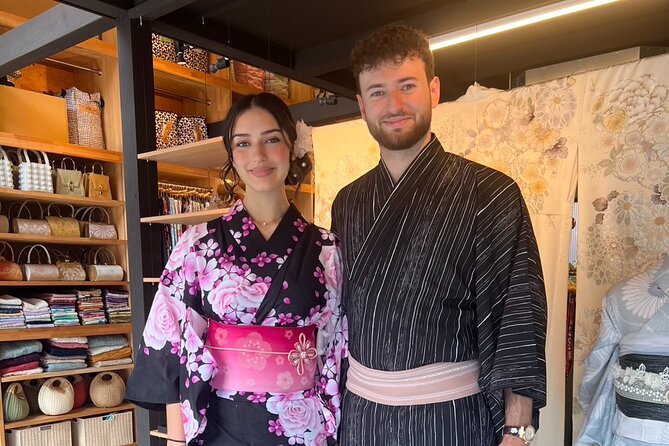
- Kimono first, ceremony second: Allow about 1 to 1.5 hours to choose your outfit, get dressed, and have simple hairstyling.
- The tea ceremony lasts one hour: You learn about tea culture and customs while enjoying matcha and sweets.
- The venue pair is especially convenient: The rental shop is beside the tea ceremony venue, about a 30-second walk from the Kiyomizu-michi bus stop.
- Keep the kimono after the class: You can wear it until 6:00 PM and explore nearby streets at your own pace.
- The group is capped at four: That small maximum suits a more personal cultural session, though availability is limited.
- It costs $84.70 per person: The price covers the dressing and ceremony experience, with several more hours of kimono use afterward.
Getting dressed at Okada in Higashiyama
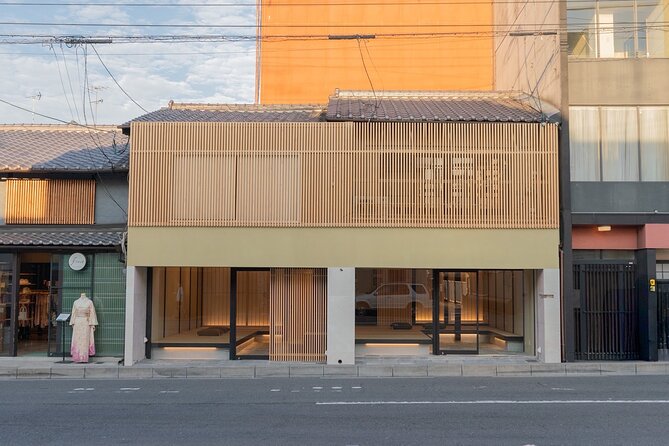
The experience begins at 岡田-OKADA-102 Tatsumichō, in Kyoto’s Higashiyama Ward. The shop is close to the Kiyomizu-michi bus stop, roughly a 30-second walk away, which is useful when you are planning a day around the area. The activity returns to this same meeting point.
Your first task is choosing a kimono. The dressing process is a substantial part of the visit, not a quick costume change. Allow 1 to 1.5 hours for selecting the outfit, getting dressed, and simple hairstyling. That time gives the experience a different pace from a brief photo rental, but it also means you should not schedule another activity too tightly afterward.
The available details do not specify the range of garments, accessories, or hairstyles, so it is wise not to arrive with a particular look in mind. The practical point is that dressing is included as an activity in its own right. You are not expected to arrive already dressed or to travel between a rental shop and a separate ceremony site.
That proximity is a real advantage. Once you are ready, you can proceed directly to the tea ceremony venue. You avoid figuring out local transport in a kimono, and you do not need to allow extra time for a transfer between the two parts of the booking.
More tea ceremonies in Kyoto:
- Kyoto: Tea Ceremony in a Traditional Tea House in Kiyomizu
★ 4.9 · 3,519 reviews - Kyoto: Tea Ceremony Ju-An at Jotokuji Temple
★ 4.9 · 3,207 reviews - Kyoto: 45-Minute Tea Ceremony Lesson Experience
★ 4.3 · 2,378 reviews
A one-hour introduction to tea customs
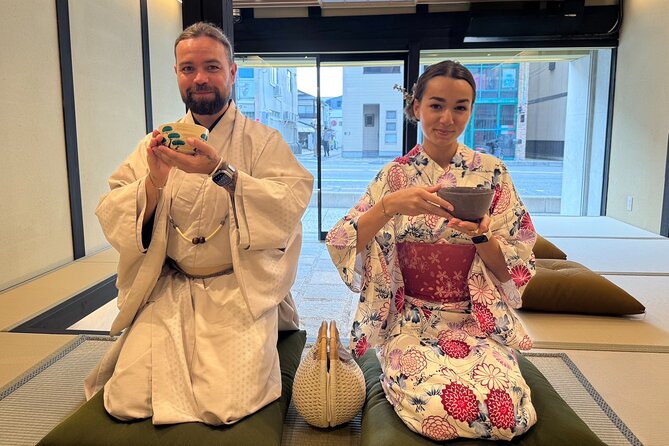
After dressing, you take part in a one-hour tea ceremony. The session is designed to explain tea culture and customs, rather than simply serve a cup of matcha. You can expect to hear about the meaning and history of the ceremony, then enjoy matcha with sweets.
That context matters. A tea ceremony can look quiet and simple from the outside, but the gestures and customs are part of the experience. A guided explanation helps you understand what you are seeing and gives you a way to engage beyond taking photos. If you are new to Japanese tea culture, this format offers an approachable introduction without asking you to prepare in advance.
Okada is described as attentive and thoughtful, and he has taken photos of participants in their kimonos. That is a useful touch if you want a record of the visit without having to ask someone else to take your picture. The emphasis is also on explaining the ceremony’s history and customs in detail, which makes the hour feel more like a cultural lesson than a staged photo opportunity.
The experience has also worked for a family with a three-year-old child. That does not guarantee every child will find a seated ceremony easy, but it is a reassuring sign for parents who want a cultural activity that can accommodate a young child. The host was patient and attentive in that case.
Your kimono time continues until 6:00 PM
The most valuable part of the schedule may come after the formal ceremony. You can keep wearing the kimono until 6:00 PM, so the booking does not end when the one-hour tea session does. That leaves you with time to explore and stroll nearby in the outfit.
This extra wear time changes the value calculation. You are paying for the dressing and ceremony, but you also have several hours to enjoy the kimono beyond the scheduled activity. If you already plan to visit nearby streets, you can make the booking part of a wider day rather than a standalone appointment.
There is a trade-off: a kimono may make a long sightseeing day less convenient than ordinary clothes. The supplied details do not specify footwear or the exact dressing setup, so plan conservatively and avoid assuming you will want to cover a large area. The advertised use is exploring nearby, which is a sensible way to enjoy the experience without turning the outfit into a logistical project.
The venue’s location near Kiyomizu-michi makes it practical to include in a Higashiyama outing. The activity itself does not list a guided neighborhood walk, so treat the sightseeing afterward as independent time. You can stroll at your own pace, then return the kimono by 6:00 PM.
Small group, personal instruction
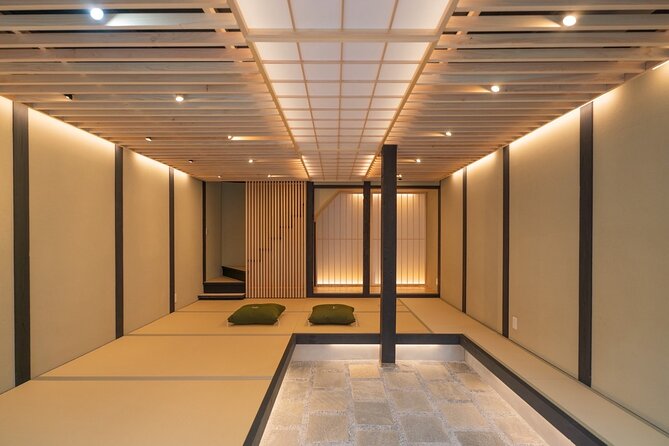
The maximum group size is four people. That is a meaningful detail for an experience built around dressing and explanation. A small group can make it easier to ask questions and follow the instructor, though the listed cap does not tell you how many people will be in your particular session.
The personal side of the experience is one of its strongest features. Okada is identified by name in participant accounts, and the descriptions of his approach emphasize patience, attentiveness, and care. He has also taken photos, an appreciated practical gesture when you are dressed up and want a keepsake.
If you are looking for a large, formal demonstration, this may not be the format you have in mind. The group limit points instead toward a close-up session with room for explanation. That suits couples, small families, or anyone who prefers a less crowded introduction to a cultural practice.
More kimono rentals and experiences in Kyoto:
- Kimono Tea Ceremony at Kyoto Maikoya, NISHIKI
★ 5.0 · 911 reviews - Kyoto: Kimono Rental with Hairstyling and Accessories
★ 4.8 · 653 reviews - Kyoto: Kimono Tea Ceremony at Orizuruya Gion
★ 4.9 · 618 reviews - KYOTO Tea Ceremony with kimono near by Imamiya Jinjya Shrine
★ 5.0 · 343 reviews
Is $84.70 a fair price?
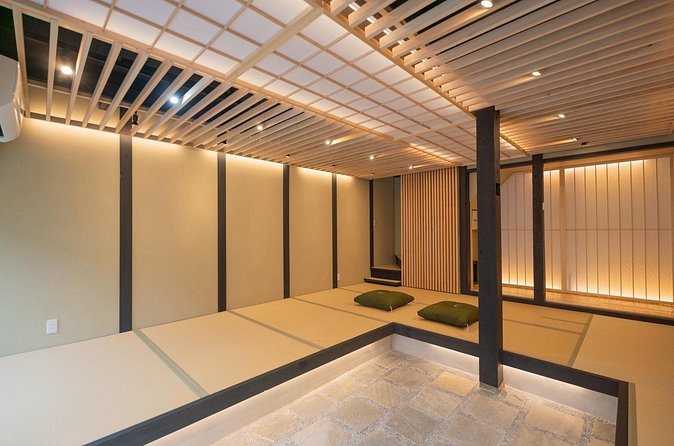
At $84.70 per person, this is not the cheapest way to try matcha or rent a kimono separately. Its value comes from putting the two activities together: dressing and simple hairstyling, a one-hour tea ceremony with matcha and sweets, and use of the kimono until 6:00 PM.
The time commitment is roughly two and a half hours for the booked experience, with the dressing portion accounting for much of that. If you value the process of getting dressed and want an explanation of tea customs, the price buys more than a short tasting. The small group limit and the convenience of having the shop beside the ceremony venue also make the visit easier to manage.
It is a weaker value if you only want a quick cup of tea, have little interest in wearing a kimono, or cannot make use of the extra time afterward. In that case, you would be paying for parts of the experience you may not care about. But if both activities appeal to you, the combined format can save the effort of arranging them separately and gives you a longer stretch to enjoy the outfit.
The experience has a 5.0 rating from seven reviews, a small sample rather than a guarantee. The recurring strengths are the thorough kimono dressing, detailed explanations of tea history and customs, and Okada’s attentive manner. Those are the elements to weigh most heavily when deciding whether the price fits your plans.
Timing, transport, and practical details
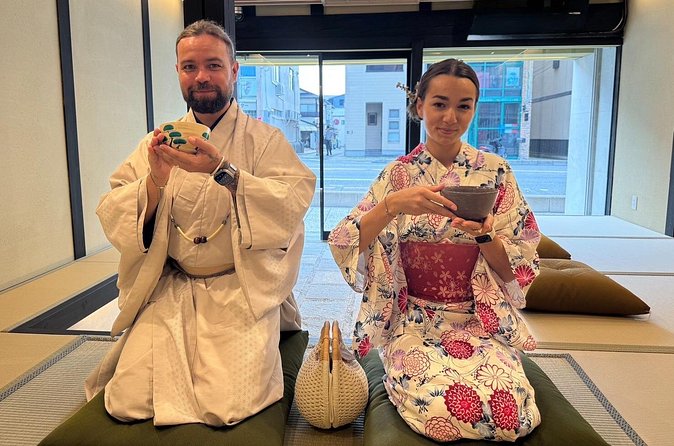
Set aside about two and a half hours for the booked activity. Since dressing alone takes 1 to 1.5 hours and the tea ceremony lasts one hour, arriving with a tight onward schedule is a poor plan. The remaining time in the approximate duration allows for the transitions involved, but the stated timing is still approximate.
The meeting point is 岡田-OKADA-102 Tatsumichō, Higashiyama Ward, Kyoto, 605-0855, Japan. It is near public transportation and a short walk from Kiyomizu-michi bus stop. The activity ends back at the same meeting point, while kimono use can continue until 6:00 PM.
Confirmation is received at booking, and mobile tickets are available. Service animals are allowed. The group maximum is four people, so book for everyone in your party together if you want to keep your group within a single session.
You can cancel for a full refund if you do so at least 24 hours before the start time. Changes or cancellations made less than 24 hours before the start time are not accepted for a refund, and the deadline follows local time. That is worth checking if your Kyoto plans are still shifting.
Who will enjoy this Kyoto experience most?
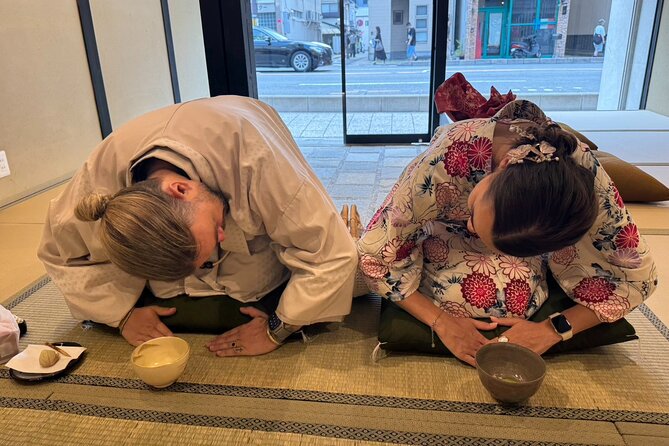
I would choose this for someone who wants more than a quick photo in traditional dress. The ceremony adds cultural context to the kimono, while the extended wear period lets you enjoy the outfit beyond the appointment. It is especially suited to couples, small groups, and families who are comfortable setting aside a large part of the day.
It is also a good fit if you are curious about Japanese tea customs but want an accessible introduction rather than a more formal or lengthy study. You learn about the culture, history, and customs while trying matcha and sweets. The combination keeps the session grounded in an activity you can see and taste.
Parents of young children may consider it, since a three-year-old has been accommodated. Still, the ceremony takes an hour, and each child’s patience is different. If you are booking with a small child, the host’s patient approach is encouraging, but you know your child’s limits best.
I would hesitate if your schedule is packed, if you do not want to spend 1 to 1.5 hours getting dressed, or if you will not use the kimono afterward. The experience works best when you have time to enjoy both parts without watching the clock.
Should you book Okada Tea Ceremony & Kimono?
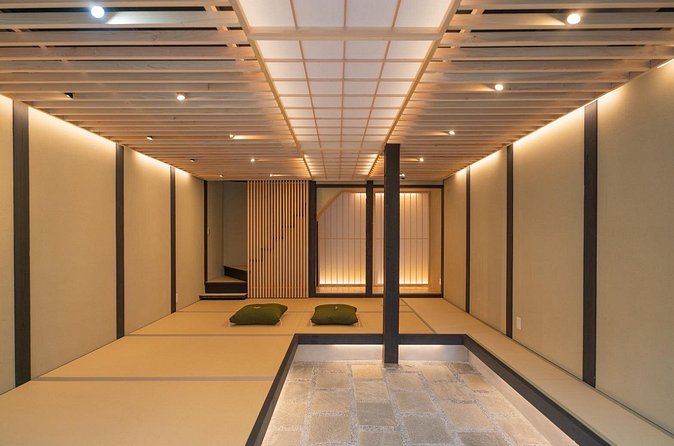
Book it if you want a well-organized pairing of kimono dressing and a guided tea ceremony, and you can spare the time to make the most of the outfit afterward. The shop and venue are side by side, the group is small, and Okada’s attentive explanations give the ceremony substance beyond the matcha and sweets.
Skip it if you want only a brief tea tasting or need to move quickly through Kyoto. The strongest value comes from enjoying the full sequence: choose a kimono, get dressed, learn the customs, then explore nearby until 6:00 PM. If that sounds like a good half-day rhythm, this is a practical way to add a personal cultural experience to a Kyoto visit.
FAQ
How long does the experience take?
The experience lasts approximately two and a half hours. Kimono dressing and simple hairstyling take about 1 to 1.5 hours, followed by a one-hour tea ceremony.
What is included in the tea ceremony?
You learn about tea culture and customs, and enjoy matcha and sweets during the one-hour ceremony.
How long can I keep the kimono?
You can continue wearing the kimono until 6:00 PM after the tea ceremony.
Where is the meeting point?
The meeting point is 岡田-OKADA-102 Tatsumichō, Higashiyama Ward, Kyoto, 605-0855, Japan. The activity ends back there.
How close is the experience to public transportation?
The venue is about a 30-second walk from the Kiyomizu-michi bus stop.
How many people can join?
The activity has a maximum of four travelers.
Can I cancel for a refund?
Yes. You can cancel for a full refund if you do so at least 24 hours before the experience starts. Cancellations and changes made less than 24 hours before the start time are not accepted for a refund.
Newly added in Kyoto
- Uji: Private immersion into Kyoto’s tea and reglious culture★ 5.0 · 17 reviews
- Whisk Your Own Matcha: A Zen Matcha Experience at Temple★ 3.6 · 7 reviews
- Kyoto tea town for matcha lovers★ 5.0 · 16 reviews
- Treasures of Kyoto: Gion & historical Walking Tour★ 5.0 · 6 reviews
- Uji and Wazuka Matcha Farm Half Day Private Guided Tour★ 5.0 · 21 reviews
- Kyoto Matcha Green Tea Tour★ 4.5 · 23 reviews
- Uji Tea Ceremony and UNESCO Heritage Walking Tour★ 5.0 · 20 reviews
- Utilising upcycled Matcha! Creating matcha incense (Uji, Kyoto)★ 5.0 · 6 reviews
Kyoto Tea Ceremonies, compared.
Tea Ceremony in a Traditional Tea House in Kiyomizu
Read our review →
World Heritage Kyoto & Nara Uji Authentic Matcha Experience
Read our review →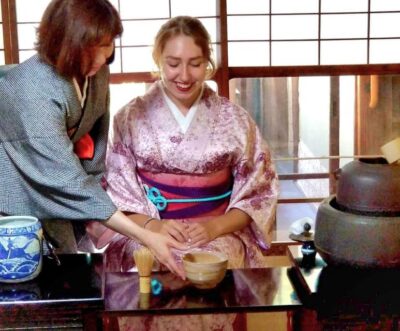

Arashiyama Bamboo Forest, Monkeys, Matcha & Temple Tour
Read our review →
Tea Museum Tickets and Matcha Grinding Experience
Read our review →Browse the lists this tour appears in