
Reviewed · KYOTO TEA CEREMONIES
Kyoto: Uji Matcha Tea Museum Entry Ticket
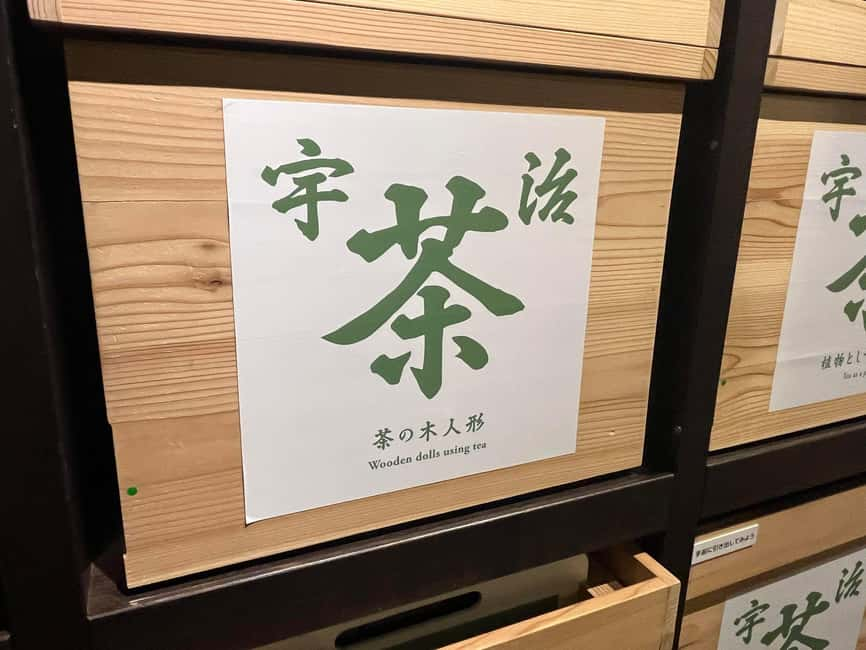
Uji tea’s story is told here through touchable digital exhibits, not just labels behind glass. In the history room, a huge 10-yen coin featuring Byodoin Phoenix Hall sets the tone: this is a museum that uses bold visuals to make local history easy to explore.
I like two things in particular: the tea room tackles useful questions, including how Gyokuro differs from Sencha, and the history room’s large 4K screen turns old townscape drawings into a striking display. Both give you more than a quick photo stop.
One consideration: the included ticket covers museum entry, but no tea tasting is listed. If you are hoping to drink Uji tea as part of the visit, check what else is available before you go.
- Get to grips with Uji tea: Digital exhibits explain its origins and production methods.
- Compare tea styles: Learn about the differences between Gyokuro and Sencha.
- See Uji’s past on a big screen: The history room features a large 4K display of townscape drawings.
- Look for the giant 10-yen coin: It depicts Byodoin Phoenix Hall and welcomes you into the history exhibits.
- Finish at the photo spot: A tea-themed corner offers a playful end to the museum visit.
Start with the questions behind your cup
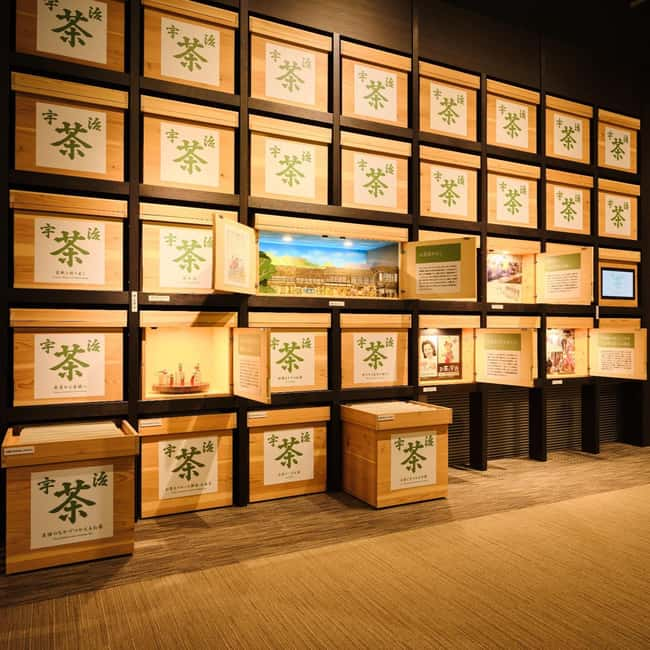
The Uji Tea Room, called Uji-cha no Ma, is the main place to get your bearings. Its exhibits address familiar questions: How is tea made? How did Uji tea begin? What makes Gyokuro different from Sencha? Is there a particular way to prepare tea well?
That mix is useful even if you already drink green tea. Instead of treating tea as one broad category, the displays invite you to consider how its production and preparation shape what ends up in your cup. You can touch and interact with the digital exhibits, which gives the room a more active feel than a display made only of text panels.
The focus is on learning, not on a formal tea ceremony. The information provided describes digital exhibitions and hands-on interaction, but does not list a tasting or tea service as part of the ticket. Plan around the museum experience itself, and treat any chance to sample tea as an extra unless it is confirmed separately.
Learn how Uji tea is made
Uji is closely tied to the tea named after it, and this room explores that connection through questions about origin and production. The value is practical: once you know that different teas are made and prepared in different ways, a tea menu or shop display can make more sense.
The exhibits include information about making delicious tea, a topic that reaches beyond history. It may help you pay closer attention to how tea is prepared at home, though the available details do not specify a lesson, recipe, or hands-on brewing session. Think of this as an introduction to the ideas behind a good cup rather than a class where you leave with a set technique.
The interactive format also suits a mixed-age visit. Children can engage with displays they can touch, while adults can follow the production and history questions. That does not mean every exhibit will hold every child’s attention for the same amount of time, but the format offers more variety than a room of written explanations alone.
More Uji trips in Kyoto:
- World Heritage Kyoto & Nara Uji Authentic Matcha Experience
★ 5.0 · 1,573 reviews - Osaka: Nara and Uji Day Trip with Deer Park and Hot Spring
★ 4.4 · 302 reviews - Uji: Green Tea Tour with Byodoin and Koshoji Temple Visits
★ 4.8 · 72 reviews
Gyokuro and Sencha are not the same story
The exhibit’s comparison of Gyokuro and Sencha is one of its most useful subjects. These are two distinct kinds of Japanese green tea, and the museum raises the question of how they differ rather than presenting Uji tea as a single, uniform product.
That is a good reason to take your time with the tea displays. The distinction can give you a better starting point when you encounter these names elsewhere, and it makes the broader story of tea production feel less abstract. The information provided does not spell out the exact differences the exhibits teach, so I would not treat the ticket description as a substitute for a detailed tasting guide.
For a casual visitor, the room’s strength is its range of questions. You can focus on the basics of how tea is made, or use the prompts to think more carefully about what you drink and how it is prepared. The digital format is intended to make these subjects approachable, rather than demanding prior knowledge.
Meet Uji through its river and town
The History Room shifts attention from the tea itself to the place that gives it its name. A giant 10-yen coin bearing Byodoin Phoenix Hall greets you, then digital exhibits trace changes in Uji town and the Uji River over time.
This local focus matters. Tea is not only a product; it is also part of a place’s story. Seeing the town and river in historical context can help you connect the museum’s tea displays with Uji’s broader past, rather than leaving with facts about production alone.
The room’s showpiece is a huge 4K digital screen displaying townscape drawings known as Meisho-zue. Its scale makes these images a visual centerpiece, and it offers a different way to take in historical material than reading a timeline. If you enjoy maps, old views, and the changing shape of towns, give this screen more than a passing glance.
The screen is also likely to be the most memorable feature for visitors who are less interested in tea-making details. That makes the museum a more rounded stop for a family or a group with different interests: one person can follow the tea story while another looks more closely at Uji’s history and imagery.
Save the photo spot for the end
The final corner is set aside as a tea-themed photo spot. It gives the visit a light finish and a chance to take pictures after you have explored the exhibits.
It is a small feature, but it can be useful if you are visiting with children or want a visual souvenir of the museum. Just keep it in proportion: the photo area is a closing extra, not the main reason to buy the ticket. The stronger draw is the combination of tea production, local history, and interactive displays.
More tea ceremonies in Kyoto:
- Kyoto: Tea Ceremony in a Traditional Tea House in Kiyomizu
★ 4.9 · 3,519 reviews - Kyoto: Tea Ceremony Ju-An at Jotokuji Temple
★ 4.9 · 3,207 reviews - Kyoto: 45-Minute Tea Ceremony Lesson Experience
★ 4.3 · 2,378 reviews - Kyoto: Table-Style Tea Ceremony at a Kyo-Machiya
★ 4.9 · 1,211 reviews
What the ticket costs, and what that price gets you
At $3.87 per person, the ticket is a low-cost way to spend part of a day learning about Uji tea and the town’s past. Its value rests on the museum’s range: one room looks at tea’s origins and production, another explores local history, and a themed photo spot adds a fun finish.
The ticket includes museum admission. No food, drink, tea tasting, or guided tour is listed as included, so keep your budget and expectations focused on entry to the exhibits. If a tasting is important to you, confirm it separately rather than assuming it comes with the museum ticket.
The activity is marked valid for one day. That means you can use the ticket within its validity period; it does not establish how many hours a visit takes. Starting times are shown through availability, so check the options for your date before making plans.
You can reserve now and pay later, and cancellation is available up to 24 hours in advance for a full refund. The museum is also listed as wheelchair accessible, a helpful detail if step-free access is important to your plans.
Who will get the most from this visit
I would put this museum on the list if you are curious about Japanese tea but want an introduction that is approachable and visual. The exhibits cover fundamentals such as how Uji tea is made, while the Gyokuro and Sencha comparison gives you a more specific subject to follow.
It also makes sense for families. The museum is described as suitable for children and adults, and interactive displays can give younger visitors something to do while adults take in the background. The large screen and photo corner add variety, though the experience is still centered on learning rather than play.
If you already know a great deal about tea, you may find the introductory questions familiar. In that case, the history room and its large-scale Meisho-zue display may be the better reason to visit. And if your main goal is to taste several teas, this ticket alone may not meet it, since a tasting is not listed.
Should you book the Uji Matcha Tea Museum?
Book it if you want an affordable, low-pressure introduction to Uji tea and local history, especially if interactive exhibits appeal to you. The combination of tea production, the Gyokuro and Sencha comparison, a giant 10-yen coin, and a large 4K history display gives the visit more range than a tea-only exhibit.
Skip it, or look for an additional activity, if you are mainly after a tasting or a guided tea experience. The ticket is for museum entry, and the information provided does not promise either. For the price, though, it is an easy addition to a day in Kyoto if you want to understand more about the tea and town behind Uji’s name.
FAQ
What does the ticket include?
It includes museum tickets for the Uji Matcha Tea Museum.
How long is the ticket valid?
The ticket is valid for one day. This describes its validity, not the length of a museum visit.
What can I learn about in the museum?
The exhibits cover Uji tea’s origins and production, the difference between Gyokuro and Sencha, ways to make tea, and the history of Uji town and the Uji River.
Is a tea tasting included?
A tasting is not listed as included. The stated inclusion is museum entry, so check separately if sampling tea is important to you.
Is the museum wheelchair accessible?
Yes. The experience is listed as wheelchair accessible.
Can I cancel for a refund?
Yes. You can cancel up to 24 hours in advance for a full refund.
Can I reserve now and pay later?
Yes. You can reserve without paying today.
More museum visits in Kyoto
- Kyoto: Tea Museum Tickets and Matcha Grinding Experience
★ 4.9 · 739 reviews - Skip the lines Basic Ticket at SAMURAI NINJA MUSEUM KYOTO
★ 4.5 · 632 reviews - Kyoto : Geiko Maiko Dance of Kyoto & Visits of Gion Museum
★ 4.6 · 415 reviews - Kyoto Sword Experience – includes Museum Ticket/Ninja Experience
★ 4.5 · 149 reviews
Newly added in Kyoto
- Uji: Private immersion into Kyoto’s tea and reglious culture★ 5.0 · 17 reviews
- Whisk Your Own Matcha: A Zen Matcha Experience at Temple★ 3.6 · 7 reviews
- Kyoto tea town for matcha lovers★ 5.0 · 16 reviews
- Treasures of Kyoto: Gion & historical Walking Tour★ 5.0 · 6 reviews
- Kyoto Matcha Green Tea Tour★ 4.5 · 23 reviews
- Uji and Wazuka Matcha Farm Half Day Private Guided Tour★ 5.0 · 21 reviews
- Uji Tea Ceremony and UNESCO Heritage Walking Tour★ 5.0 · 20 reviews
- Utilising upcycled Matcha! Creating matcha incense (Uji, Kyoto)★ 5.0 · 6 reviews
Kyoto Tea Ceremonies, compared.

Tea Ceremony in a Traditional Tea House in Kiyomizu
Read our review →

World Heritage Kyoto & Nara Uji Authentic Matcha Experience
Read our review →

Arashiyama Bamboo Forest, Monkeys, Matcha & Temple Tour
Read our review →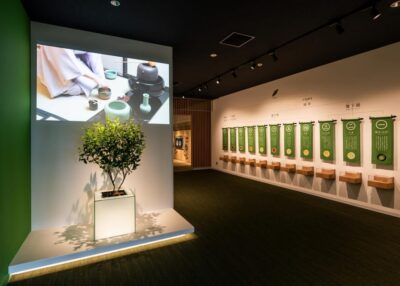
Tea Museum Tickets and Matcha Grinding Experience
Read our review →Browse the lists this tour appears in