
Reviewed · KYOTO CRAFT WORKSHOPS
Private Japanese Calligraphy in Kyoto – Learn Shodō with a Master
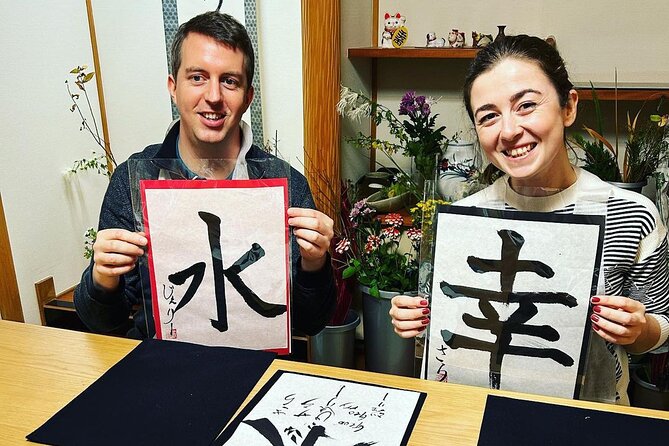
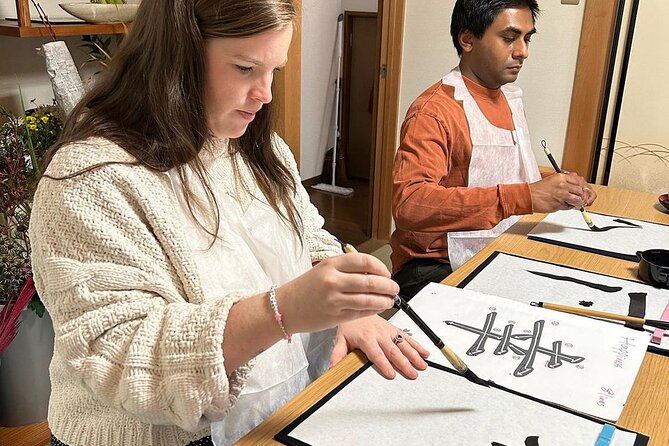
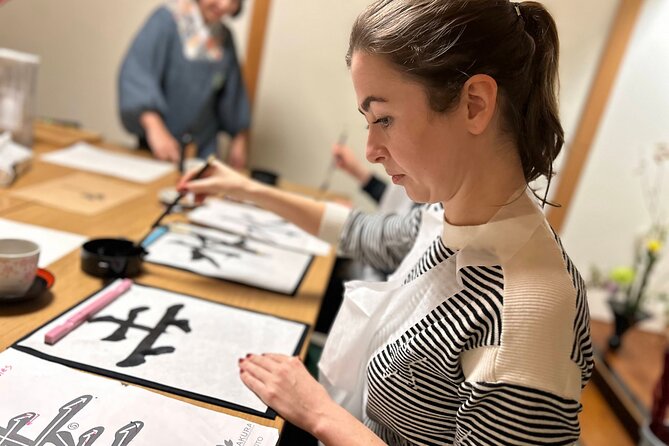
Shodō here is hands-on: you sit in a Kyoto home, learn how to guide ink and brush across paper, then try writing kanji yourself. I like that the class is private, so Aya can give your group individual guidance, and that the lesson ends with your own artwork to take home, not just a quick demonstration.
One thing to plan for: an hour can feel short if you want to learn several characters or write your name in Japanese as well as practice a favorite kanji. Choose what matters most before you arrive, and tell Aya early. Children under 12 cannot attend, and arriving more than 15 minutes late means the class cannot go ahead.
- A private lesson near Nijo Castle: Only your group takes part, in a home studio setting.
- A teacher with decades of practice: Aya has more than 55 years of calligraphy experience.
- Brush technique, not just a photo opportunity: Learn basic movements, then practice writing kanji with ink.
- A personal take-home piece: Your finished artwork is included, along with the paper and tools used in class.
- A small but useful cultural lesson: The class covers calligraphy’s background and the thought behind the strokes.
- Socks are required: The lesson takes place in a tatami room, where bare feet are not permitted.
A quiet hour of Kyoto culture
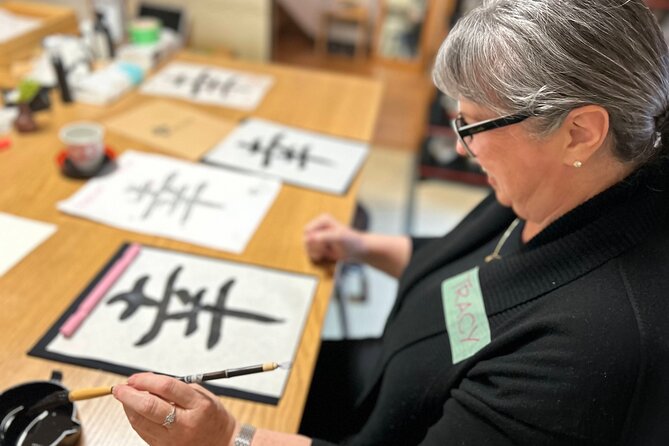
A calligraphy class offers a different pace from Kyoto’s temples and busy streets. At SAKURA Experience Japanese Culture, the setting is Aya’s home near Nijo Castle, where you learn shodō, the Japanese art of calligraphy, in a small private session rather than a large group demonstration.
The class is designed for beginners. You do not need to know Japanese or have used a brush before. Aya introduces the tools and basic brush movements, then helps you practice kanji. The focus is not on producing perfect work at once. It is on learning to control the brush and noticing how each stroke gives a character its shape.
Aya has practiced calligraphy for more than 55 years. That experience matters in a short lesson: she can show the technique, explain the art’s background, and guide your attempts as you work. The instruction is offered in English and Japanese.
What happens during the class
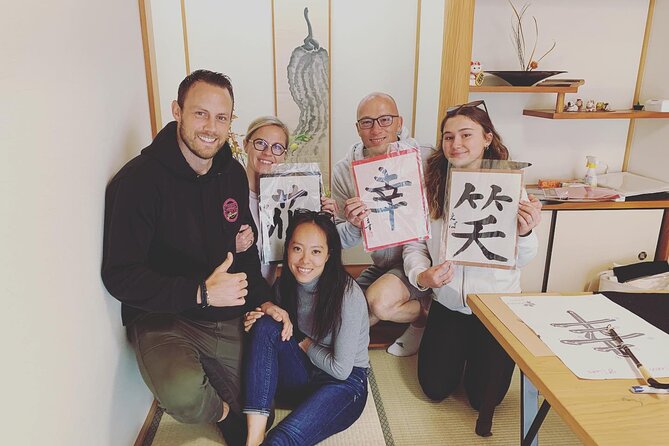
The experience begins at SAKURA Experience Japanese Culture Nijo Home, in Nakagyo Ward. You meet Aya and settle into the home’s tatami room before the lesson begins. This is a traditional room, so bring clean socks or wear them; bare feet are not permitted.
The class moves between explanation and practice. Aya introduces calligraphy and its history, demonstrates brush movements, and helps you try writing characters. You work with ink, brush, and paper supplied for the session. A calm, hands-on setting suits the subject: good calligraphy is not only about the form of a character, but also the pace and control of each stroke.
You can choose a favorite kanji and are also invited to write your name in Japanese. With only about an hour, there may be a trade-off between the two. If writing your name is a priority, say so near the start rather than leaving it until the end. Some names may take longer to work out in Japanese than a single character.
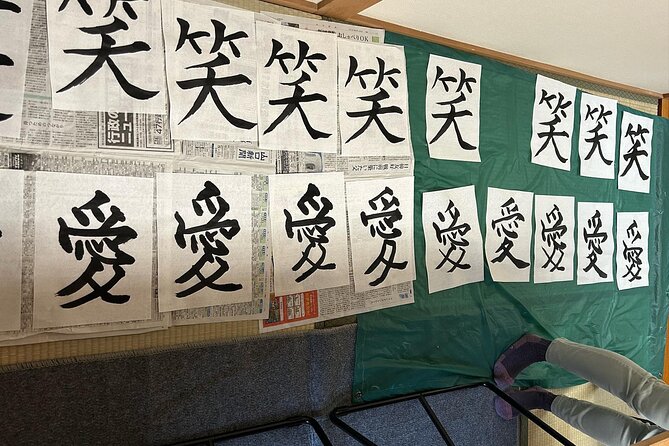
The session ends with your finished calligraphy to take home. Past classes have produced more than one practice piece, but the amount you complete depends on your pace and choices. Think of the artwork as a personal souvenir and a record of what you learned, not a professionally finished commission.
More craft workshops in Kyoto:
- Kyoto : Chopsticks Making Workshop in Gion with Engraving Option
★ 5.0 · 958 reviews - Kyoto: Calligraphy class at Buddhist temple in city center
★ 5.0 · 167 reviews - Kyoto: Beginner Knife Sharpening & Handle Fitting Workshop
★ 4.9 · 141 reviews
Why the private format helps
Private means only your group joins the lesson. That gives Aya room to adjust her guidance to your pace and answer questions without splitting her attention among strangers. It also makes this a good choice if you are shy about trying something unfamiliar in front of a crowd.
The home setting adds a personal note. You are not simply watching an artist work from across a room; you are learning in the place where your instructor teaches. Past sessions have included conversation about Japanese culture beyond calligraphy, and some have included tea, traditional sweets, or photos shared afterward. These are nice touches, but they should not be treated as guaranteed parts of every booking.
A private class also has limits. It is still a short introduction, not a multi-day course. If your goal is to develop a serious calligraphy practice or get detailed feedback on advanced work, one hour will only get you started. For a first lesson and a taste of the art, the focused format makes good sense.
The value of a brushstroke you made yourself
At $77.51 per person, this is more expensive than a self-guided cultural stop, but the fee covers personal instruction, use of the tools and paper, help choosing and writing a kanji, and the piece you take home. You are paying for Aya’s time and one-on-one guidance as much as for the materials.
The keepsake gives the class lasting value. A small object bought in a shop can remind you of Kyoto, but the artwork here carries the memory of the practice behind it: holding the brush, learning how to move it, and making the marks yourself. If you have room in your itinerary for only one short activity beyond sightseeing, this offers a tangible skill and cultural context in the same hour.
The price is per person, and group discounts are available. Private transportation is not included, so you will need to reach the meeting point on your own. The location is near public transportation and close to Nijo Castle, making it practical to pair the class with time in that part of the city.
Getting to the home near Nijo Castle
The meeting point is 660 Izumichō, Nakagyo Ward, Kyoto. The host places the home about 200 meters west of the front of Nijo Castle. One practical wrinkle: map street-view images may not match the correct entrance, even when the map pin is accurate. Follow the pin rather than relying on street-view photos, and check any directions or entrance information sent to you before setting off.
Allow enough time to find the house and arrive promptly. The class has a strict late-arrival rule: if you are more than 15 minutes late, the lesson cannot be offered and no refund is available. If weather or public transport delays you, contact the host as soon as possible. Do not assume that a late start can be made up later.
The experience ends back at the meeting point. There is no private transport, so plan your onward route separately. The area is served by public transportation, but the details of the best route depend on where you are staying.
More private tours in Kyoto:
- Fushimi Inari Hidden Hiking Tour (Private Option Available)
★ 5.0 · 1,750 reviews - Private Kyoto Tour with a Local, Highlights & Hidden Gems, Personalised
★ 5.0 · 1,543 reviews - Kyoto 6hr Private Tour with Government-Licensed Guide
★ 5.0 · 1,369 reviews - 10 Must-see Spots in Kyoto One Day Private Tour (up to 7 people)
★ 5.0 · 1,108 reviews
Who will enjoy this class most
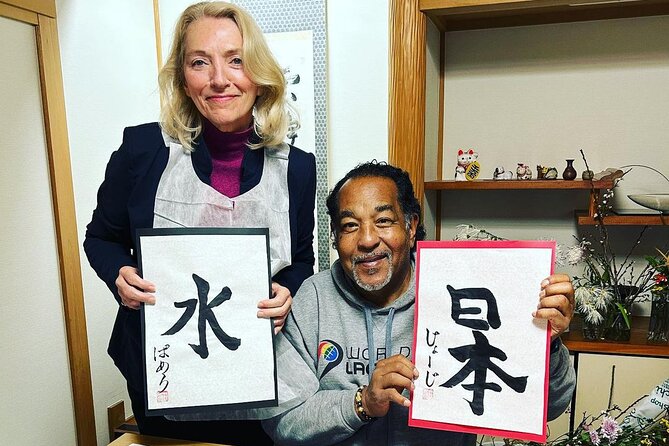
This is a good fit if you are curious about Japanese writing, enjoy trying a craft with an instructor, or want a quieter activity between temple visits. You do not need artistic confidence. The class is beginner-friendly, and Aya’s patient approach helps take the pressure off getting every stroke right on the first try.
It also works well for couples, friends, and small private groups who want to share an activity rather than watch a performance. Past participants have taken their work home for display or made pieces for family members. If you enjoy learning by doing, the mix of history, demonstration, practice, and a personal souvenir gives the hour a clear shape.
Families should pay close attention to the age rule. Children under 12 cannot be accommodated, even if they are interested in calligraphy. The quiet learning environment is part of the class, so this is not a flexible family activity for younger children.
Set a realistic goal for one hour
The main drawback is the time limit. There is room for an introduction and hands-on practice, but not endless experimentation. Some people may want to spend the whole session refining one kanji; others may prefer to try a few characters or work on their name. Decide which result matters most to you before class.
Expect an introduction, not mastery. Calligraphy asks for control and repetition, and the first attempts can look less polished than the instructor’s examples. That is normal. The value lies in learning how the brush behaves and taking home a piece you made yourself, not in matching a master’s work after a single lesson.
If you are hoping for a long lecture on Japanese art, this may not be the right choice. The session is primarily practical, with cultural and historical context woven in. If you want both, ask questions as you go and make clear what you are most interested in.
Booking ahead and making the most of it
This class is booked, on average, about 54 days in advance. That does not mean you must reserve exactly that early, but it is a useful signal if your Kyoto dates are fixed. Group discounts are offered, and the activity is available in English and Japanese.
The cancellation terms are straightforward: cancel at least 24 hours before the scheduled start for a full refund. Changes or cancellations made within 24 hours are not accepted for a refund. Keep the arrival rule in mind when planning your route, since a late start is not covered by the cancellation window.
Before you go, wear or pack clean socks, check the meeting instructions, and choose whether a favorite kanji or your Japanese name is the priority. These small preparations help you spend the short class practicing rather than sorting out details.
Should you book this Kyoto calligraphy class?
Book it if you want a personal introduction to shodō, appreciate learning from an experienced teacher, and like the idea of taking home something you made yourself. The private home setting and hands-on practice are the strongest reasons to choose it over a brief demonstration.
Skip it if you need a child-friendly activity for anyone under 12, want a long or advanced course, or dislike strict start times. For everyone else, it is a thoughtful use of an hour, especially if you are willing to treat the first brushstrokes as practice rather than a test.
FAQ
How long is the calligraphy class?
The class lasts about one hour.
What is the price?
The listed price is $77.51 per person. Group discounts are available.
Is the class private?
Yes. Only your group participates.
What languages are offered?
The class is offered in English and Japanese.
Can children attend?
Children under 12 cannot be accommodated.
Do I need to bring calligraphy supplies?
No. Calligraphy tools and paper are provided for the lesson.
What should I wear or bring?
Bring clean socks or wear them. Bare feet are not permitted in the tatami room.
What happens if I arrive more than 15 minutes late?
The class cannot be offered, and a refund is not available. If public transport or weather causes a delay, contact the host as soon as possible.
Newly added in Kyoto
- Uji: Private immersion into Kyoto’s tea and reglious culture★ 5.0 · 17 reviews
- Whisk Your Own Matcha: A Zen Matcha Experience at Temple★ 3.6 · 7 reviews
- Kyoto tea town for matcha lovers★ 5.0 · 16 reviews
- Treasures of Kyoto: Gion & historical Walking Tour★ 5.0 · 6 reviews
- Kyoto Matcha Green Tea Tour★ 4.5 · 23 reviews
- Uji and Wazuka Matcha Farm Half Day Private Guided Tour★ 5.0 · 21 reviews
- Uji Tea Ceremony and UNESCO Heritage Walking Tour★ 5.0 · 20 reviews
- Utilising upcycled Matcha! Creating matcha incense (Uji, Kyoto)★ 5.0 · 6 reviews
Kyoto Craft Workshops, compared.
Chopsticks Making Workshop in Gion with Engraving Option
Read our review →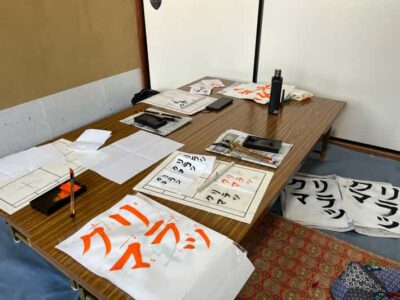
Calligraphy class at Buddhist temple in city center
Read our review →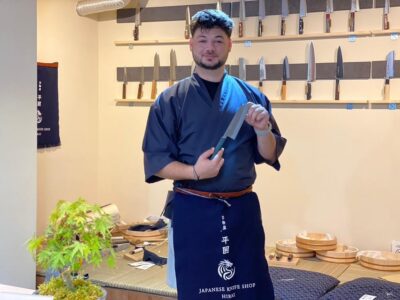
Beginner Knife Sharpening & Handle Fitting Workshop
Read our review →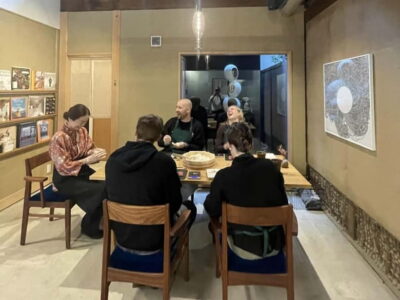
Japanese Archery Workshop with Experienced Instructor
Read our review →
Kyoto Michelin Ramen Workshop or Painting Ramen Essentials
Read our review →
Browse the lists this tour appears in