
Reviewed · KYOTO TEA CEREMONIES
Traditional Tea Ceremony with Matcha and Sweets in Kyoto
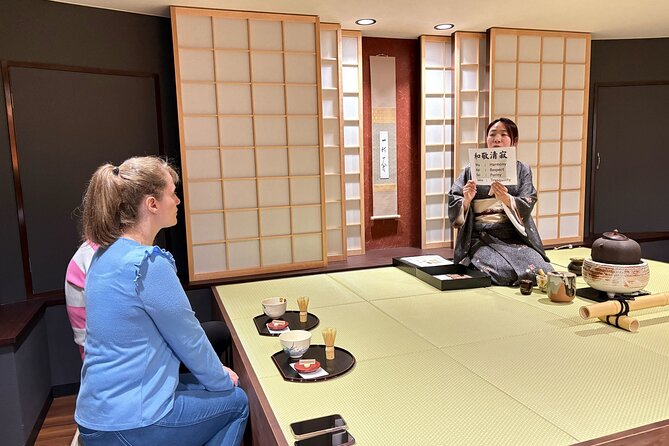
In Gion, this one-hour tea ceremony makes a fine introduction to Japanese tea culture without asking you to sit formally on the floor. I like the mix of close-up demonstration and hands-on matcha making, and I like that the tea master explains the history and Zen ideas behind the ritual, not just the steps. Traditional sweets and matcha from a family-run farm round out the experience.
The trade-off is that an hour can only offer a brief look at a complex art. If you want a long, highly formal ceremony, this approachable short version may feel brisk. But if you want context, a taste of matcha, and a chance to try the whisk yourself, it offers a thoughtful start.
Key points to know
- The setting is Gion: Meet at 1 Yamatocho, Higashiyama Ward, in the Gion Tanakaya Building, then return to the same point.
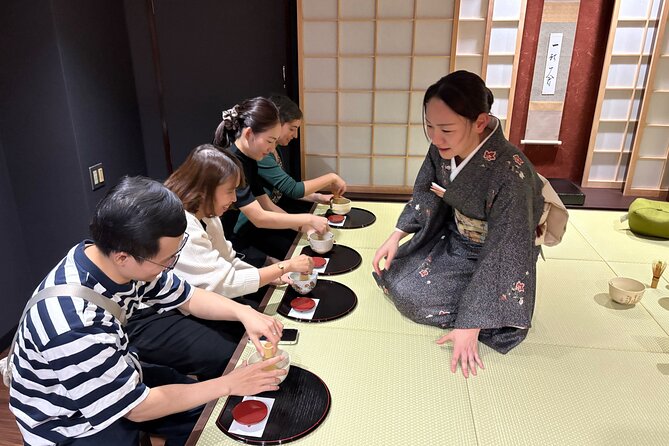
- You sit on chairs: The format avoids floor seating, making the session more comfortable for people who find it difficult to sit on the floor.
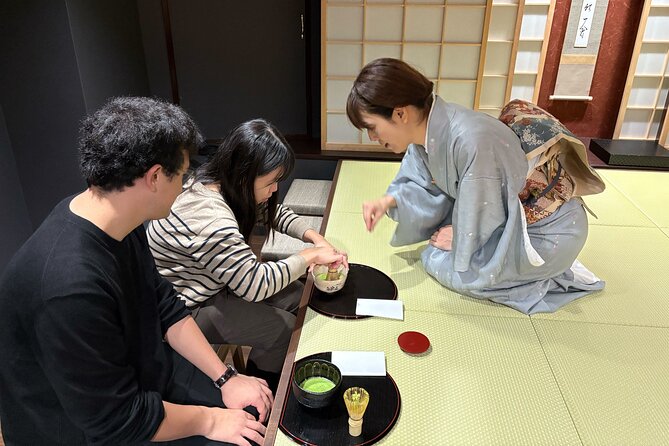
- You see and do: Watch a tea master demonstrate chanoyu, then make your own bowl of matcha.
- Tea and sweets are part of the lesson: Enjoy traditional sweets from long-established artisans and matcha made with tea from a family-run farm.
- The group stays small: The maximum is 13 people, and the experience lasts about an hour.
- It’s a strong-value introduction: At $22.86 per person, you get a cultural explanation, a demonstration, a hands-on activity, and a question period.
A Gion tea ceremony that welcomes beginners
This experience takes place in Kyoto’s historic Gion district, where traditional tea culture feels at home. The session is designed to be warm and approachable rather than solemn or intimidating. You don’t need prior knowledge of tea, special clothing, or experience with Japanese customs to take part.
The chair seating is a practical choice with a real effect on the mood. In a formal tea setting, sitting on the floor can become a distraction if you’re unfamiliar with it or have limited mobility. Here, you can focus on the host’s movements and explanations instead. Chairs help with comfort, though they should not be taken as a promise of full wheelchair access, which is not specified.
The group limit of 13 helps keep the experience personal without making it a private lesson. You should have a reasonable view of the tea master’s techniques, and the session ends with time for questions. The exact venue details beyond the Gion meeting address aren’t provided, so check the address carefully before setting out.
More tea ceremonies in Kyoto:
- Kyoto: Tea Ceremony in a Traditional Tea House in Kiyomizu
★ 4.9 · 3,519 reviews - Kyoto: Tea Ceremony Ju-An at Jotokuji Temple
★ 4.9 · 3,207 reviews - Kyoto: 45-Minute Tea Ceremony Lesson Experience
★ 4.3 · 2,378 reviews
Starting with the story behind chanoyu
The session begins with an introduction to the history of tea in Japan and the ideas that give the ceremony its meaning. That context is useful: without it, the practiced gestures can look like a series of precise movements with no clear purpose. The host connects them to Zen philosophy and the spirit of omotenashi, the Japanese idea of hospitality.
You’ll hear how the ceremony’s values shape the way tea is prepared and shared. Rather than treating the experience as a performance to watch from a distance, this introduction gives you a way to notice the care and attention behind each step. It also offers a cultural foothold for the rest of your time in Kyoto, where tea is more than a drink served in a bowl.
Instruction is a particular strength here. The instructors named in accounts of the experience include Mitsune and Yuki. Their explanations have been appreciated for bringing both the history and the philosophy to life. Your instructor may vary, so don’t assume you’ll have one of those specific hosts on your date.
The short format has a clear benefit: it’s easy to fit into a day of sightseeing, and it keeps the basics accessible. Its limit is just as clear. An hour can introduce the ceremony’s ideas, but it won’t cover every custom or detail. Think of it as a well-shaped first lesson, not an exhaustive course.
Watching the tea master’s precise movements
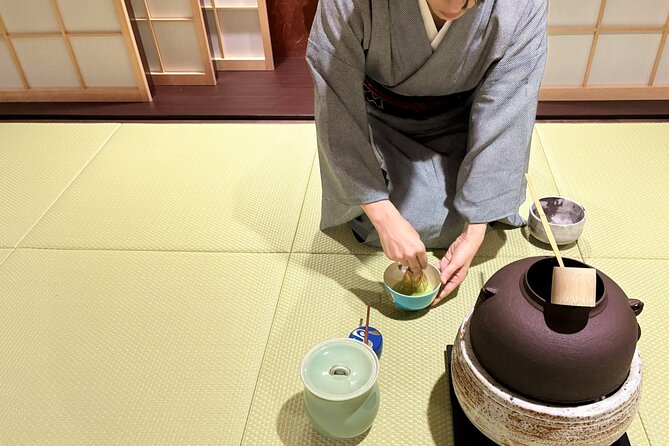
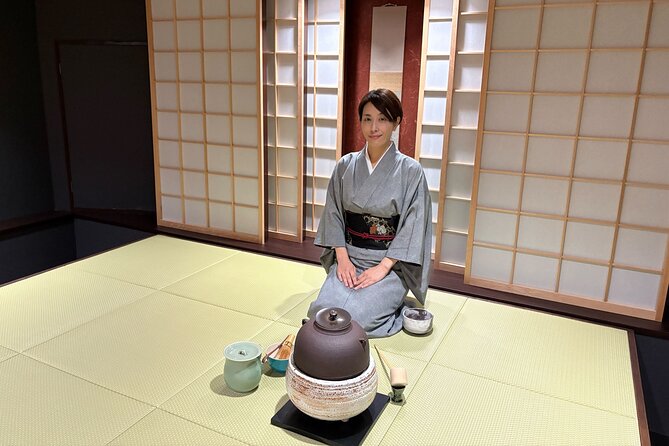
After the introduction, you’ll watch a tea master perform the ceremony up close. Chanoyu is known for its careful gestures and measured pace, and seeing those techniques directly makes it easier to appreciate details you might miss in a book or a quick explanation.
Pay attention to how the tea is prepared and presented, but don’t worry about memorizing every movement. The point is to notice the focus and intention in the process. The host’s commentary helps you connect the visible actions with the larger themes of hospitality, attention, and Zen.
The demonstration is also a good chance to see the difference between watching tea being made and preparing it yourself. A tea master’s practiced movements show the form at its most polished. When it’s your turn, the process becomes more personal and a little less mysterious.
This is an educational experience, not a theatrical show. The appeal lies in learning how the ceremony works and why its details matter. If you’re expecting a long, silent ritual with strict rules for every guest, the comfortable, explanatory style here is more relaxed than that.
Sweets and your own bowl of matcha
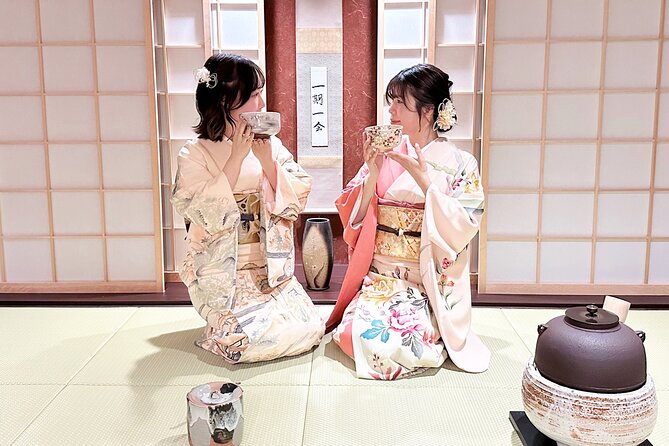
In the second half, you’ll try traditional sweets selected from long-established artisans and make a bowl of matcha yourself. The sweets aren’t just an extra treat. They are part of the experience of enjoying tea, giving you a chance to notice how the food and drink accompany one another.
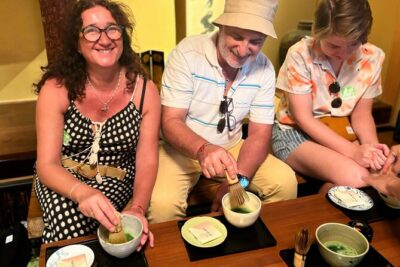
The matcha comes from a family-run farm and is described as premium tea. You’ll learn by doing: the tea master guides you as you whisk your own bowl. This hands-on step is where the earlier demonstration becomes practical. You don’t need to arrive knowing how to prepare matcha; learning the process is the point.
If you’ve only tasted matcha in a latte or dessert, this is a useful way to meet it in a more traditional setting. You can pay attention to its flavor on its own and to the care involved in preparing it. The experience doesn’t specify the exact sweets or the farm’s name, so go for the broader cultural lesson rather than expecting a particular menu or producer story.
The activity is participatory but low-pressure. You’re not being tested on technique. The host has shown the movements first, and you get to try them for yourself in a setting meant to welcome beginners.
More cooking classes in Kyoto:
- Ramen Cooking Class at Ramen Factory in Kyoto
★ 5.0 · 1,937 reviews - Sushi Making in Kyoto! Same-day bookings welcome!
★ 5.0 · 713 reviews - Kyoto: Ramen Cooking Class at a Ramen Factory with Souvenir
★ 4.9 · 532 reviews - Kyoto: Ramen, Gyoza, and Onigiri Cooking Class
★ 5.0 · 445 reviews
Finishing with questions and a clearer understanding
The session closes with a Q&A, a small but valuable part of a short class. After hearing about the ceremony and trying the tea, you’ll likely have more specific questions than you did at the start. This is your chance to ask about the customs, the ideas behind the gestures, or what you’ve just tasted.
A question period also keeps the experience from feeling like a one-way presentation. The tea master can respond to what has caught your interest, giving the hour a more personal finish. If you’re curious about Japanese culture but unsure where to begin, this is a friendly way to ask without needing to know the right vocabulary beforehand.
You return to the same meeting point where the experience began. That makes the class straightforward to fit around other plans in Gion, though the exact start times and nearby transport stops aren’t provided here.
What $22.86 gets you
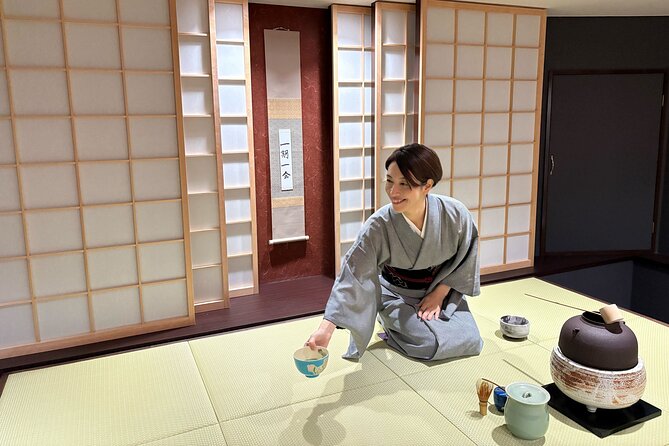
At $22.86 per person, the price buys more than a cup of tea. You get an introduction to Japanese tea history and Zen, a close-up demonstration, traditional sweets, your own matcha preparation, and a chance to ask questions. For an hour-long cultural activity in central Kyoto, that’s a solid amount of substance for the cost.
The value is strongest if you want an accessible first encounter with chanoyu. You’re paying for guided context and the chance to participate, not simply a serving of matcha. The small maximum group size of 13 also supports a more attentive experience than a large lecture would, although it is not a one-to-one class.
It may be less worthwhile if your main goal is a lengthy, highly formal ceremony or a deep study of tea practice. The session is intentionally concise and welcoming. Its focus is to make the ceremony understandable and let you try the basics, not to cover every layer of the tradition.
Practical details before you go
The meeting point is Japan, 605-0802 Kyoto, Higashiyama Ward, Yamatocho, 1, Gion Tanakaya Building. The activity ends back at that address, and the location is near public transportation. Allow enough time to find the building in the Gion area, especially if you’re unfamiliar with Kyoto’s streets.
The duration is about one hour, and the maximum group size is 13. You receive a mobile ticket, and booking confirmation is provided at the time of booking. The chair seating is helpful if floor sitting is uncomfortable, but specific accessibility details beyond that are not supplied.
The experience is offered by Japan Wonder Travel. Cancellation is free up to 24 hours before the start time for a full refund. Changes or cancellations made less than 24 hours before the start are not accepted for a refund, and the cutoff follows local time.
Is this Gion tea ceremony right for you?
Book it if you want a clear, hands-on introduction to tea culture without committing to a long ceremony. It suits first-time visitors, curious learners, and anyone who wants to understand the meaning behind matcha preparation rather than just order a drink. The chairs, friendly teaching style, small group cap, and Q&A make it an easy cultural stop to add to a Kyoto day.
Think twice if you’re seeking a lengthy formal ritual, an advanced tea lesson, or detailed information about the specific farm and sweets. Those details aren’t promised. For most visitors looking for a meaningful hour in Gion, though, the balance is appealing: learn the background, watch a master, make your own tea, and leave with a better sense of what the ceremony is about.
FAQ
How long is the tea ceremony experience?
It lasts approximately one hour.
Where does the experience meet?
The meeting point is at Gion Tanakaya Building, 1 Yamatocho, Higashiyama Ward, Kyoto, Japan, 605-0802.
Does the experience end at the meeting point?
Yes. It ends back at the same meeting point.
Is the activity near public transportation?
Yes, the location is described as near public transportation. A specific station is not provided.
How many people can join?
The maximum group size is 13 people.
Do I sit on the floor?
No. Participants sit on chairs, so floor seating is not required.
Do I get to make matcha?
Yes. You’ll make your own bowl of matcha using tea sourced from a family-run farm.
Are sweets included?
Yes. The experience includes traditional sweets selected from long-established artisans.
Can I cancel for a full refund?
Yes, if you cancel at least 24 hours before the experience’s start time. Cancellation or changes made less than 24 hours beforehand are not accepted for a refund.
Newly added in Kyoto
- Uji: Private immersion into Kyoto’s tea and reglious culture★ 5.0 · 17 reviews
- Whisk Your Own Matcha: A Zen Matcha Experience at Temple★ 3.6 · 7 reviews
- Kyoto tea town for matcha lovers★ 5.0 · 16 reviews
- Treasures of Kyoto: Gion & historical Walking Tour★ 5.0 · 6 reviews
- Kyoto Matcha Green Tea Tour★ 4.5 · 23 reviews
- Uji and Wazuka Matcha Farm Half Day Private Guided Tour★ 5.0 · 21 reviews
- Uji Tea Ceremony and UNESCO Heritage Walking Tour★ 5.0 · 20 reviews
- Utilising upcycled Matcha! Creating matcha incense (Uji, Kyoto)★ 5.0 · 6 reviews
Kyoto Tea Ceremonies, compared.

Tea Ceremony in a Traditional Tea House in Kiyomizu
Read our review →

World Heritage Kyoto & Nara Uji Authentic Matcha Experience
Read our review →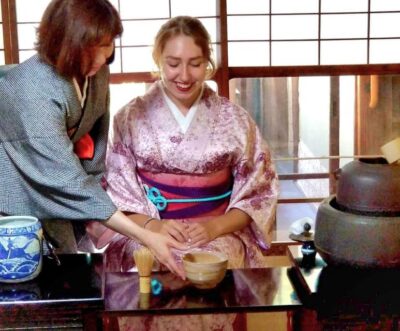

Arashiyama Bamboo Forest, Monkeys, Matcha & Temple Tour
Read our review →
Tea Museum Tickets and Matcha Grinding Experience
Read our review →Browse the lists this tour appears in