
Reviewed · KYOTO TEA CEREMONIES
Kyoto tea town for matcha lovers
Uji turns tea from a drink into a place you can walk through: old tea shops, tea fields, matcha sweets, and a traditional ceremony all fit into one half-day outing. If you want to understand why this Kyoto-area town is so closely tied to Japanese tea, this tour gives you a guided introduction rather than leaving you to piece it together alone.
I like the balance between tasting and learning: you can try matcha treats, see tea-related sights, and, according to the experience details, take part in a tea ceremony and learn about tea production. I also like the small group limit of seven, which gives you room to ask questions and keep a comfortable pace.
The main drawback is the price: $157.65 per person is a substantial fee for a five-hour walk, especially if you mainly want to sample sweets and browse shops. Uji can also be hot on a summer day, and you should be ready to walk for much of the outing.
- Matcha in its hometown: Uji’s tea shops and fields make the town itself part of the lesson.
- A century-spanning stop: Tsuen Main Branch is more than 850 years old.
- Hands-on tea culture: The experience includes a traditional tea ceremony, and some participants describe grinding matcha themselves.
- A personal guide: Terumi is often named for her patient manner and willingness to answer questions.
- A small group: The maximum is seven people, a useful size for questions and conversation.
- A half-day commitment: Plan on about five to five and a half hours, starting at 9:30 a.m. at Uji Station.
Uji makes tea part of the town
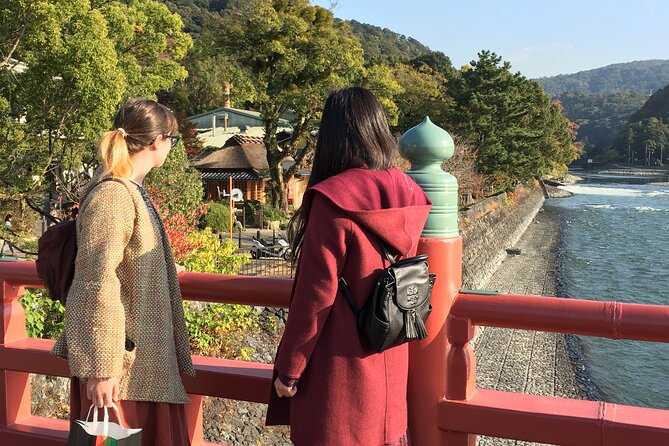
Uji is a good choice if you want to see tea as more than a souvenir or a café order. The town’s identity is tied to tea, and the walk connects that reputation to actual places: tea shops, fields, historic sites, and the people who make and sell tea. That context is the real advantage of going with a guide. You are not just stopping for sweets; you are learning how the town’s tea culture fits together.
The tour is built for people who enjoy food and drink but also want some cultural background. The overview promises information about tea’s origins, the tea ceremony, and Uji itself. The day includes tastings and a meal centered on tea dishes, so it is not a lecture with a few sips added at the end.
The most frequently named guide is Terumi. The accounts of her approach describe someone who explains as you go, welcomes questions, and adjusts to the group’s pace. That matters on a compact walking tour: a guide who can respond to your curiosity can make a tea shop or shrine more memorable than a string of quick photo stops.
Starting at Uji Shrine
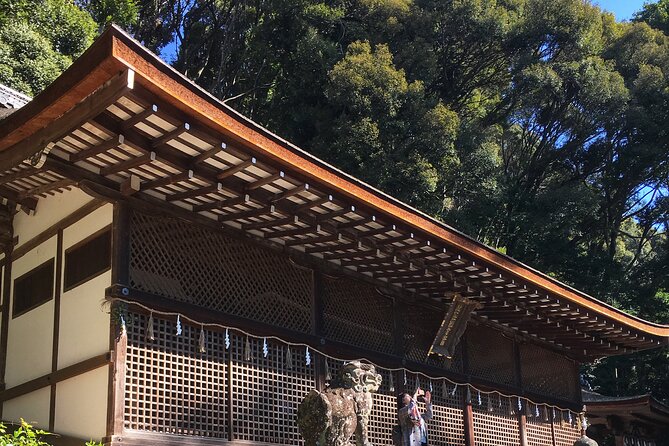
The tour begins at Uji Station at 9:30 a.m. and returns to the same meeting point. Its first listed stop is Uji Shrine, with about 20 minutes set aside. The shrine offers an early change of pace from tea tasting, and it places the day’s food and drink in a wider setting of Uji’s history and local culture.
Twenty minutes is enough for an introduction, not an unhurried visit to every corner. If you are especially interested in shrines, you may want to ask your guide what details to look for while you are there. The tour’s broader aim is to connect Uji’s historic landmarks with its tea traditions, rather than spend the full half-day at a single site.
A useful feature of a guided walk is that the meaning of a place can be easier to grasp when someone explains it on the spot. You can ask questions as they arise instead of trying to match a guidebook description to a building after the fact. The listed admission for this stop is free.
More tea ceremonies in Uji:
- World Heritage Kyoto & Nara Uji Authentic Matcha Experience
★ 5.0 · 1,573 reviews - Uji: Green Tea Tour with Byodoin and Koshoji Temple Visits
★ 4.8 · 72 reviews - Uji: UNESCO Heritage & Tea Ceremony Walking Tour
★ 4.6 · 54 reviews
Tasting matcha at Tsuen Main Branch
Tsuen Main Branch is described as more than 850 years old, making it a standout stop for anyone interested in how long tea has been part of life in Uji. The visit is short, about 10 minutes, but it gives you a chance to sample matcha rice cake skewers made with matcha powder. That small bite is a practical introduction to the town’s sweeter side.
Do not expect this one stop to function as a leisurely tea-shop browse. Ten minutes passes quickly, especially if you want to look at the shop’s offerings as well as taste something. Still, the age of the business gives the visit a sense of continuity: tea here is not a trend imported for visitors, but a long-running local trade.
The tour also takes in tea shops and fields, according to its description. The shops show how tea appears in everyday products and treats; the fields give you a chance to see where the story begins. The exact sequence and time spent at each are not specified, so treat them as parts of a walking day rather than a set of extended visits.
From tea leaves to matcha powder
The most engaging part for a hands-on learner may be making matcha. Several participants describe grinding tea with a stone mill and drinking the matcha they prepared. That is a useful step beyond tasting a finished drink: you get to handle the process and understand that matcha takes more than stirring powder into hot water.
The experience also explores tea production and the people involved in it. Accounts describe meeting local merchants and sampling different kinds of tea, while the tour overview includes tea fields. This makes the outing more useful than a simple sweets crawl. You can connect the flavor in your cup with the work and traditions behind it.
The precise workshop format and the amount of time spent grinding are not stated, so do not book on the assumption that you will receive a long technical lesson. Think of it as a guided, practical introduction. If tea production is your main interest, ask before booking what hands-on activities are included on your date.
Lunch, tea dishes, and a proper ceremony
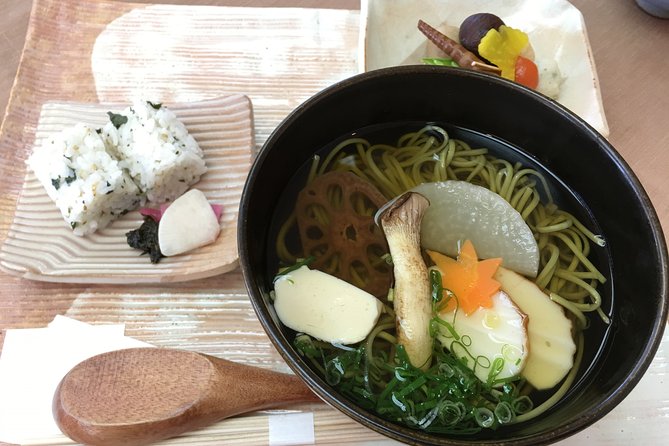
Lunch is planned at a famous tea house, where the group has tea dishes. That is a welcome change from sampling snacks on the move, and it gives you a chance to encounter tea as an ingredient in food as well as a drink. The details of the menu are not provided, so you should not count on a particular dish or assume the meal suits every dietary need without checking.
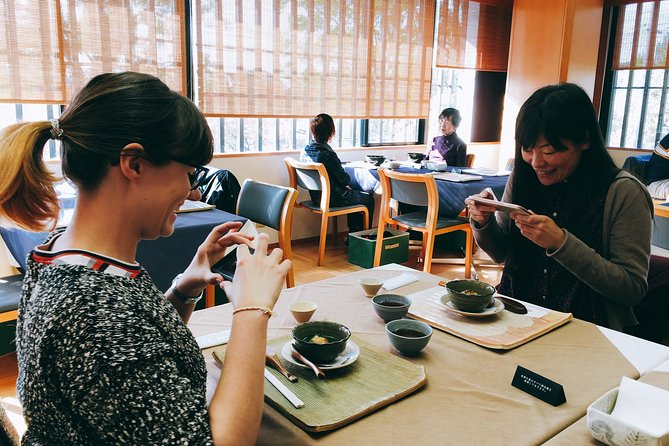
After lunch, the tour includes an authentic Japanese tea ceremony at a traditional tea house. This is the cultural anchor of the day. A ceremony is not just a special way to serve matcha; it offers a chance to see the care, sequence, and attention associated with tea in a traditional setting. The guide’s explanations can help you notice what is happening instead of simply wondering when to take a sip.
The itinerary does not specify how long the ceremony lasts or whether every participant performs each step. Some accounts describe learning how to practice a ceremony, while others emphasize being part of one. If active participation is important to you, clarify the format when booking. Either way, the ceremony gives the day a quieter, more focused finish after the walk and tastings.
More Kyoto tours in Uji:
- Osaka: Nara and Uji Day Trip with Deer Park and Hot Spring
★ 4.4 · 302 reviews - Matcha Grinding Experience and Walking Tour in Uji Kyoto
★ 5.0 · 26 reviews - Slow Cycling Tour at Uji’s Matcha Green Tea Fields and Heritage
★ 5.0 · 25 reviews - Kyoto & Uji: Full Day Sightseeing Tour from Osaka or Kyoto
★ 5.0 · 25 reviews
What the small group changes
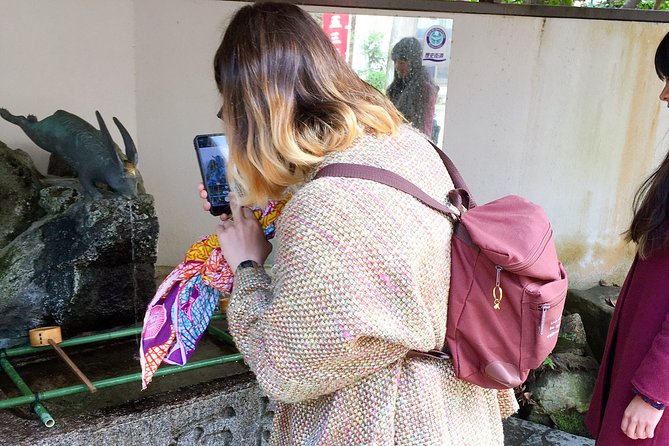
With a maximum of seven people, this is a more personal outing than a large bus tour. You have a better chance to ask questions without having to compete for the guide’s attention, and the group can move at a manageable pace. Accounts of Terumi describe her as patient, friendly, and attentive to different interests, including taking photographs and helping with questions.
That personal approach seems to be one of the tour’s strongest assets. The guide’s role is not only to lead you from place to place, but to connect tea, local businesses, landmarks, and daily life. A participant also describes Terumi helping with interpretation during an extra tea-shop visit after the scheduled tour. Do not assume that kind of additional help is guaranteed, but it gives a sense of the attentive style associated with her.
The experience has a 5.0 rating from 16 reviews, with all recommending it. That is an encouraging record, but it is still a small pool of feedback. The repeated praise for the guide, the hands-on matcha, and the range of stops is more useful for setting expectations than the perfect score alone.
Is $157.65 good value?
At $157.65 per person, this is not an inexpensive way to spend a morning. The value depends on whether you want a guided, multi-part introduction to Uji or simply hope to visit one tea shop and try a matcha dessert. The price buys a roughly five-hour experience with a guide, sightseeing, tastings, tea-focused lunch, and a traditional ceremony, though the exact inclusions and any extra costs are not specified here. Confirm what is covered before booking.
For a matcha fan, the combination is appealing: you get context, a chance to sample local specialties, and a ceremony in a traditional tea house. For someone who already knows a lot about tea, the value may hinge on the guide’s local knowledge and the opportunity to meet tea sellers and see production-related sites. If you are mainly after a low-cost walk, Uji can be explored independently, but you would miss the guided explanations and organized activities.
The tour is most suited to curious eaters, tea drinkers, and people who like a little history with their food. Families can also find plenty to enjoy, based on accounts of the outing, but remember that it involves several hours on foot. The stated fitness requirement is moderate, and one participant found a June walk hot. In summer, bring water and plan for warm conditions.
A few practical details before you go

Meet at Uji Station for the 9:30 a.m. start. The tour ends back at the meeting point, and the experience is listed as being near public transportation. Allow five to five and a half hours for the full outing, rather than trying to fit another timed activity immediately afterward.
The tour requires good weather and a minimum number of participants. If poor weather cancels it, you are offered another date or a full refund; if the minimum group size is not met, you are offered another date or experience, or a refund. You can cancel for a full refund up to 24 hours before the start time. Changes or cancellations inside that 24-hour window are not accepted for a refund.
Should you book the Uji matcha walk?
Book this tour if you want more than a pretty tea shop and a quick dessert. Its strongest appeal is the combination of Uji’s tea setting, a hands-on element, local tastings, and a traditional ceremony, with a guide who can make the connections clear. The small group and Terumi’s repeatedly praised, welcoming style add to the appeal.
Skip it if your priority is keeping costs low, spending a long time at each individual site, or avoiding a warm-weather walk. For matcha lovers who want to understand the town behind the tea, though, this is a well-rounded way to spend a half-day in Uji. Check the price inclusions and ceremony format before booking, then leave room in your schedule to browse the tea shops afterward.
FAQ
How long is the Uji matcha tour?
The tour lasts about five to five and a half hours.
Where does the tour start and end?
It starts at Uji Station and ends back at the same meeting point.
What time does the tour begin?
The start time is 9:30 a.m.
How many people can join?
The maximum group size is seven travelers.
What are the main stops?
The listed stops include Uji Shrine and Tsuen Main Branch. The experience also includes tea shops, tea fields, lunch at a tea house, and a traditional tea ceremony.
What can I taste during the tour?
At Tsuen Main Branch, you can try matcha rice cake skewers. The tour also includes tea tastings and tea dishes at lunch.
Is there a tea ceremony?
Yes. The experience includes a Japanese tea ceremony at a traditional tea house.
What level of fitness is needed?
A moderate level of physical fitness is recommended.
What happens if the tour is canceled because of weather?
If poor weather cancels the tour, you are offered a different date or a full refund.
Newly added in Uji
- Uji: Private immersion into Kyoto’s tea and reglious culture★ 5.0 · 17 reviews
- Uji and Wazuka Matcha Farm Half Day Private Guided Tour★ 5.0 · 21 reviews
- Uji Tea Ceremony and UNESCO Heritage Walking Tour★ 5.0 · 20 reviews
- Utilising upcycled Matcha! Creating matcha incense (Uji, Kyoto)★ 5.0 · 6 reviews
- Slow Cycling Tour at Uji’s Matcha Green Tea Fields and Heritage★ 5.0 · 25 reviews
- Uji Walking Tour – Byodo-in temple and Tea Ceremony from Kyoto★ 3.5 · 3 reviews
- Matcha Grinding Experience and Walking Tour in Uji Kyoto★ 5.0 · 26 reviews
- Kyoto & Uji: Full Day Sightseeing Tour from Osaka or Kyoto★ 5.0 · 25 reviews
Kyoto Tea Ceremonies, compared.

Tea Ceremony in a Traditional Tea House in Kiyomizu
Read our review →


World Heritage Kyoto & Nara Uji Authentic Matcha Experience
Read our review →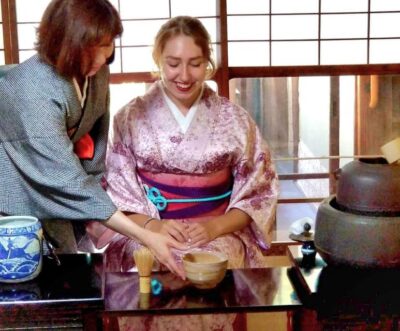


Arashiyama Bamboo Forest, Monkeys, Matcha & Temple Tour
Read our review →
Tea Museum Tickets and Matcha Grinding Experience
Read our review →Browse the lists this tour appears in