
Reviewed · KYOTO CRAFT WORKSHOPS
Kyoto: Japanese Calligraphy Class
Japanese calligraphy gives you more than a few careful brush strokes to take home. In this Kyoto class, you’ll learn basic techniques, explore how your name might be written in kanji, and make souvenirs from your work, all in about an hour.
I like two things in particular: English instruction makes the writing process approachable, and the class turns practice into something personal when you choose a name or favorite word. The reported one-to-one guidance from instructors such as Rena, Lana, and Waka is another welcome feature for beginners.
The main consideration is time. An hour goes quickly, and the exact meeting point can vary by booking option, so check your confirmation before setting out. This is a hands-on introduction, not an extended course in calligraphy.
What makes this class worth your hour
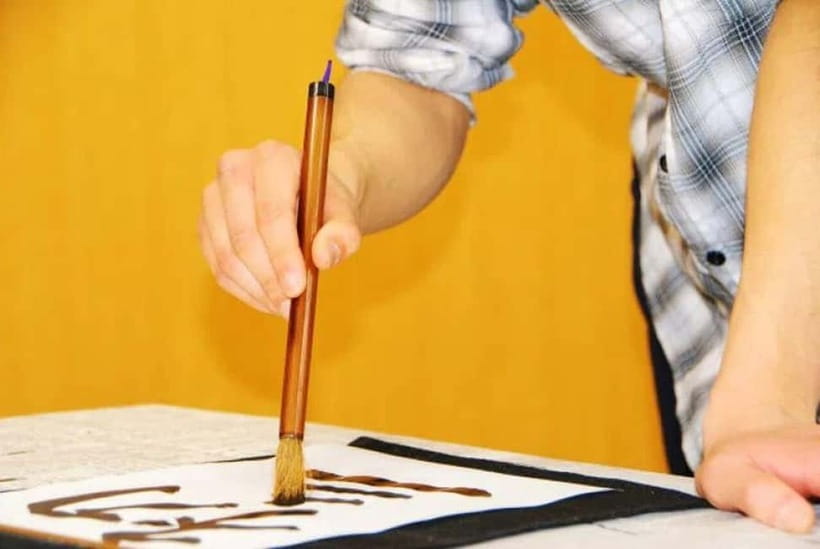
- Brush and ink basics: Learn how to hold and use the brush, and how to apply ink.
- Your own kanji name: Staff help suggest characters and explain their possible meanings.
- A keepsake with your handwriting: Make a scroll and take home some of your creations.
- English instruction: You can ask questions about Japanese writing and the activity in English.
- A central Kyoto location: The listed location is in front of Kyoto Station, though the meeting point depends on the option booked.
- A small-group or private format: These options can give you more room for individual help.
Start with brush, ink, and a few basic strokes
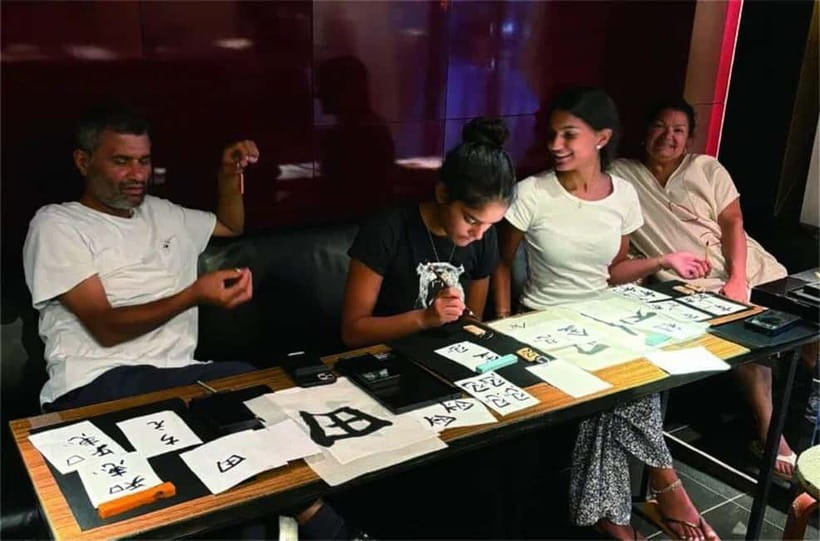
The class begins with an introduction to the brush and ink. You’ll learn how to use the brush and apply ink before trying basic characters. That short demonstration matters: calligraphy can look simple from across the room, but the brush responds to pressure and movement in ways that aren’t obvious until you try it.
You do not need to arrive with Japanese-language skills or calligraphy experience. The session is designed to get you started, and the instructors can explain the writing and answer questions in English. Several instructors have been named by class participants, including Rena, Lana, Waka, Yoshia Kobayashi, and Kou. Names may depend on the session, so don’t assume a particular instructor will be leading your class.
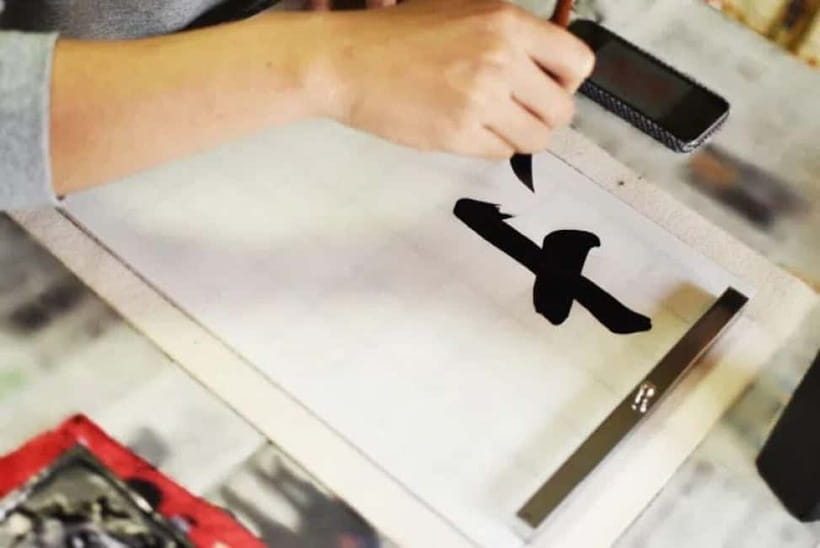
The useful thing here is the balance between explanation and practice. You are not just watching someone write a character and then being sent off to imitate it. The teaching includes individual help with getting strokes right, a practical advantage if your first attempt looks more like a small ink accident than a character.
Calligraphy rewards patience, but this is a short beginner activity rather than a test of precision. You can practice at your own pace, and the class’s supportive, encouraging approach is especially helpful if you are nervous about making a mistake. Ink and paper are part of the activity, so there is no need to bring your own supplies.
More craft workshops in Kyoto:
- Kyoto : Chopsticks Making Workshop in Gion with Engraving Option
★ 5.0 · 958 reviews - Kyoto: Calligraphy class at Buddhist temple in city center
★ 5.0 · 167 reviews - Kyoto: Beginner Knife Sharpening & Handle Fitting Workshop
★ 4.9 · 141 reviews
Practice basic characters before choosing your own
After learning the fundamentals, you move on to basic characters. This gives you a chance to apply the brush technique before working on something more personal. A scroll made from the kanji you write is one of the keepsakes you can take home.
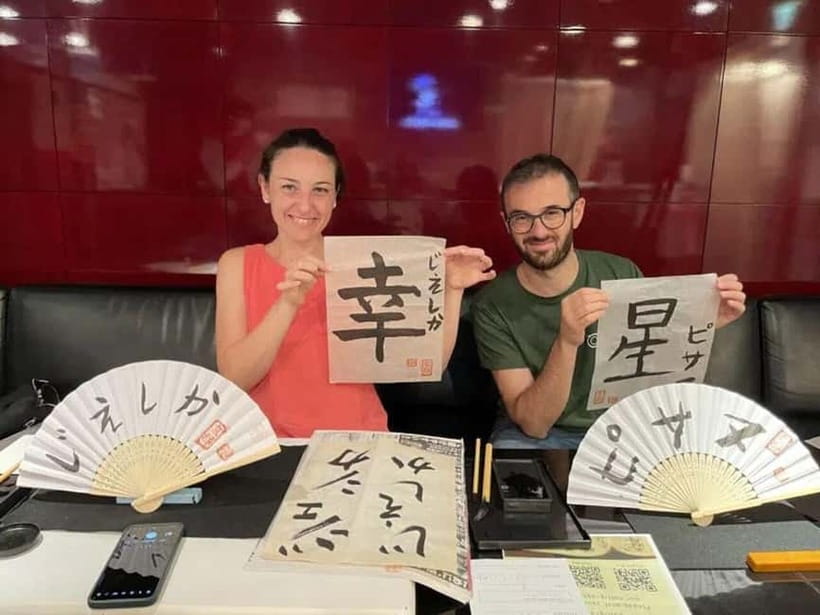
The class also helps you consider how to represent your name or a favorite word in kanji. Staff suggest possible characters and explain their meanings. The examples show how creative this can be: Brian might be written as 武礼安, using characters associated with bravery, courtesy, and peace. Liz might become 梨図, with characters meaning pear and picture or diagram.
That process is an engaging window into how written characters can carry meaning, but it is worth understanding what you are getting. These are suggested character combinations, not a single automatic translation of a Western name. The staff’s role is to help you choose possible kanji and understand the associations behind them. If you have a particular meaning in mind, tell the instructor what you want your name or word to express.
You can also write your name and favorite word in the alphabet. That gives you a second way to practice and makes the session accessible even if you are not ready to work only in Japanese characters. You leave with a better sense of how the brush feels, plus a piece of writing tied to your own choice.
Turn practice into a fan, card, or other keepsake
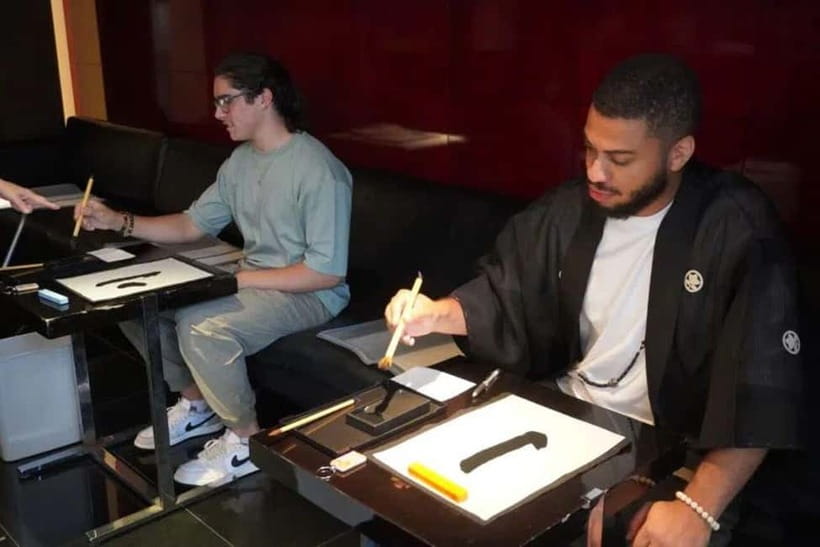
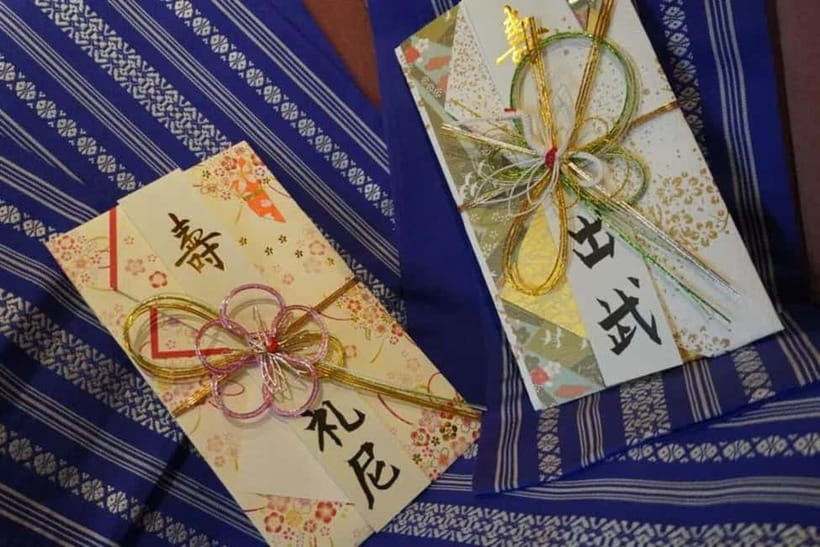
The final part of the activity is making souvenirs. The included materials are brushes, ink, and washi paper, along with some items you can take home. Examples include a Japanese fan and a picture frame. Past class projects have also included postcards and stationery, so the exact objects you make may depend on the session.
This is the class’s most tangible payoff. Instead of leaving with only a memory or a few practice sheets, you can take home work that carries your own marks. A fan or card may not be a museum-quality piece, and that is not the point. It is a personal reminder of an hour spent learning a traditional art form rather than buying another ready-made souvenir.
I would keep your expectations flexible about the number and type of items. The activity includes some take-home products, but the details provided do not promise every participant a set list of specific souvenirs. If you particularly want to make a fan, postcard, or another item, ask what is available for your chosen option before booking.
The souvenir-making also gives the hour a satisfying shape: first you learn the tools, then try characters, then create something to keep. That progression works well for a short class and helps make the experience feel complete.
Why the one-hour format works
At about one hour, this activity is easy to fit between other Kyoto plans. The class may take a little more or less time depending on how quickly you complete the activities, so avoid scheduling something immediately afterward if you want a relaxed finish.
The short duration is both a strength and a limit. It is enough for an introduction, a little practice, and a personal project, but not enough to develop advanced calligraphy skills. Think of it as a cultural workshop with hands-on instruction, not a full course. If your main goal is to study technique in depth, you may want a longer class; if you want to try calligraphy and leave with something you made, the format makes sense.
The class is listed at $51 per person. That price buys more than access to brushes and paper: English-language instruction, help with possible kanji for your name or chosen word, and some souvenirs are part of the experience. For a one-hour activity, the value depends on how much you enjoy guided, hands-on learning and whether you appreciate taking home your own work. It is less compelling if you only want a quick photo or expect a long, intensive lesson.
Private or small-group options are available. A smaller format can be useful when you want to ask questions or get individual help with brush strokes, though the information provided does not specify the size of each group. Check the option details to see which format you are booking.
More Kyoto tours in Kyoto:
- PERFECT KYOTO 1-Day Bus Tour
★ 5.0 · 13,518 reviews - Kyoto: Fushimi Inari, Kinkakuji, Bamboo Grove 1 Day Bus Tour
★ 4.8 · 4,316 reviews - Kyoto: Tea Ceremony in a Traditional Tea House in Kiyomizu
★ 4.9 · 3,519 reviews - Kyoto Geisha Walking Tour: Gion District & Hidden Gems
★ 4.7 · 3,273 reviews
A useful break near Kyoto Station
The location is described as in front of Kyoto Station, which can make the class a convenient stop in a day built around arriving, departing, or exploring the city. But the meeting point may vary depending on the option booked. Confirm the location for your specific session rather than relying only on the general area.
The central setting is practical, but the workshop itself is the draw. The calm, focused pace offers a change from the movement of a sightseeing day. You sit down, pay attention to the brush, and work with a single character at a time. That quiet contrast is part of the appeal, especially if your itinerary has been full of transport connections and major sights.
English is the stated language of instruction. That matters here because the activity is not only about making shapes on paper: you may want to ask what a character means, why a certain combination is suggested, or how Japanese writing works. The class can help make those questions part of the experience, rather than leaving you to guess at the significance of your souvenir.
Who will enjoy the class most
This is a good fit for first-time calligraphy students, curious language learners, and anyone who wants a Kyoto activity with a handmade result. You do not need prior knowledge, and the instructors’ patient, step-by-step teaching suits people who prefer learning by doing. Families can enjoy it too: children took part in the activity, although it is not suitable for children under five.
It also works well as a shared activity for couples, friends, or a family group. Choosing kanji for names gives each person a different project, while making souvenirs gives everyone something concrete to compare afterward. If your group includes someone who is not interested in writing or crafts, however, this may not be the best use of an hour.
The class’s strongest feature is the combination of personal attention and cultural context. The instructors can help with the physical details of writing and explain the meanings attached to possible characters. That makes the activity more than a craft session, while keeping it friendly and manageable for a beginner.
Should you book it?
Book this class if you want an approachable introduction to Japanese calligraphy, English instruction, and a keepsake you have made yourself. It is particularly appealing if you like the idea of exploring how your name or favorite word might appear in kanji, with an instructor to help explain the choices.
Skip it if you are looking for advanced training, a long workshop, or a guaranteed list of specific souvenirs. Before booking, check the meeting point and the details of your chosen option, since the location can vary. At $51 for about an hour, it offers fair value for a guided, personal activity with materials and take-home work, as long as you value the learning as much as the finished piece.
FAQ
How long does the calligraphy class last?
The class takes about one hour. The exact time may vary depending on how long the activities take to complete.
Is instruction available in English?
Yes. English instruction is included, and English is the stated language for the activity.
Do I need previous calligraphy experience?
No prior experience is stated as a requirement. The class begins with instruction on using the brush and applying ink, then moves on to basic characters.
What can I take home?
You can make a scroll from the kanji characters you write and take home some souvenirs. Examples include a Japanese fan or picture frame; postcards and stationery have also been made during sessions.
Where is the meeting point?
The listed location is in front of Kyoto Station, but the meeting point may vary depending on the option booked. Check the details for your specific selection.
Can children join the class?
Children under five are not suitable for this activity. The class information does not give a minimum age beyond that restriction.
Newly added in Kyoto
- Uji: Private immersion into Kyoto’s tea and reglious culture★ 5.0 · 17 reviews
- Whisk Your Own Matcha: A Zen Matcha Experience at Temple★ 3.6 · 7 reviews
- Kyoto tea town for matcha lovers★ 5.0 · 16 reviews
- Treasures of Kyoto: Gion & historical Walking Tour★ 5.0 · 6 reviews
- Kyoto Matcha Green Tea Tour★ 4.5 · 23 reviews
- Uji and Wazuka Matcha Farm Half Day Private Guided Tour★ 5.0 · 21 reviews
- Uji Tea Ceremony and UNESCO Heritage Walking Tour★ 5.0 · 20 reviews
- Utilising upcycled Matcha! Creating matcha incense (Uji, Kyoto)★ 5.0 · 6 reviews
Kyoto Craft Workshops, compared.
Chopsticks Making Workshop in Gion with Engraving Option
Read our review →
Calligraphy class at Buddhist temple in city center
Read our review →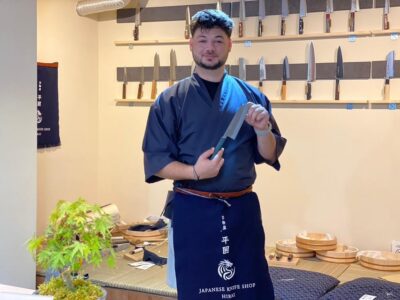
Beginner Knife Sharpening & Handle Fitting Workshop
Read our review →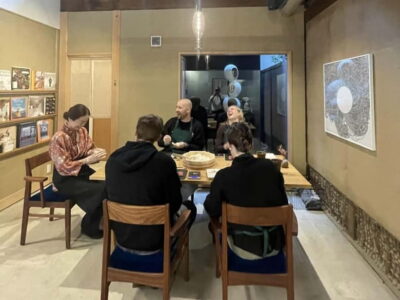
Japanese Archery Workshop with Experienced Instructor
Read our review →
Kyoto Michelin Ramen Workshop or Painting Ramen Essentials
Read our review →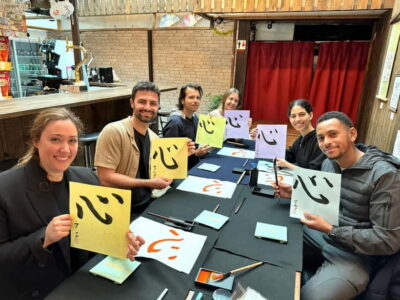
Browse the lists this tour appears in