
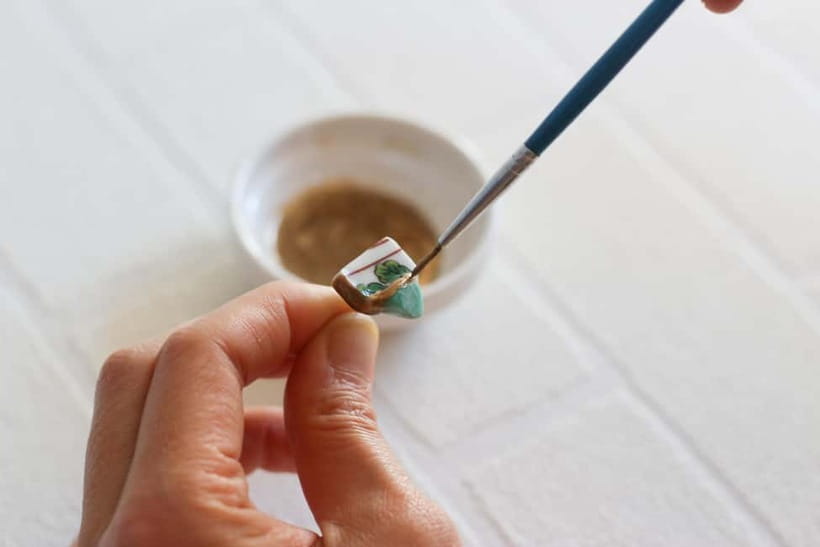
Reviewed · KYOTO CRAFT WORKSHOPS
Kyoto: Kintsugi Jewelry Workshop with Natural Stones
Broken pottery becomes wearable art in this kintsugi jewelry workshop near Fushimi Inari Taisha. In a traditional Kyoto townhouse, instructor Natsuka shows you how to combine pottery shards with natural stones and gold powder to make a one-of-a-kind accessory.
I like two things in particular: you get to choose from Japanese ceramics and other materials, so the design is personal, and the craft comes with an introduction to kintsugi and its place in Japanese culture. One consideration: this is a hands-on session, not a quick demonstration, so allow the full 150 minutes and be ready to work carefully.
Key points to know
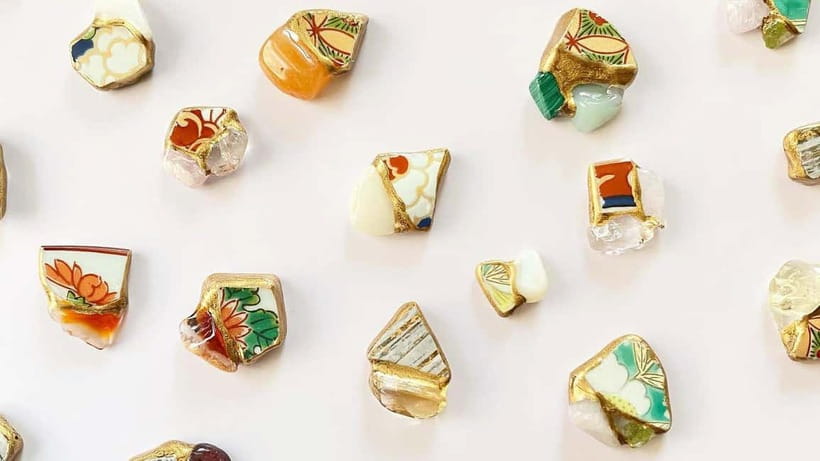
- Make jewelry from broken ceramics: Pair pottery fragments with gold powder and natural stones to give discarded materials a new use.
- Choose your materials: Options include Arita, Karatsu, Oribe, Kyoto, Shigaraki, and Hagi pottery, along with stained glass, shells, pearls, and stones.
- Pick an accessory style: Earrings, rings, necklaces, brooches, tie pins, and cufflinks are among the choices.
- Work in an old Kyoto townhouse: The atelier is in a 100-year-old traditional house, a three-minute walk from Fushimi Inari Taisha.
- Get personal guidance: Groups are limited to 10, and the instructor works in English and Japanese.
- Take home your creation: You can bring your finished jewelry with you the same day.
Kintsugi, scaled down for jewelry
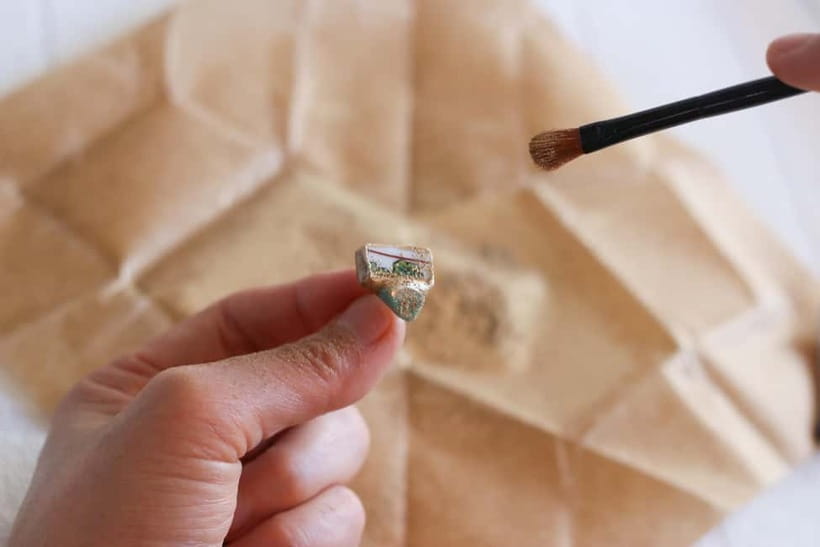
Kintsugi is the Japanese practice of repairing broken ceramics, traditionally drawing attention to the break rather than trying to hide it. Here, the idea is adapted to jewelry: you work with pottery pieces and gold powder to create an accessory that treats a fragment’s past as part of its design.
The workshop uses synthetic lacquer, rather than the traditional lacquer associated with kintsugi. That choice is intended to avoid allergic reactions. It is useful to know the distinction: you are learning a kintsugi-inspired technique for jewelry, not carrying out the full traditional repair of a ceramic bowl or cup.
The materials make the craft especially appealing. You can choose from fragments associated with several Japanese pottery traditions, including Arita, Karatsu, Oribe, Kyoto, Shigaraki, and Hagi. Natural stones, shells, pearls, and stained glass add other colors and textures, giving you room to create something that feels like your own rather than a standard souvenir.
More craft workshops in Kyoto:
- Kyoto : Chopsticks Making Workshop in Gion with Engraving Option
★ 5.0 · 958 reviews - Kyoto: Calligraphy class at Buddhist temple in city center
★ 5.0 · 167 reviews - Kyoto: Beginner Knife Sharpening & Handle Fitting Workshop
★ 4.9 · 141 reviews
Choosing a piece that feels personal
Once you arrive, you can select the kind of accessory you want to make. The choices include earrings, rings, necklaces, brooches, tie pins, and cufflinks, so the workshop works for different styles and for people who would rather not wear earrings or rings.
You then choose from the available pottery and decorative materials. If you are drawn to a particular color or fragment, that can guide your design; if you are unsure, the instructor is there to help you through the process. The variety of materials is part of the fun, but it also means you will have decisions to make. Take a moment to look closely before you start attaching pieces.
The goal is not to produce a perfectly uniform piece. Kintsugi’s appeal lies in making a break visible and giving it a new purpose. That can make the finished accessory more meaningful than a mass-produced trinket, particularly if you value the story of how it was made.
From introduction to finished jewelry
The session lasts about 150 minutes, enough time to hear about kintsugi, choose materials, and work through the jewelry-making process with guidance. Natsuka explains and demonstrates the steps, then helps you as you shape your idea. The precise timing of each stage can vary with your design and pace.
The introduction gives context to the materials. You learn about the history and significance of kintsugi, as well as the origins and regional variety of the pottery fragments. The idea of wabi sabi, which finds meaning in imperfection and age, also fits naturally into a craft built around giving broken ceramics another life.
Next comes the hands-on work. You use the selected pottery, stones, or other materials with synthetic lacquer and gold powder to make your accessory. This is a careful, creative task, not a fast assembly line. A patient pace is part of the appeal, and the small group makes it easier to ask for help or get advice as you go.
At the end, you can take your jewelry home on the same day. That is a practical plus: you leave with a finished keepsake, not a project that needs shipping or another visit. The exact number of pieces to expect is not specified, so if making more than one is important to you, check that detail before booking.
The townhouse and the Fushimi Inari setting
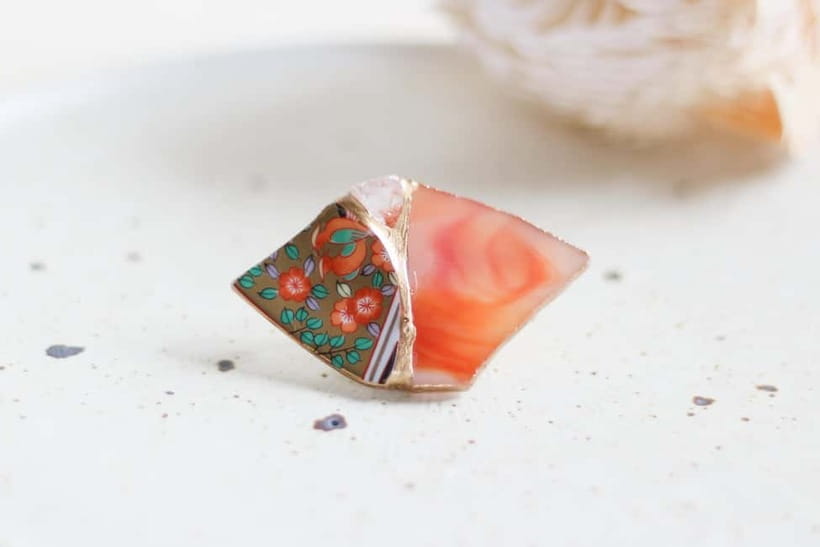
The atelier is a 100-year-old traditional Kyoto townhouse near Fushimi Inari Taisha. The setting gives the workshop a sense of place that a generic craft studio might lack, while the activity itself offers a quieter change of pace from sightseeing.
The house is described as a one-story traditional home with a white noren curtain at the entrance. Look for that detail as you approach. The atelier is a five-minute walk from either Keihan Ryukoku Daimae-Fukakusa Station or JR Inari Station; it is also a three-minute walk from Fushimi Inari Taisha.
There is no parking, and the lane in front of the atelier is narrow and unsuitable for vehicles. Plan to arrive on foot from a nearby station or shrine, and use the route map to find the house. If you are visiting Fushimi Inari on the same day, the location makes it easy to pair the workshop with time at the shrine, though you should leave enough time to arrive without rushing.
More Kyoto tours in Kyoto:
- PERFECT KYOTO 1-Day Bus Tour
★ 5.0 · 13,518 reviews - Kyoto: Fushimi Inari, Kinkakuji, Bamboo Grove 1 Day Bus Tour
★ 4.8 · 4,316 reviews - Kyoto: Tea Ceremony in a Traditional Tea House in Kiyomizu
★ 4.9 · 3,519 reviews - Kyoto Geisha Walking Tour: Gion District & Hidden Gems
★ 4.7 · 3,273 reviews
What the $106 price buys
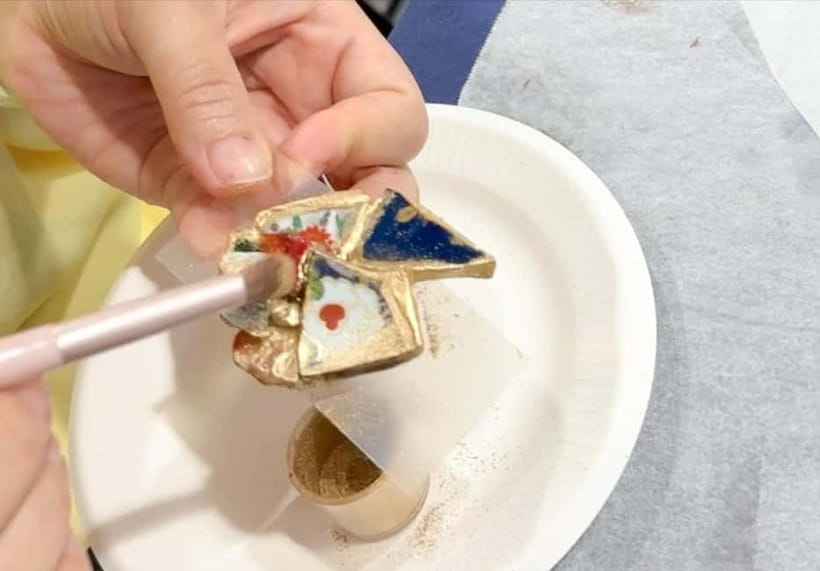
At $106 per person, this is more expensive than a simple craft activity, but the price covers a 150-minute guided workshop, materials, and instructor assistance. You are also paying for access to a range of pottery and decorative pieces, plus the chance to make a personal souvenir in a historic Kyoto home.
The value depends on what you want from an activity. If your priority is a low-cost introduction to Japanese culture, a museum or temple visit will cost less. If you want an interactive experience, individual guidance, and a piece you can take home, the workshop offers more than a short demonstration.
The experience also has a useful rainy-day advantage. Most of the time is spent indoors, and the work is calm and focused. It can be a good way to give your feet a rest between long walks, though it is not a passive break: you will be making choices and working with your hands.
A small group with patient guidance
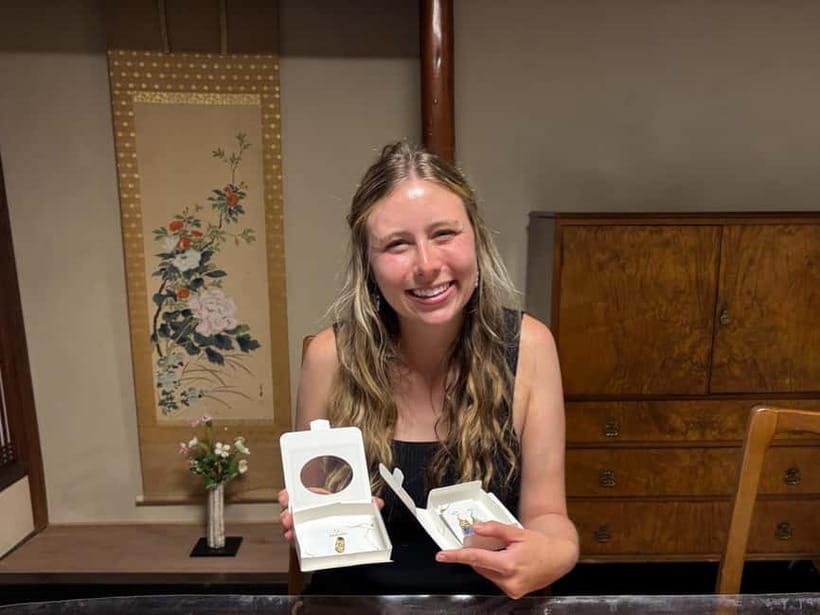
The group is limited to 10 participants, with instruction in English and Japanese. That size should suit a craft that benefits from individual attention. The instructor, Natsuka, is described as patient and clear in guiding participants through each step, and the workshop is set up to help you get advice as you work.
The pace may be especially welcome if you are new to making jewelry. You do not need to arrive with a design plan or prior kintsugi experience. The materials offer a starting point, and the instructor explains the process rather than expecting you to know the craft already.
An eight-year-old child has taken part with a parent, which suggests the activity can work for a family with a creative child. Still, there is no stated minimum age, so check with the provider if you are booking for a child. The workshop is not suitable for wheelchair users.
Who will enjoy this workshop
I would recommend this to you if you like hands-on cultural activities and want a souvenir with a clear connection to Japan. It is a strong fit for people interested in ceramics, jewelry, traditional crafts, or sustainable ways to reuse materials. The combination of pottery fragments and stones also gives you plenty of scope to make something personal.
It can suit couples, friends, solo visitors, and families with older children who can focus on a careful activity. The small group and English-language instruction make it approachable even if you have never tried a craft like this before.
You may want to skip it if you prefer fast-paced sightseeing, have little interest in making things, or need a fully accessible venue. It is also not the right activity if you want to practice traditional lacquer repair on a full ceramic vessel. The workshop uses synthetic lacquer and applies kintsugi techniques to jewelry.
Should you book it?
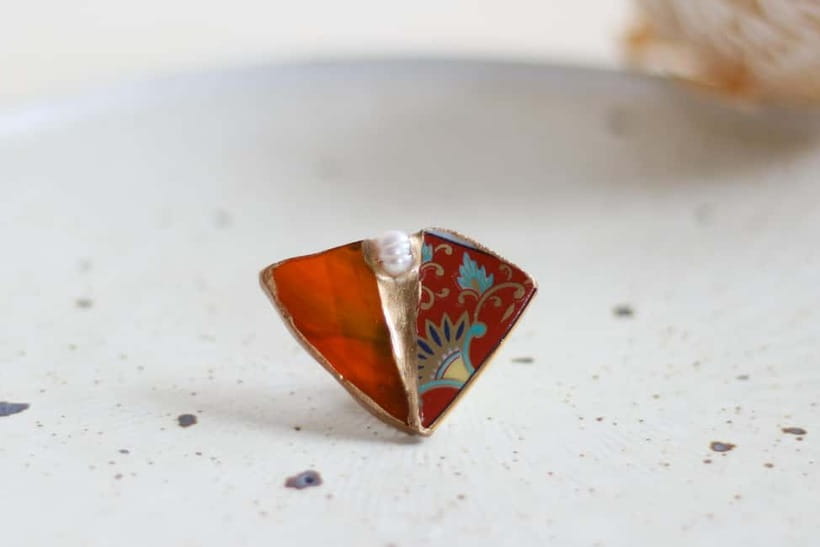
Book this if you want a quiet, hands-on Kyoto experience and like the idea of leaving with jewelry you made yourself. The historic townhouse, thoughtful material choices, and patient guidance make the workshop more than a souvenir stop. If the $106 price works for your budget, it offers a memorable way to spend two and a half hours near Fushimi Inari.
If you are on the fence, consider whether you would enjoy the making process as much as the finished piece. This is best for someone who likes taking time over a design, not someone looking for a quick activity between sights. Free cancellation is available up to 24 hours in advance, and you can reserve now and pay later.
FAQ
How long is the workshop?
The workshop lasts 150 minutes. Check the available start times when planning your day.
Where does the workshop take place?
It is held in a 100-year-old traditional Kyoto townhouse near Fushimi Inari Taisha.
How do I get to the atelier?
The atelier is a five-minute walk from Keihan Ryukoku Daimae-Fukakusa Station or JR Inari Station. It is also a three-minute walk from Fushimi Inari Taisha. A route map is provided.
What can I make?
You can choose from accessory types such as earrings, rings, necklaces, brooches, tie pins, and cufflinks.
What materials are available?
Materials include pottery shards from Arita, Karatsu, Oribe, Kyoto, Shigaraki, and Hagi, as well as stained glass, natural stones, shells, and pearls.
Is the lacquer traditional?
The workshop uses synthetic lacquer to avoid allergic reactions, along with gold powder.
Can I take my jewelry home, and is the workshop wheelchair accessible?
You can take your finished jewelry home the same day. The activity is not suitable for wheelchair users.
Newly added in Kyoto
- Uji: Private immersion into Kyoto’s tea and reglious culture★ 5.0 · 17 reviews
- Whisk Your Own Matcha: A Zen Matcha Experience at Temple★ 3.6 · 7 reviews
- Kyoto tea town for matcha lovers★ 5.0 · 16 reviews
- Treasures of Kyoto: Gion & historical Walking Tour★ 5.0 · 6 reviews
- Kyoto Matcha Green Tea Tour★ 4.5 · 23 reviews
- Uji and Wazuka Matcha Farm Half Day Private Guided Tour★ 5.0 · 21 reviews
- Uji Tea Ceremony and UNESCO Heritage Walking Tour★ 5.0 · 20 reviews
- Utilising upcycled Matcha! Creating matcha incense (Uji, Kyoto)★ 5.0 · 6 reviews
Kyoto Craft Workshops, compared.
Chopsticks Making Workshop in Gion with Engraving Option
Read our review →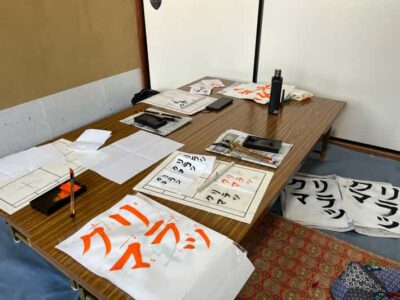
Calligraphy class at Buddhist temple in city center
Read our review →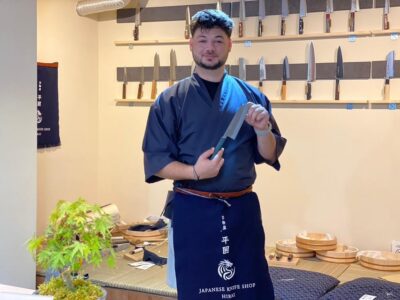
Beginner Knife Sharpening & Handle Fitting Workshop
Read our review →
Japanese Archery Workshop with Experienced Instructor
Read our review →
Kyoto Michelin Ramen Workshop or Painting Ramen Essentials
Read our review →
Browse the lists this tour appears in