
Reviewed · KYOTO TEA CEREMONIES
Kyoto: Wazuma Magic Show & Tea Ceremony
Wazuma is an old Japanese art of illusion, performed here at close range in a traditional Gion tea room. With only six seats and a private booking, you’re not watching from the back of a hall. I like that rare, personal format, and the chance to see an art said to have fewer than ten remaining masters.
I also like the clear two-part shape: first a lively half-hour of magic, then a quieter half-hour with Uji matcha and English guidance. That change of pace gives the hour more substance than a short stage act alone.
The main consideration is the narrow scope: this is a one-hour cultural stop, not a broad introduction to Japanese tea or magic. The room is not suitable for wheelchair users, so accessibility needs careful checking before you book.
What makes this Gion experience distinctive
- A rare art at close range: Wazuma is described as a 1,000-year-old Japanese illusion tradition, with fewer than ten masters remaining.
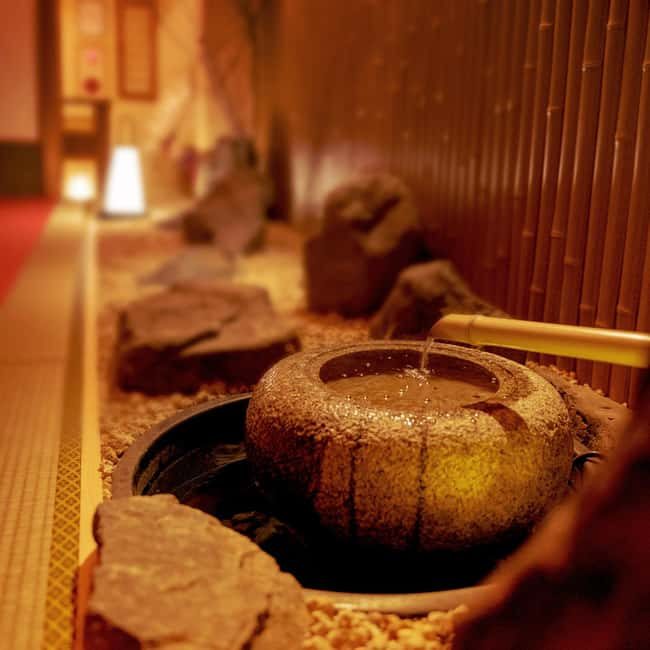
- Just six seats: The traditional tea room is reserved for one private group, keeping the show personal and unobstructed.
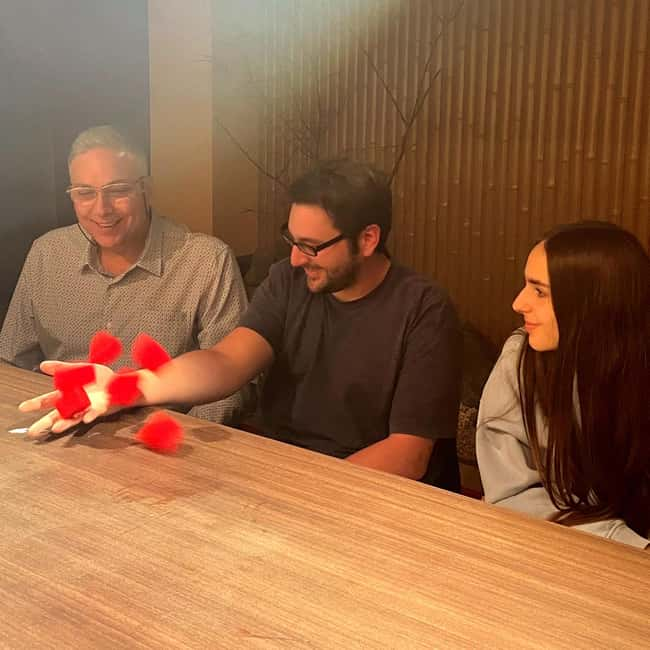
- A half-hour of magic: Precise gestures and whispered spells unfold close enough to make the sleight of hand hard to follow.
- Uji matcha after the show: The second half is devoted to a bowl of matcha, hand-whisked and served with English guidance.
- A one-hour plan: The compact format can fit into a Kyoto day without consuming a large block of sightseeing time.
- A few practical limits: You need a reservation, should arrive five minutes early, and cannot use flash photography during the performance.
Entering a quiet tea room in Gion
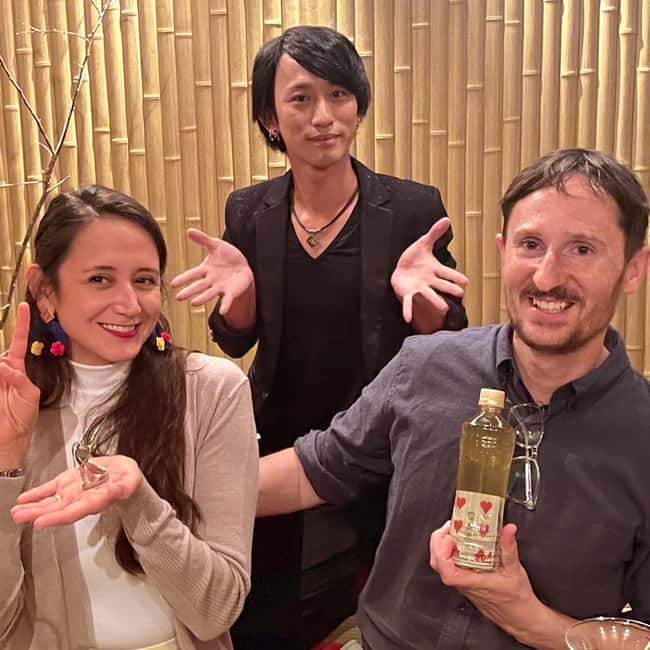
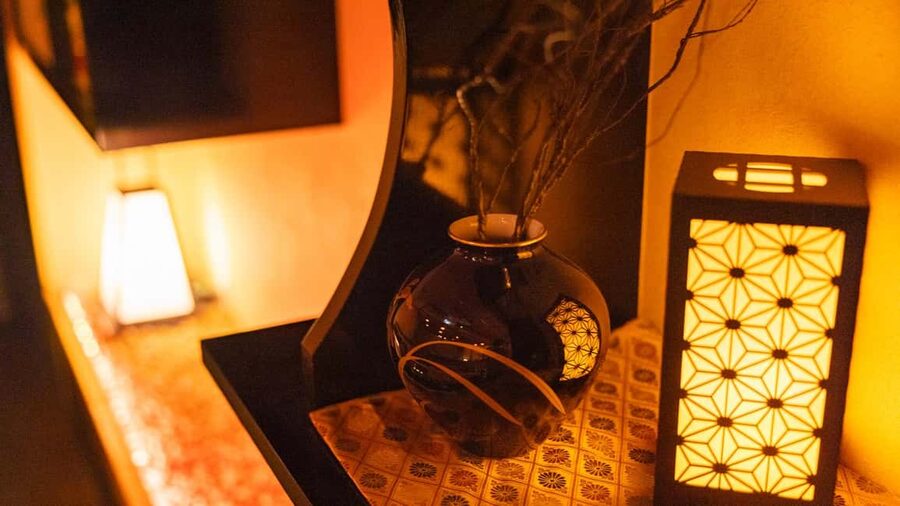
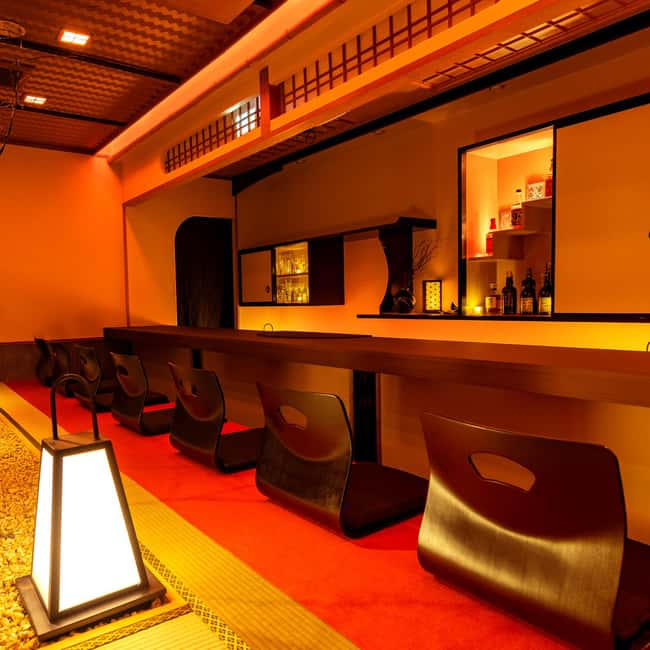
This experience begins away from the feel of a large theater. The setting is a traditional tea room in Kyoto’s Gion area, reached by meeting a staff member in front of the building five minutes before the scheduled start. The room has only six seats and is reserved for one group, so the scale is closer to a private salon than a public show.
That small audience is more than a comfort. Magic depends on attention, timing, and the angle from which you watch. When the performer is only a short distance away, a slight movement of the hand can hold your focus. You can study the action closely and still find yourself unsure how a trick was done.
The format also suits people who dislike crowded attractions or prefer not to compete for a view. You are not buying a ticket to a big production with rows of seats and a distant stage. You are booking a contained cultural encounter, with the room and performance centered on your group.
Arrive on time. The organizer asks you to be there five minutes before the show, and the staff member waits in front of the building. The experience is reservation-only, so you cannot simply drop in if you happen to be walking through Gion. The exact address is not included in the details provided here, so use the meeting information supplied with your booking.
More tea ceremonies in Kyoto:
- Kyoto: Tea Ceremony in a Traditional Tea House in Kiyomizu
★ 4.9 · 3,519 reviews - Kyoto: Tea Ceremony Ju-An at Jotokuji Temple
★ 4.9 · 3,207 reviews - Kyoto: 45-Minute Tea Ceremony Lesson Experience
★ 4.3 · 2,378 reviews
Watching Wazuma from a few feet away
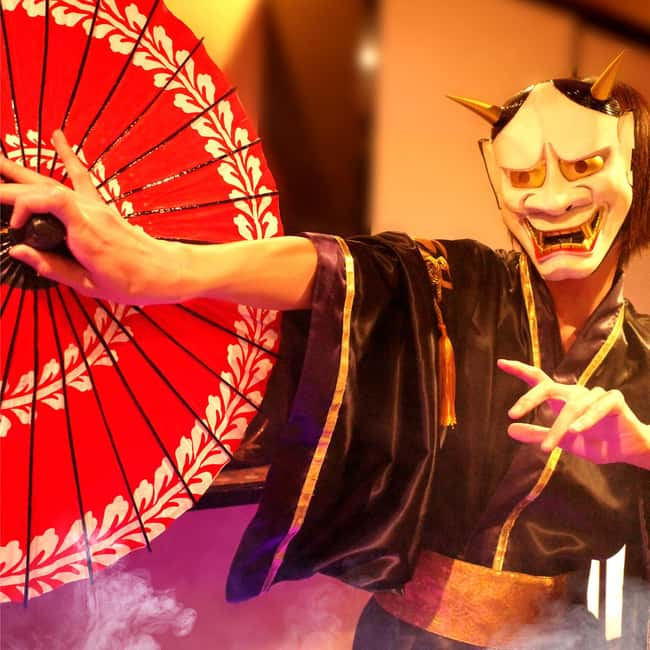
The first 30 minutes are devoted to Wazuma, a traditional Japanese art of illusion. It is described as roughly 1,000 years old and recognized by Japan as intangible cultural heritage. The tradition is now practiced by fewer than ten masters, which makes the performance unusual even before the first trick begins.
The close setting changes how you watch. In a large show, you might follow the broad action and miss small details. Here, the gestures take place right in front of you, and the performance is designed for a tiny audience. You may be invited to take part in an act, adding a little participation to the usual job of trying to catch the magician’s method.
The performance has a theatrical quality, but the appeal is not only spectacle. Wazuma is presented as a traditional art, with gestures and spells that connect the entertainment to Japanese cultural practice. That gives the show a different feel from a general-purpose magic act, while keeping it accessible to someone who knows little about the subject.
Masaya is named in connection with the close-up performance, and Tamaki is also associated with the experience. The available details do not specify their exact roles in every session, so consider those names useful context rather than a promise that a particular person will appear at your time.
Photography has one clear restriction: flash is not allowed during the performance. That matters in a small room, where a flash could interrupt the act and distract the people around you. If you want pictures, check with the staff about what is permitted outside the show rather than assuming you can photograph freely.
Some participants have received a small memento at the end. It is a pleasant possible extra, but it is not listed among the inclusions, so I would treat it as a bonus rather than part of the value calculation.
Taking a quieter half-hour with Uji matcha
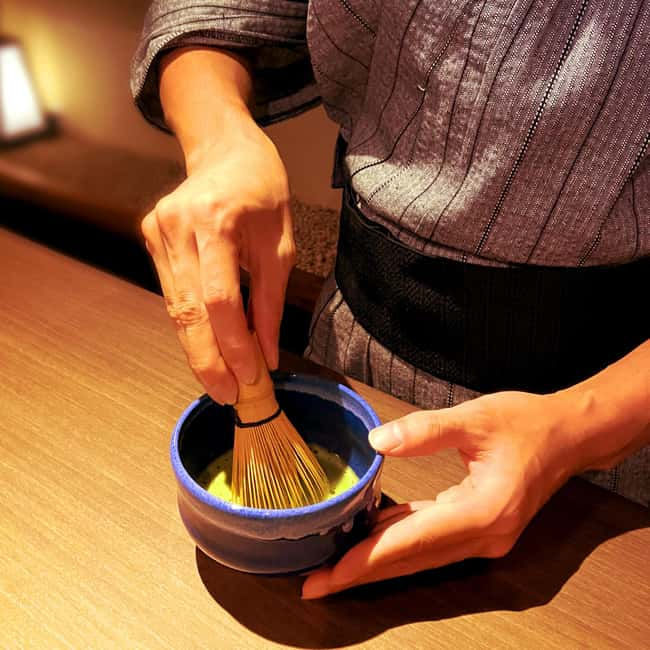
After the magic, the pace shifts to tea. The second 30 minutes are set aside for Uji matcha, served after the show with English guidance. The matcha is hand-whisked, giving you a chance to see how it is prepared and to enjoy the drink in the same quiet room where you watched the performance.
This transition is one of the experience’s strengths. The first half asks you to focus on quick movements and surprises; the second gives you time to settle in. Instead of ending as soon as the applause fades, the hour slows down and lets you take in another part of Japanese cultural life.
The tea component is best understood as a focused tea time, not a long formal lesson. The information promises guidance in English and a bowl of Uji matcha, but it does not describe an extended class or a detailed study of tea ceremony customs. If you want a full-length tea ceremony with a broader explanation of utensils, etiquette, and history, this may be more concise than you have in mind.
Uji matcha is a specific point of interest for anyone who enjoys Japanese tea. You get to taste it in a traditional room, rather than simply ordering a matcha drink at a café. Still, the value here lies in the whole pairing: the quiet tea time follows a rare performance and gives the visit a gentle finish.
What the $77 price buys you
At $77 per person, this is not a bargain-priced hour in the way a simple museum ticket might be. The price makes more sense if you value the private format, the small audience, and the chance to see a traditional art that is rarely performed for visitors. You are paying for a scheduled show in a dedicated room, not just for a bowl of tea.
The private booking is central to the value. The room is set aside for one group, with only six seats available, so the experience has a level of personal attention that a larger performance could not offer in the same way. If you are traveling as a couple, a family, or a small group and want a distinctive shared activity, that privacy may matter more than getting the lowest cost per minute.
The hour is also easy to place in a busy Kyoto itinerary. It is long enough to include two distinct activities, but short enough to leave most of the day open. There is no transportation included, however, so factor in the time and cost of getting to Gion and back to your next stop.
I would compare the price with what you want from the day. If you mainly want an inexpensive entertainment stop, $77 may feel high for 60 minutes. If you are drawn to rare traditional performance, appreciate a personal setting, and would enjoy a guided matcha break, the combination offers a more particular kind of value.
The booking terms add some flexibility: you can reserve now and pay later, and cancel up to 24 hours in advance for a full refund. Check the available start times before building the rest of your day around it.
More shows in Kyoto:
- Kyoto Gion Cultural Walk & Geisha Show with Dining Options
★ 5.0 · 518 reviews - Kyoto Gion Cultural Walk & Geisha Show with Dining Options
★ 5.0 · 483 reviews - 1 Hour Geisha Show in Kyoto
★ 5.0 · 452 reviews - Kyoto: Samurai Kenbu Traditional Sword Dancing Show
★ 4.5 · 426 reviews
Who is likely to enjoy it most
This is a good fit if you want something distinct from Kyoto’s temples, shops, and larger cultural attractions. It works especially well for couples or small groups who enjoy close-up performance and would rather have one shared room than a public audience. The combination of magic and matcha also makes it an easy choice for people with different interests.
You do not need prior knowledge of Wazuma or tea ceremony to follow the experience. English guidance is available, and the show is built around visual action. The cultural background adds interest, but the magic itself gives you an immediate way in.
It may be less suited to anyone seeking a long educational session, a full afternoon activity, or a highly structured tea lesson. The description gives a firm 30 minutes to the show and 30 minutes to tea, so there is little room for a wider tour of Gion or a lengthy discussion. Wheelchair users should also note that the activity is not suitable for them.
Families may find the show engaging, but no minimum age or child-specific details are provided. If you are booking with children, confirm suitability and any age requirements with the provider rather than assuming the format will fit every child.
Small details that make the hour go smoothly
Keep the timing simple. Arrive five minutes before the start and look for the staff member in front of the building. Since this is a reservation-only activity, have your booking details ready and allow enough time to reach the meeting point without rushing.
Plan for an hour at the venue, plus whatever transport time you need to get to and from Gion. Transportation is not included, and no specific route or pickup service is provided. The activity’s location in Gion makes it possible to pair with other plans in the area, but the exact address and nearby transit advice should come from your booking information.
Put your camera away during the performance if it uses flash. The restriction is explicit, and the close room makes it especially important to avoid disrupting the show or other people in your group. If photography matters to you, ask the staff what is allowed before the performance begins.
Finally, keep your expectations in line with the format. This is a polished one-hour encounter built around two specific elements: traditional Japanese illusion and Uji matcha. Its small scale is the point, but it also means you will not get a broad survey of either subject.
Should you book this Kyoto experience?
Book it if you want a rare, personal performance and like the idea of following it with a calm cup of matcha. The private room, six-seat limit, and close-up Wazuma act are the main reasons to choose it over a standard show. Skip it if you need wheelchair access, want a longer tea lesson, or are looking for a low-cost activity with several hours of content.
FAQ
How long does the experience last?
It lasts one hour: 30 minutes for the traditional Japanese magic show and 30 minutes for Uji matcha tea time.
Where does the activity take place?
It takes place in a traditional tea room in Kyoto’s Gion area. A staff member meets you in front of the building five minutes before the start.
Is the show private?
Yes. It is for one private group, and the tea room has six seats available.
What is Wazuma?
Wazuma is described as a traditional Japanese illusion art about 1,000 years old and recognized by Japan as intangible cultural heritage.
Is the activity guided in English?
Yes. English is listed as the language for the host or greeter, and the matcha tea time includes English guidance.
What is included in the price?
The activity includes a 30-minute traditional Japanese magic show and a 30-minute Uji matcha tea time.
Is transportation included?
No. Transportation to and from the activity location is not included.
Can I take photographs during the show?
Flash photography is not allowed during the performance.
Is the activity suitable for wheelchair users?
No. It is listed as not suitable for wheelchair users.
Can I cancel my booking?
Yes. You can cancel up to 24 hours in advance for a full refund.
Newly added in Kyoto
- Uji: Private immersion into Kyoto’s tea and reglious culture★ 5.0 · 17 reviews
- Whisk Your Own Matcha: A Zen Matcha Experience at Temple★ 3.6 · 7 reviews
- Kyoto tea town for matcha lovers★ 5.0 · 16 reviews
- Treasures of Kyoto: Gion & historical Walking Tour★ 5.0 · 6 reviews
- Kyoto Matcha Green Tea Tour★ 4.5 · 23 reviews
- Uji and Wazuka Matcha Farm Half Day Private Guided Tour★ 5.0 · 21 reviews
- Uji Tea Ceremony and UNESCO Heritage Walking Tour★ 5.0 · 20 reviews
- Utilising upcycled Matcha! Creating matcha incense (Uji, Kyoto)★ 5.0 · 6 reviews
Kyoto Tea Ceremonies, compared.

Tea Ceremony in a Traditional Tea House in Kiyomizu
Read our review →

World Heritage Kyoto & Nara Uji Authentic Matcha Experience
Read our review →

Arashiyama Bamboo Forest, Monkeys, Matcha & Temple Tour
Read our review →
Tea Museum Tickets and Matcha Grinding Experience
Read our review →Browse the lists this tour appears in