
Reviewed · KYOTO CRAFT WORKSHOPS
Fish Cutting workshop in Kyoto Japan
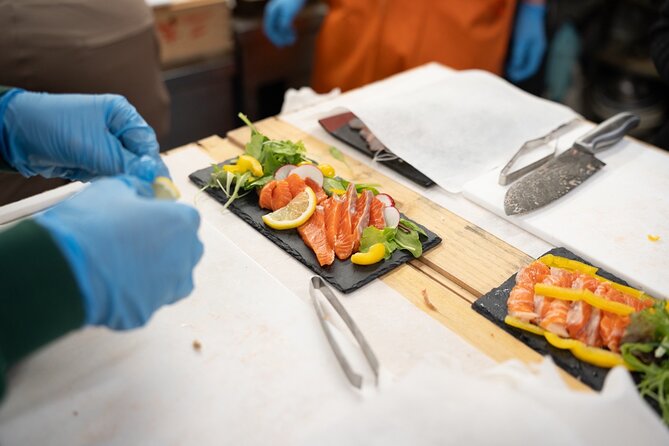
A fish arrives whole, and by lunchtime you’ve helped turn it into sashimi. This small Kyoto workshop teaches you how to handle fish and cut it into three pieces, then lets you eat what you prepare. It’s a practical look at a craft that most sushi meals keep behind the counter.
I like two things in particular: you get close, step-by-step guidance rather than a distant demonstration, and the lesson ends with a fresh sashimi lunch. The small group, capped at six, also gives you room to ask questions as you work.
The main consideration is comfort with knives and raw fish. You don’t need prior experience, but you do need to handle a knife, and the class is not suitable for children under 8.
What to know before you book
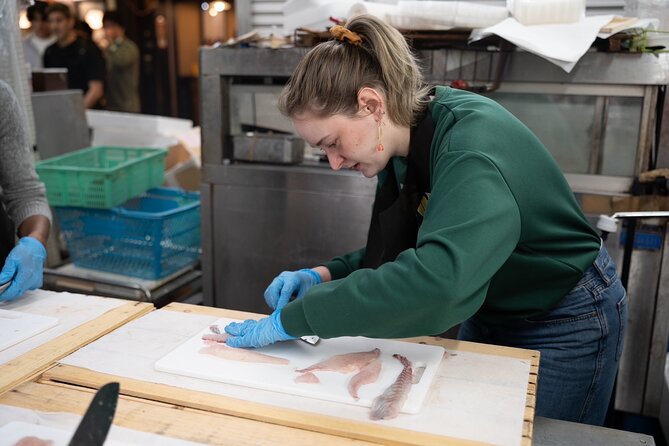
- You cut fish yourself: Learn basic handling and processing techniques, including cutting fish into three pieces.
- The lesson takes place at a historic fishmonger: The shop has a 400-year history; the instructor has worked in a fish shop for more than 20 years.
- Your work becomes lunch: The fish you prepare is served as sashimi, so come ready to eat raw fish.
- The class stays small: A maximum of six people makes it easier to ask for help and follow each demonstration.
- Expect a focused morning: The experience starts at 10 a.m. and lasts about two and a half hours.
- Plan for the knife work: Beginners are welcome, but children under 8 should not attend because participants handle knives.
At Kimura Fresh Fish, the lesson starts with the fish
The meeting point is Kimura Fresh Fish, at 483 Nakauoyachō in Kyoto’s Nakagyo Ward. The shop is described as a fishmonger with a 400-year history, giving the lesson a setting rooted in the work itself rather than a generic cooking classroom.
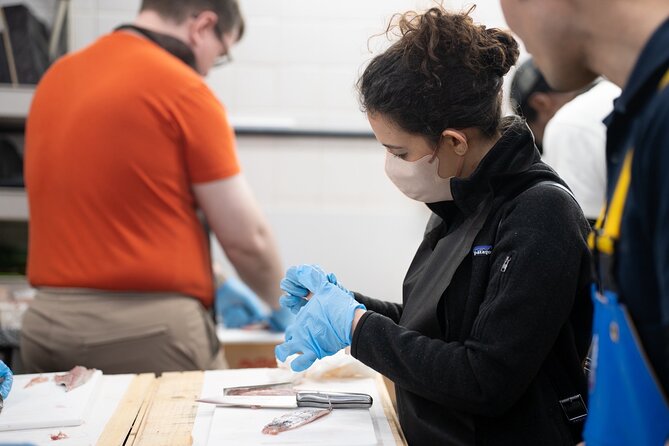
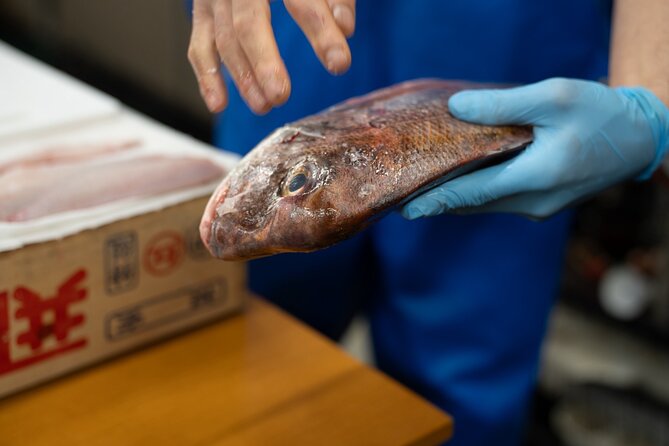
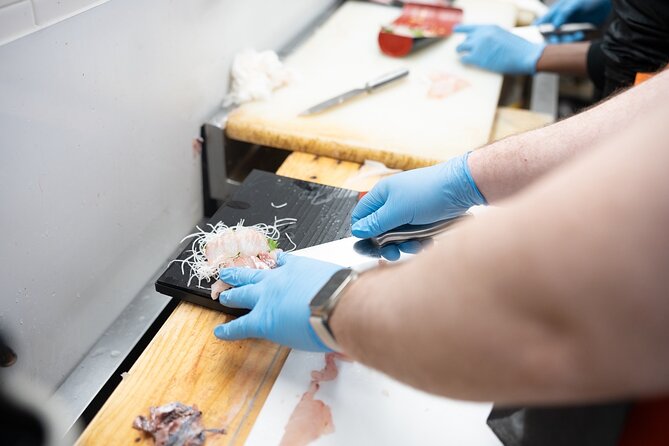
The focus is practical. You’ll first be shown how to handle the fish, then learn the basic processing techniques needed to cut it into three pieces. The instructor’s experience matters here: someone who has spent more than 20 years in a fish shop can explain not just what to do, but how to approach a task that may be unfamiliar to you.
That doesn’t mean the workshop expects you to arrive with knife skills. The instruction is intended for beginners, and the teacher demonstrates the process before you try it. You can ask questions as they come up, which is useful when you are learning a sequence of cuts and want to understand how to handle the fish safely.
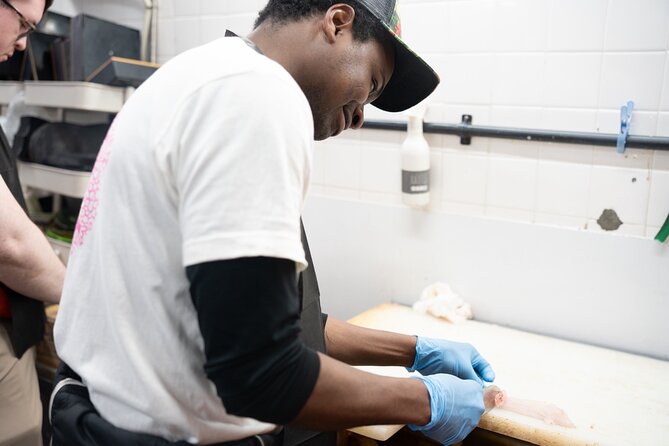
Fish preparation is not a tidy theory lesson. You’ll be working directly with the ingredient, and the experience includes seeing the fish opened and processed. If you’re curious about how a sashimi platter begins, that direct contact is the point. If the sight or feel of raw fish makes you uneasy, consider that carefully before booking.
More craft workshops in Kyoto:
- Kyoto : Chopsticks Making Workshop in Gion with Engraving Option
★ 5.0 · 958 reviews - Kyoto: Calligraphy class at Buddhist temple in city center
★ 5.0 · 167 reviews - Kyoto: Beginner Knife Sharpening & Handle Fitting Workshop
★ 4.9 · 141 reviews
Learning by watching, then making the cuts yourself
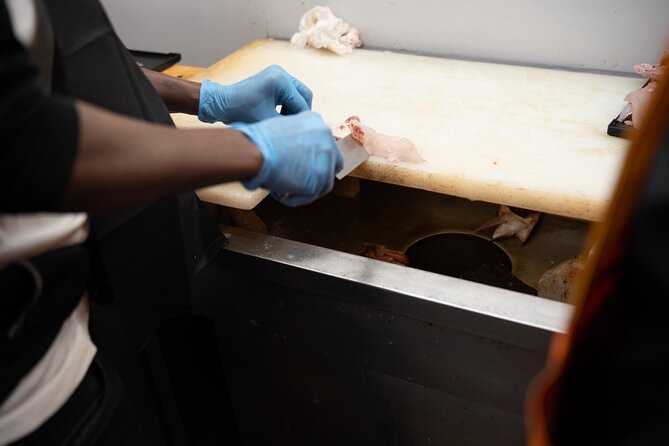
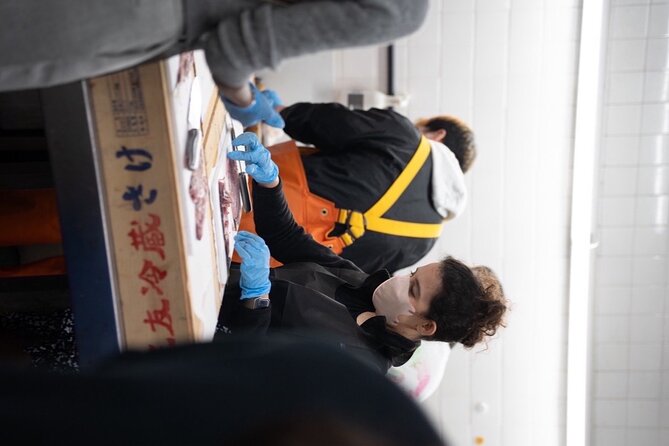
The class moves from demonstration to hands-on work. You watch the instructor break down the fish step by step, then take your turn. The teaching style is attentive: the instructor watches your cuts and helps you correct them as needed.
That close supervision is one of the strongest reasons to choose this workshop over a general cooking class. Fish cutting calls for control and confidence, and the small group gives the teacher a chance to focus on each person. You’re not simply watching someone skilled work at speed and hoping you can copy it later.
You’ll cut the fish into three pieces yourself. The available details do not specify the exact fish, knife style, or full set of techniques, so don’t book expecting a particular species or a lesson in every stage of professional fish processing. The clear promise is an introduction to handling and cutting fish, with guidance from an experienced fish-shop worker.
Questions are welcome, including questions about fish more broadly. That makes the session useful even if sashimi is not your only interest. You may come away with a better sense of how raw fish is prepared and why careful handling matters, as well as a new knife skill to practise at home.
The work can be challenging. One participant described the cutting as difficult, but also noted that the instructors helped the group feel at ease. That is a fair expectation: the lesson is hands-on, not effortless, and the help is there to keep you on track rather than remove the need to try.
Sashimi lunch: the best kind of lesson recap
At the end, you eat the fish you prepared as sashimi. Lunch is included, and the meal gives the workshop a satisfying finish: you can see the result of your work, then taste it while the process is still fresh in your mind.
Freshness and the quality of the fish are central to the experience. You are not just paying to watch a demonstration; you get to prepare the ingredient and eat it. If you enjoy sashimi, this makes the class both a lesson and a meal. Come hungry, as the lunch is part of the value.
The format also helps connect technique with taste. You can better appreciate the care involved in preparing sashimi when you have handled the fish yourself. That does not mean the class turns you into a professional in one morning, but it gives you a closer look at the skill behind a dish you may otherwise order without thinking much about its preparation.
If you don’t eat raw fish, this is likely the wrong fit. The meal is described as sashimi made from the fish you have processed, and no alternative lunch is specified. Likewise, if you are uncomfortable handling fish, the hands-on nature of the class is a real consideration, not a minor detail.
A small group makes questions part of the experience
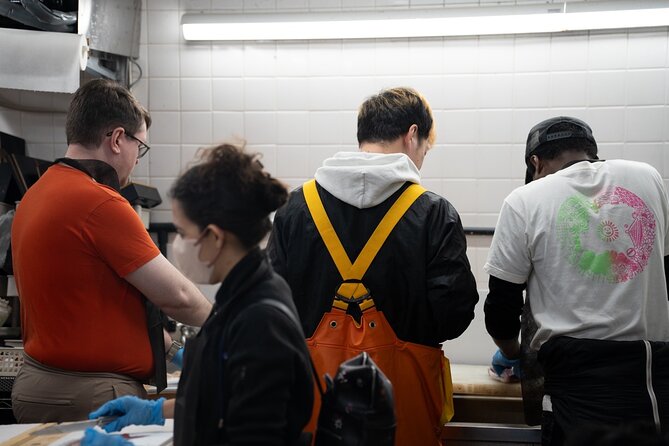
The maximum group size is six. That is a meaningful limit for a practical lesson: you have a better chance to see the demonstration clearly, ask for clarification, and receive guidance while you make your own cuts.
The teaching sounds relaxed and interactive. The instructors are described as supportive, and conversation can extend beyond technique to Japanese food culture and Kyoto recommendations. These exchanges are not a guaranteed separate sightseeing component, but they can add a human dimension to a class centered on a specific craft.
The workshop is also a good setting for curiosity. You can ask about fish, processing, and the instructor’s work, rather than treating the lesson as a fixed performance. If you like learning by doing and talking through the steps, this format should suit you better than a large demonstration.
The trade-off is that a compact group does not make the activity private. You will share the instruction with others, and the exact amount of individual attention depends on the group. Still, six is small enough to keep this from feeling like a lecture hall.
More Kyoto tours in Kyoto:
- PERFECT KYOTO 1-Day Bus Tour
★ 5.0 · 13,518 reviews - Kyoto: Fushimi Inari, Kinkakuji, Bamboo Grove 1 Day Bus Tour
★ 4.8 · 4,316 reviews - Kyoto: Tea Ceremony in a Traditional Tea House in Kiyomizu
★ 4.9 · 3,519 reviews - Kyoto Geisha Walking Tour: Gion District & Hidden Gems
★ 4.7 · 3,273 reviews
Is $98.53 fair for two and a half hours?
At $98.53 per person, this is more than the cost of a sashimi lunch alone. You’re paying for a roughly two-and-a-half-hour lesson, direct instruction from someone with long experience in a fish shop, the chance to prepare the fish yourself, and lunch made from your work.
The price makes most sense if you value the skill and access as much as the meal. If you only want to eat sashimi, you can do that elsewhere for less. If you’re interested in Japanese food preparation, knife work, or the path from whole fish to finished sashimi, the instruction is the main value.
The class is not a broad cooking course. Its appeal is specific: handling and cutting raw fish. That focus is a plus if you want a memorable, practical activity, but it limits the value if you are hoping to learn several dishes or take home a complete set of recipes. No private transportation is included, so you’ll need to make your own way to the shop.
The activity is popular enough that it is booked, on average, about 48 days ahead. If this is a priority during your Kyoto stay, leave room in your plans rather than assuming you can book at the last minute. Booking confirmation is provided at the time of reservation, and free cancellation is available up to 24 hours before the start time.
Who will get the most from this Kyoto class?
This workshop is best for you if you enjoy cooking, want to improve your knife skills, or are curious about how sashimi is prepared. It also suits anyone who values meeting a craftsperson and learning a technique in the place where that work is part of daily life.
You do not need prior fish-handling experience. In fact, the careful demonstration and supervision make the class approachable for beginners. Still, you should be willing to try the cuts yourself and comfortable around raw fish and knives.
It may be less rewarding if you are not interested in food preparation, do not eat sashimi, or prefer a passive activity. The point is not simply to watch a fishmonger work. You take part, and the meal is the result of that effort.
The 10 a.m. start and 2.5-hour duration make this a manageable morning activity. It ends back at the meeting point, leaving the rest of your day open. Keep in mind that the activity is at a specific shop in Nakagyo Ward, and private transport is not part of the package.
Should you book the fish-cutting workshop?
Book it if you want more than another meal in Kyoto. You’ll learn a basic fish-processing skill, work closely with an experienced instructor, and eat sashimi you prepared yourself. The small group and supportive, step-by-step teaching make it a strong choice even if you are new to fish handling.
Skip it if raw fish or knives are a firm no, or if you are paying mainly for lunch. At $98.53, the value lies in the instruction and participation. For a food-curious cook, that makes this a distinctive morning; for someone who wants only to eat, it is more class than necessary.
FAQ
How long is the fish-cutting workshop?
The experience lasts approximately two hours and 30 minutes.
What time does the class start?
The listed start time is 10 a.m.
Where does the workshop meet?
It starts at Kimura Fresh Fish, 483 Nakauoyachō, Nakagyo Ward, Kyoto. The activity ends back at the meeting point.
How many people can join?
The maximum group size is six travelers.
Do I need experience handling fish?
No. The instructor explains how to handle the fish, and the class is intended to welcome people who are new to fish handling.
What will I learn to do?
You’ll learn basic Japanese fish-processing techniques and cut the fish into three pieces yourself.
Is lunch included?
Yes. You eat the fish you have prepared as sashimi, and lunch is included.
Can children under 8 take part?
No. Children under 8 should not attend because participants handle knives.
Newly added in Kyoto
- Uji: Private immersion into Kyoto’s tea and reglious culture★ 5.0 · 17 reviews
- Whisk Your Own Matcha: A Zen Matcha Experience at Temple★ 3.6 · 7 reviews
- Kyoto tea town for matcha lovers★ 5.0 · 16 reviews
- Treasures of Kyoto: Gion & historical Walking Tour★ 5.0 · 6 reviews
- Kyoto Matcha Green Tea Tour★ 4.5 · 23 reviews
- Uji and Wazuka Matcha Farm Half Day Private Guided Tour★ 5.0 · 21 reviews
- Uji Tea Ceremony and UNESCO Heritage Walking Tour★ 5.0 · 20 reviews
- Utilising upcycled Matcha! Creating matcha incense (Uji, Kyoto)★ 5.0 · 6 reviews
Kyoto Craft Workshops, compared.
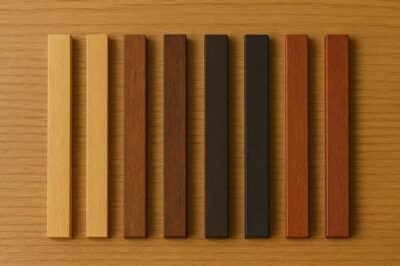
Chopsticks Making Workshop in Gion with Engraving Option
Read our review →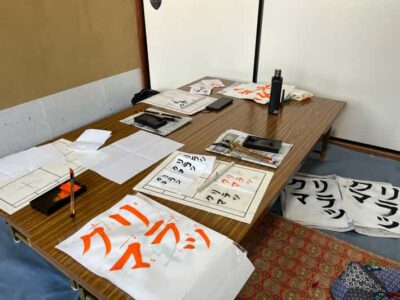
Calligraphy class at Buddhist temple in city center
Read our review →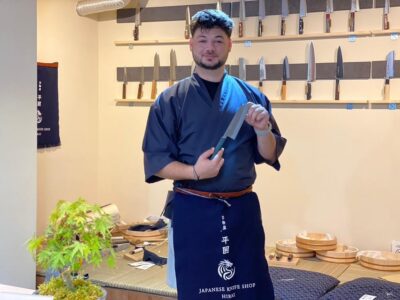
Beginner Knife Sharpening & Handle Fitting Workshop
Read our review →
Japanese Archery Workshop with Experienced Instructor
Read our review →
Kyoto Michelin Ramen Workshop or Painting Ramen Essentials
Read our review →
Browse the lists this tour appears in