
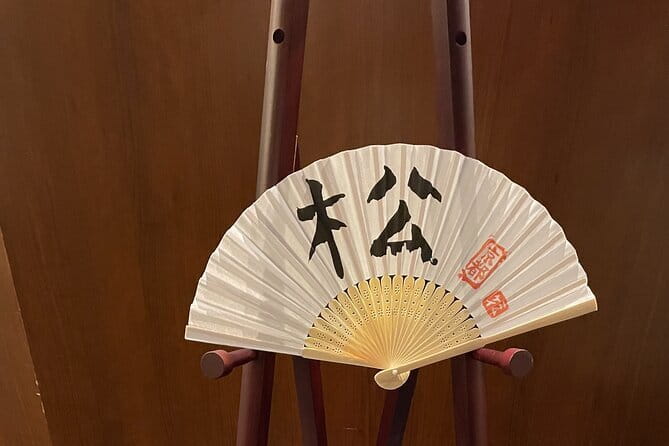
Reviewed · KYOTO CRAFT WORKSHOPS
Japanese Calligraphy – Shodo – Lesson (near Kyoto Station)
Japanese calligraphy gives you more than a souvenir: it lets you try the brushwork behind the characters you see across Japan. In this one-hour lesson near Kyoto Station, you’ll learn how to hold and use a brush, practice simple characters, and make a scroll to take home.
I like two things in particular: the small group, capped at 10, leaves room for hands-on help, and your name can be rendered in kanji with an explanation of the characters’ meanings. One consideration: an hour is enough for a welcoming introduction, not a full course, and the meeting point can take a little searching if you don’t know to look for the MK taxi stand.
What to know before you book
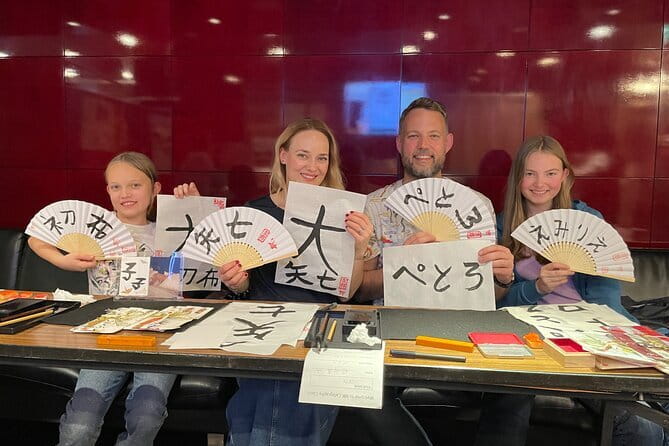
- You begin with brush and ink basics, then practice characters including One, A, Forever, and Kyoto.
- Your name becomes a language lesson, with staff helping choose possible kanji and explaining their meanings.
- A take-home scroll is part of the plan, so you leave with your own calligraphy rather than only a short demonstration.
- The group has a maximum of 10 people, which helps keep the instruction personal.
- Brushes, ink, and washi paper are included, so you don’t need to bring supplies.
- The meeting point is the MK Taxi VIP Station at Kyoto Station’s Hachijo Exit, and the class returns there.
A first taste of shodo, not just a photo stop
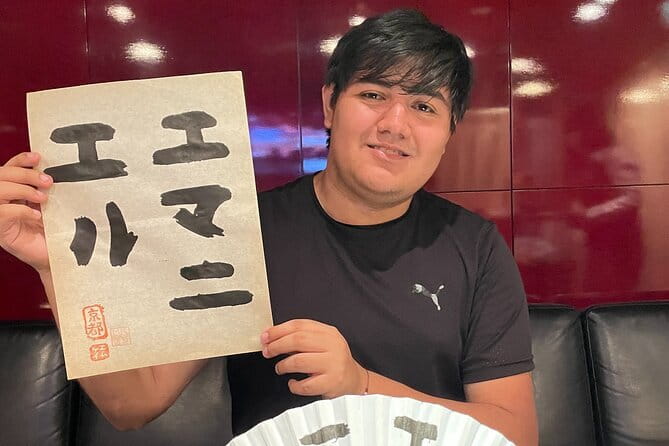
Shodo, Japanese calligraphy, is a practical way to spend an hour if you want to do something with your hands while learning about Japanese writing. You are not expected to arrive with artistic skill. The class starts with basic instruction, then gives you time to try the brush and ink yourself.
That distinction matters. Watching an instructor write can be lovely, but it won’t tell you how the brush feels or how much ink to use. Here, you get to practice, make uneven marks, adjust, and try again. That small act of learning turns the finished piece into a more personal keepsake.
The class is run by Kyoto MK and takes place near Kyoto Station. The stated price is $50.40 per person, and the session lasts about an hour. It’s a compact activity, easy to fit into a day of sightseeing or an arrival and departure day, though you’ll want to allow a little extra time to find the meeting point.
More craft workshops in Kyoto:
- Kyoto : Chopsticks Making Workshop in Gion with Engraving Option
★ 5.0 · 958 reviews - Kyoto: Calligraphy class at Buddhist temple in city center
★ 5.0 · 167 reviews - Kyoto: Beginner Knife Sharpening & Handle Fitting Workshop
★ 4.9 · 141 reviews
Brush, ink, and the first characters
The lesson begins with staff explaining how to use a brush and apply ink. These are simple-sounding steps, but they are the foundation of the activity. A brush does not behave like a pen, and learning how to move it gives you a better chance of making deliberate strokes instead of simply pressing down and hoping for the best.
You then practice basic characters, including One, A, Forever, and Kyoto. This gives the class a clear progression: first get comfortable with the tools, then make a few guided attempts at writing. You won’t leave fluent in calligraphy, but you should come away with a sense of how the process works and a few characters of your own.
The provided supplies include brushes, ink, and washi paper. That’s useful if you’re traveling light or don’t want to spend time figuring out what to buy before the lesson. It also means the class can get straight to the activity rather than turning into a shopping trip.
The schedule is short, so expect an introduction rather than long periods of free practice. If you’re hoping to study brush technique in depth, this may feel brief. If you want a friendly first encounter and a chance to make something yourself, the hour makes good use of your time.
Turning your name into a keepsake
One of the most personal parts comes when you work on a version of your name in kanji. Staff help suggest characters and explain their meanings. Because the sounds and meanings do not always line up neatly between languages, the result is an approximate rendering rather than a simple one-to-one translation.
The examples show how creative this can be. Brian might be written with characters associated with martial courage, courtesy, and peace. Liz might be represented by characters meaning pear and painting. Those examples make clear that choosing kanji is not just a matter of finding symbols that sound alike; the meanings can become part of the story.
I like this element because it turns a standard class exercise into something tied to you. You can ask about the characters proposed for your name and understand why they were chosen, rather than leaving with a string of unfamiliar marks. The staff’s help is especially useful here, since guessing at kanji on your own could easily lead to a very different result.
The planned takeaway is a scroll made from the characters you write. It is a more satisfying souvenir than a generic object because you have had a hand in making it. Pack it with care, particularly if you have more stops on your itinerary, and check how it is presented before you leave.
A small group with room for questions
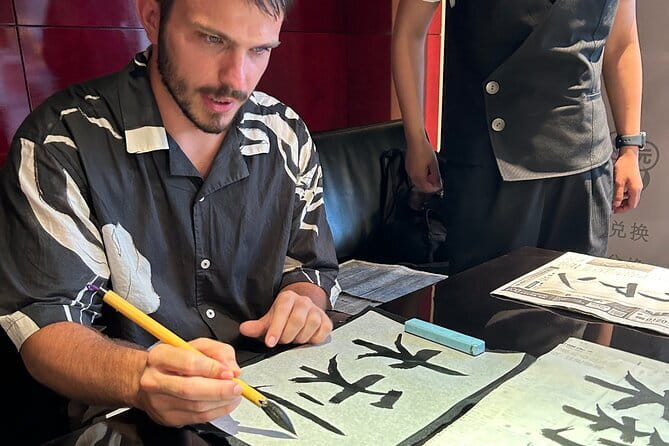
The group is limited to 10 participants. That cap is a useful detail for a hands-on lesson: you need a chance to see how the brush moves, try it yourself, and ask for help if your strokes are going sideways. It is not a private class, but it is smaller than a large demonstration-style activity.
The staff are described as friendly, patient, and helpful, and English is spoken during instruction. Haruko is one instructor named by a participant, who appreciated her kind, patient explanations. Staff may vary by session, so don’t assume Haruko will lead your class, but the account gives a sense of the approachable teaching style to expect.
The experience is family-friendly, with activities available for children. A parent and a nine-year-old both enjoyed the class, and children can get multiple chances to practice. Still, the exact activity for each child is not specified, so if you are booking for a younger child, consider whether they will enjoy sitting through a short lesson and handling brush and ink with care.
The format suits mixed ages better than a lecture would. You can learn alongside your child, make your own piece, and leave with separate keepsakes. It can also work for adults looking for a calm activity that is more engaging than another stop at a museum or shop.
More Kyoto tours in Kyoto:
- PERFECT KYOTO 1-Day Bus Tour
★ 5.0 · 13,518 reviews - Kyoto: Fushimi Inari, Kinkakuji, Bamboo Grove 1 Day Bus Tour
★ 4.8 · 4,316 reviews - Kyoto: Tea Ceremony in a Traditional Tea House in Kiyomizu
★ 4.9 · 3,519 reviews - Kyoto Geisha Walking Tour: Gion District & Hidden Gems
★ 4.7 · 3,273 reviews
Finding the MK taxi meeting point
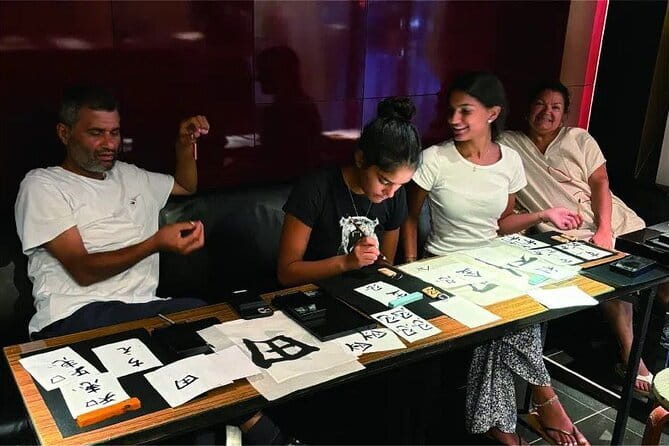
The class starts and ends at the MK Taxi VIP Station, at Kyoto Station’s Hachijo Exit. The address provided is 47 Higashikujo Kamitonodacho, Minami Ward, Kyoto, at the ibis Styles Kyoto Station. Look for the MK taxi stand and Kyoto sightseeing reception.
The exact spot can be a little tricky to identify if you are moving quickly through the station area. One useful clue is to look for the MK building diagonally across the street as you come out by the station exit. Give yourself a few extra minutes rather than arriving at the last moment; the class itself is only an hour, and a rushed start would be a poor warm-up for careful brushwork.
The activity is near public transportation, and the return point is the same as the start. It’s convenient if you are staying near Kyoto Station or connecting this with other city plans. A mobile ticket is offered, and confirmation is received at booking.
Is $50.40 fair for an hour?
At $50.40 per person, this is not a bargain-priced craft table. You are paying for a guided cultural activity, instruction, the use of materials, and a take-home piece, all in a location close to Kyoto Station. The value depends on what you want from the hour.
If your priority is a structured introduction to calligraphy and a personal souvenir, the price is easier to justify. You don’t have to source brushes, ink, or paper, and you get help not only with basic writing but also with the meaning of possible kanji for your name. That guidance is the part that makes the activity more than a chance to try a new pen.
If you want a long workshop with advanced technique or extensive practice, this is probably not the right fit. The duration is about an hour, and the plan moves from a basic demonstration into guided writing and a finished scroll. It’s best viewed as an accessible sampler, not a serious course.
The activity has a 4.9 rating from 37 reviews, with a 100 percent recommendation figure. The most consistently praised elements are the welcoming, helpful staff, the fun of making calligraphy, and the souvenirs people take home. Those are also the experience’s clearest strengths: the lesson is approachable, participatory, and personal.
Who will enjoy this lesson most?
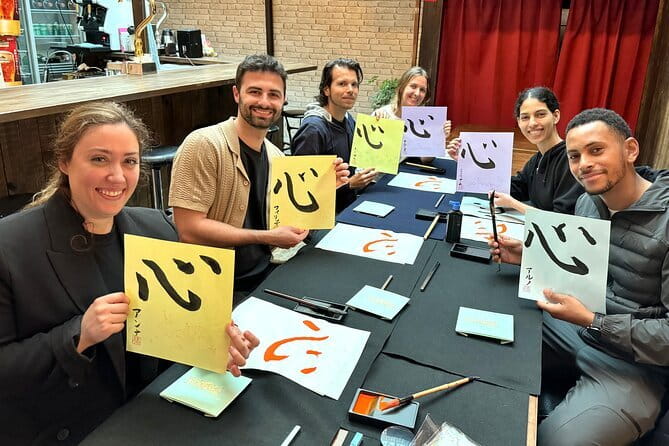
I’d consider booking this if you want a hands-on activity that fits neatly into a Kyoto itinerary. It’s particularly suited to first-time visitors curious about Japanese writing, families who want an activity they can do together, and anyone who prefers a small class to a large tour group.
It can also be a good choice near the end of a trip. You can make something connected to your time in Japan and take it home, rather than adding another mass-produced souvenir to your bag. The name-writing exercise gives the keepsake a personal angle, while the basic character practice makes the hour more than a photo opportunity.
You may want to skip it if you need an advanced lesson, have little interest in making things, or are squeezing every minute from a packed sightseeing day. The class is brief, and the meeting point requires a little attention. But if you can spare an hour and enjoy learning by doing, it offers a useful, low-pressure introduction.
Practical details and cancellation
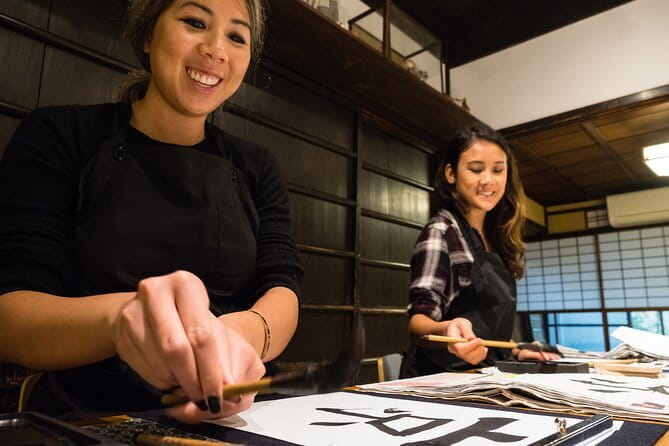
The experience lasts about one hour, and the maximum group size is 10. Brushes, ink, and washi paper are included; you can take home a scroll of the characters you write. Most people can participate, and the class is near public transportation.
Free cancellation is available up to 24 hours before the start time. Cancellations made less than 24 hours in advance are not refundable, and changes inside that window are not accepted.
Should you book this Kyoto calligraphy class?
Book it if you want a short, welcoming introduction to shodo, personal help creating a kanji version of your name, and a handmade souvenir to take home. The small group and included supplies make it approachable, while the staff’s patient guidance appears to be a real strength.
Pass if you’re looking for advanced instruction or a long session devoted to technique. For everyone else, especially families and curious beginners, this is a nicely focused hour near the station. Just allow time to locate the MK taxi stand before class.
FAQ
How long is the Japanese calligraphy lesson?
The lesson lasts approximately one hour.
Where does the class meet?
It meets at the MK Taxi VIP Station at Kyoto Station’s Hachijo Exit, at 47 Higashikujo Kamitonodacho, Minami Ward, Kyoto. Look for the MK taxi stand and Kyoto sightseeing reception.
Does the activity return to the same meeting point?
Yes. The class ends back at the meeting point.
What supplies are included?
Brushes, ink, and washi paper are included.
What will I write during the lesson?
You’ll learn how to use a brush and apply ink, then practice basic characters including One, A, Forever, and Kyoto. Staff can also help suggest kanji for your name and explain their meanings.
Can children take part?
Yes. The experience is family-friendly, and activities are available for children. Most participants can take part, though no minimum age is specified.
What is the cancellation policy?
You can cancel for a full refund up to 24 hours before the experience starts. Cancellations or changes made less than 24 hours before the start time are not accepted for a refund or change.
Newly added in Kyoto
- Uji: Private immersion into Kyoto’s tea and reglious culture★ 5.0 · 17 reviews
- Whisk Your Own Matcha: A Zen Matcha Experience at Temple★ 3.6 · 7 reviews
- Kyoto tea town for matcha lovers★ 5.0 · 16 reviews
- Treasures of Kyoto: Gion & historical Walking Tour★ 5.0 · 6 reviews
- Kyoto Matcha Green Tea Tour★ 4.5 · 23 reviews
- Uji and Wazuka Matcha Farm Half Day Private Guided Tour★ 5.0 · 21 reviews
- Uji Tea Ceremony and UNESCO Heritage Walking Tour★ 5.0 · 20 reviews
- Utilising upcycled Matcha! Creating matcha incense (Uji, Kyoto)★ 5.0 · 6 reviews
Kyoto Craft Workshops, compared.
Chopsticks Making Workshop in Gion with Engraving Option
Read our review →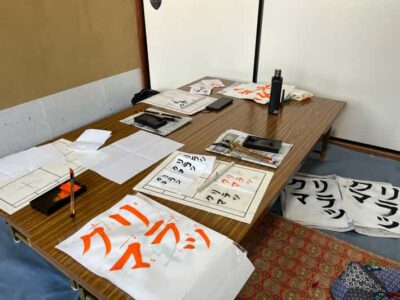
Calligraphy class at Buddhist temple in city center
Read our review →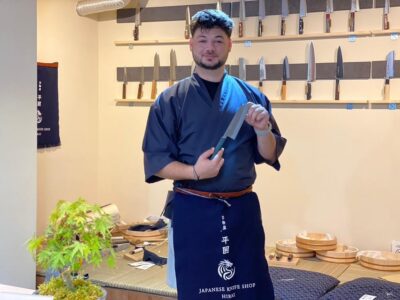
Beginner Knife Sharpening & Handle Fitting Workshop
Read our review →
Japanese Archery Workshop with Experienced Instructor
Read our review →
Kyoto Michelin Ramen Workshop or Painting Ramen Essentials
Read our review →
Browse the lists this tour appears in