
Reviewed · KYOTO CRAFT WORKSHOPS
Pure Silver Spoon Making Workshop in Kyoto
A silver spoon is a useful souvenir with a story built into it. At this private Kyoto workshop, you’ll mark a piece of pure silver, hammer it into shape, smooth the edges, and polish the finished teaspoon yourself.
I like two things in particular: you do the hands-on work, with a craftsperson there to guide you, and the small spoon has a personal finish rather than a factory-made one. The hosts also welcome you with tea and snacks, which gives the session a warm, unhurried start.
The main consideration is the price: $141.22 per person is a substantial cost for a two-and-a-half-hour activity, especially if you’re comparing it with shorter craft classes. It makes the most sense if you value the pure-silver material, individual instruction, and a keepsake you can use or give away.
What to know before booking
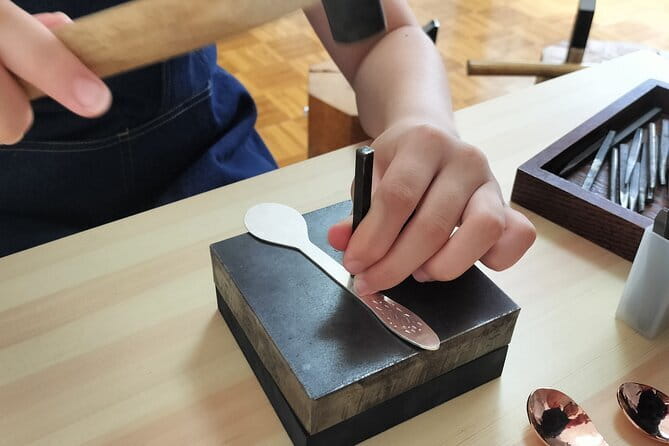
- You shape a pure-silver teaspoon: Add a pattern with a chisel or stamp, then hammer the metal into spoon form.
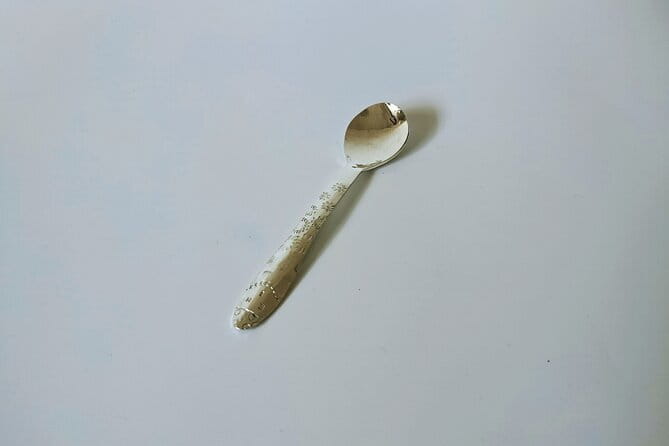
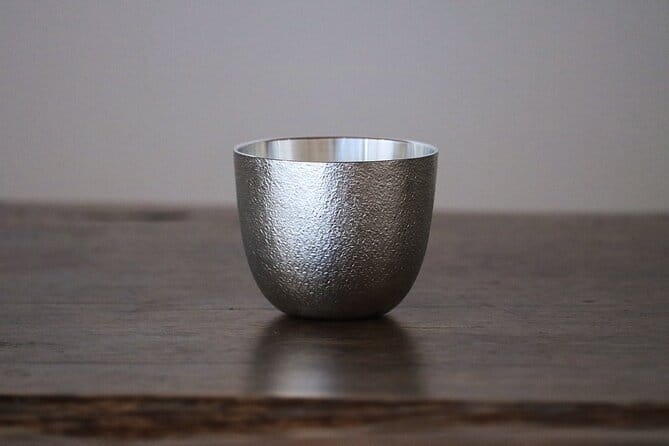
- The finished spoon is small: It measures about 12 cm long and 2.7 cm wide, making it suitable for use as a teaspoon.
- The hosts guide you through each stage: The workshop is run by a friendly couple, with English instructions prepared and patient help available.
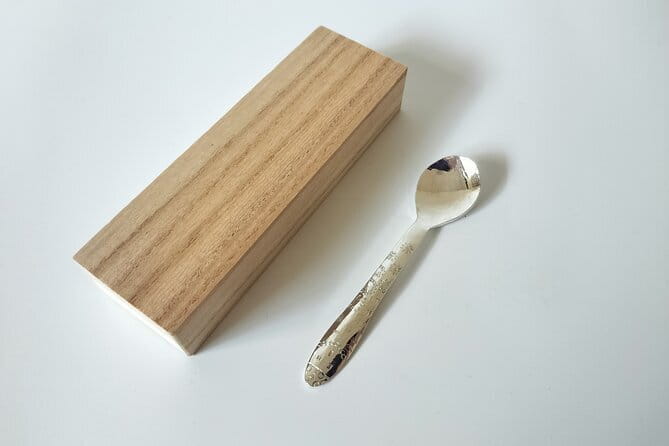
- Your work ends in a gift-ready box: The price includes the silver, tool rental, a paulownia box, and a metal polishing cloth.
- It is a private activity: Only your own group takes part, and the session lasts about two and a half hours.
- The studio is near Shugakuin Imperial Villa: It is an eight-minute walk from the villa, though transport to the meeting point is not included.
Making a spoon, not just a souvenir
Kyoto offers plenty of ways to spend an afternoon, but this workshop gives you something different from another temple visit or shop stop: a chance to make a useful object with your own hands. The work is done in a small format, and the finished spoon is practical enough to use at home rather than simply display.
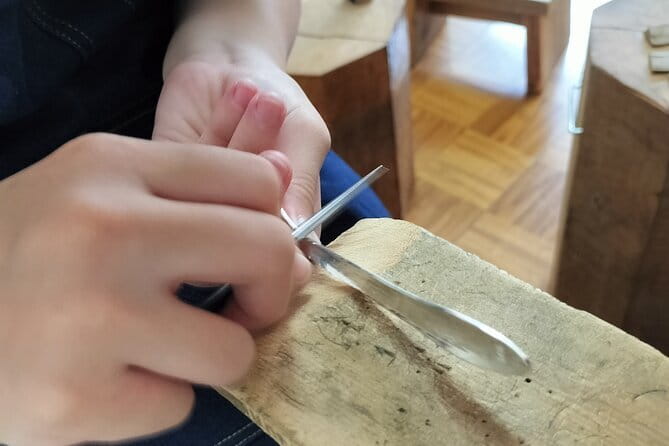
The process begins with a prepared piece of pure silver. You choose a chisel or stamp and add a pattern to the metal before using a hammer to form it into a spoon. That first stage gives the spoon its personal touch. You are not choosing a design from a shelf; you are putting your own marks into the surface.
Next comes shaping and smoothing. You file the sides and use a burnisher to refine the spoon’s edges and form. This is where the job shifts from striking metal to working more carefully. If you like making things, that change of pace is part of the appeal. If you have never handled craft tools, the hosts are there to show you what to do.
A craftsperson then polishes the spoon with a machine. You do not operate that equipment yourself, which keeps the machine-polishing step in the craftsperson’s hands. Finally, you polish the spoon with an abrasive. The process gives you several different tasks, but it does not require you to complete every step alone.
Expect a small teaspoon, not a serving spoon or a large piece of cutlery. The approximate finished size is 12 cm by 2.7 cm. That is a useful size for tea or other small servings, and worth keeping in mind if you’re hoping to make something bigger.
More craft workshops in Kyoto:
- Kyoto : Chopsticks Making Workshop in Gion with Engraving Option
★ 5.0 · 958 reviews - Kyoto: Calligraphy class at Buddhist temple in city center
★ 5.0 · 167 reviews - Kyoto: Beginner Knife Sharpening & Handle Fitting Workshop
★ 4.9 · 141 reviews
A friendly welcome and patient instruction
This workshop’s appeal depends partly on the people guiding it. The couple who run the session welcome participants with tea and snacks, and English instructions are prepared. That helps make the activity approachable even if you do not speak Japanese.
A language difference can feel like a real barrier when a class involves tools and a sequence of steps. Here, the instructions and the hosts’ patience help make the process easier to follow. You still need to pay attention as you work, but you are not expected to figure out the technique by watching from across the room.
The format is private to your group, which means you will not be sharing the session with unrelated participants. That can make it easier to ask for help or move at a pace that suits your group. It also makes this a more personal activity than a large class, though the information provided does not specify a maximum group size.
The hosts’ warmth is one of the strongest reasons to choose this workshop. A simple welcome can change the feel of an afternoon, particularly when you are trying a craft that is new to you. The tea and snacks are a thoughtful start, but the practical value is the patient assistance as you work with the silver.
Why a silver spoon carries meaning
The workshop gives a little context to the object you make. Silver has long been considered a talisman against misfortune and evil spirits, and in Japan there is a custom of giving a silver spoon to a baby as a wish for happiness. You are not just shaping a bit of metal; you are making something with a tradition of good wishes attached to it.
That symbolism makes the spoon an appealing gift, especially for someone who would enjoy a handmade keepsake with a story behind it. The included paulownia box makes it easy to present as a gift, while the polishing cloth helps you care for the spoon after you take it home.
There is no need to treat the spoon as a precious object that must stay in its box. It is recommended for use as a teaspoon, and its small size suits that purpose. If you plan to use it, the included cloth is a practical extra. If you would rather keep it as a memento, the box gives you a neat way to store it.
The price and what it covers
At $141.22 per person, this is not a budget activity. The fee covers the silver material, tool rental, the paulownia box, and a metal polishing cloth. You also get about two and a half hours of instruction in a private session, with a craftsperson handling the machine-polishing stage.
That value will depend on what you want from the afternoon. If you mainly want a quick souvenir, you may find the cost hard to justify. If you want to learn a hands-on process, make a keepsake yourself, and have a craftsperson guide you through the work, the price is easier to understand.
The fact that the spoon is made from pure silver matters here. The workshop is unusual in offering cutlery-making from this material, rather than a small generic craft project. Still, the finished piece is modest in size. Be sure that a teaspoon is what you want before booking, since the result is not a large utensil.
The activity is booked, on average, about 30 days ahead. That is useful planning context if this workshop is high on your Kyoto list. It is not a guarantee that every date will sell out, but leaving it until the last minute may limit your options.
More Kyoto tours in Kyoto:
- PERFECT KYOTO 1-Day Bus Tour
★ 5.0 · 13,518 reviews - Kyoto: Fushimi Inari, Kinkakuji, Bamboo Grove 1 Day Bus Tour
★ 4.8 · 4,316 reviews - Kyoto: Tea Ceremony in a Traditional Tea House in Kiyomizu
★ 4.9 · 3,519 reviews - Kyoto Geisha Walking Tour: Gion District & Hidden Gems
★ 4.7 · 3,273 reviews
Finding the workshop near Shugakuin
The meeting point is at 1-15 Shūgakuin Yamanohanachō, Sakyo Ward, Kyoto. The studio is an eight-minute walk from Shugakuin Imperial Villa and is near public transportation. Private transportation is not included, so you’ll need to arrange your own way there.
The activity ends back at the same meeting point. That makes the workshop easy to fit into a day that begins or ends in the area, but the available details do not provide a suggested route from central Kyoto or a specific transit stop. Check your route before setting out, rather than assuming the villa’s entrance is the meeting place.
The setting also offers a change from Kyoto’s busiest sightseeing areas. One person who took the class described it as a good break from crowded tourist spots. That does not mean the workshop itself is a sightseeing tour; the focus is on making the spoon. But if your schedule is full of major sights, a quiet craft session can provide a welcome shift in pace.
Who will enjoy this workshop
I’d recommend this activity to you if you enjoy making things, want a souvenir you can use, or are looking for a personal gift that carries a bit of meaning. The small size and guided steps make the task approachable for most participants, and the workshop information says most people can take part.
It is also a good choice for a couple, family, or small group that would rather share an activity than simply browse shops. Because the session is private to your group, you get time with the hosts without other bookings joining in. The prepared English instructions are useful if you are concerned about following the craft process in Kyoto.
You may want to skip it if you are focused on keeping costs low, have very limited time, or expect to make a large piece of silverware. Two and a half hours is a meaningful slice of a Kyoto day, and the result is a compact teaspoon. Choose it for the process and the personal keepsake, not for a big finished object or a fast stop between attractions.
Service animals are allowed, and confirmation is received at booking. The experience has free cancellation up to 24 hours before its start time; changes made within 24 hours are not accepted, and cancellations inside that window are not refunded. Check the exact local start time and your plans before booking.
Should you book the silver spoon class?
Book this workshop if you want a calm, hands-on Kyoto activity and like the idea of taking home a small object you shaped yourself. The combination of pure silver, patient guidance, English instructions, and a gift-ready box gives the session a clear purpose beyond filling an afternoon.
Think twice if the price feels high for a teaspoon or if you would rather spend the time at Kyoto’s major sights. But if you value a personal craft experience and a souvenir with a useful size and a tradition of good wishes, this is a distinctive way to spend two and a half hours.
FAQ
How long does the workshop last?
The activity lasts about two hours and 30 minutes.
Where does the workshop meet?
It meets at 1-15 Shūgakuin Yamanohanachō, Sakyo Ward, Kyoto. The workshop is an eight-minute walk from Shugakuin Imperial Villa.
What size is the finished spoon?
The approximate finished size is 12 cm long and 2.7 cm wide. It is recommended for use as a teaspoon.
What is included in the price?
The price includes the silver material, tool rental, a paulownia box, and a metal polishing cloth. Private transportation is not included.
Is the workshop private?
Yes. Only your group takes part in the activity, and it ends back at the meeting point.
Are English instructions available?
Yes. English instructions are prepared, and the hosts provide assistance during the workshop.
Newly added in Kyoto
- Uji: Private immersion into Kyoto’s tea and reglious culture★ 5.0 · 17 reviews
- Whisk Your Own Matcha: A Zen Matcha Experience at Temple★ 3.6 · 7 reviews
- Kyoto tea town for matcha lovers★ 5.0 · 16 reviews
- Treasures of Kyoto: Gion & historical Walking Tour★ 5.0 · 6 reviews
- Uji and Wazuka Matcha Farm Half Day Private Guided Tour★ 5.0 · 21 reviews
- Kyoto Matcha Green Tea Tour★ 4.5 · 23 reviews
- Uji Tea Ceremony and UNESCO Heritage Walking Tour★ 5.0 · 20 reviews
- Utilising upcycled Matcha! Creating matcha incense (Uji, Kyoto)★ 5.0 · 6 reviews
Kyoto Craft Workshops, compared.
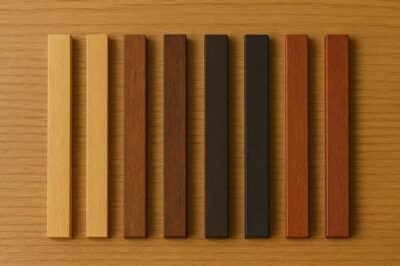
Chopsticks Making Workshop in Gion with Engraving Option
Read our review →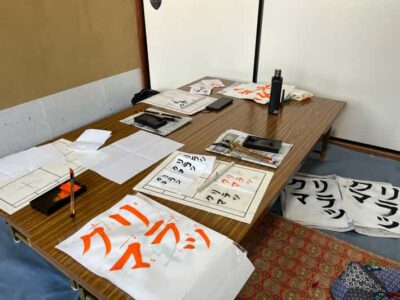
Calligraphy class at Buddhist temple in city center
Read our review →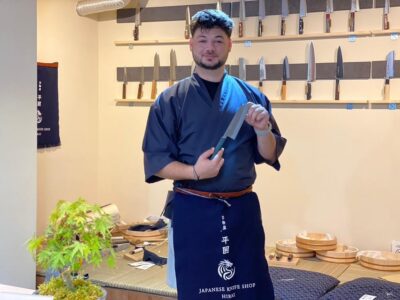
Beginner Knife Sharpening & Handle Fitting Workshop
Read our review →
Japanese Archery Workshop with Experienced Instructor
Read our review →
Kyoto Michelin Ramen Workshop or Painting Ramen Essentials
Read our review →
Browse the lists this tour appears in